
Katarina Schuth – författare
Visar alla böcker från författaren . Handla med fri frakt och snabb leverans.
2 produkter
2 produkter
E-bok
Engelska, 2016341 kr
Läs direkt efter köp
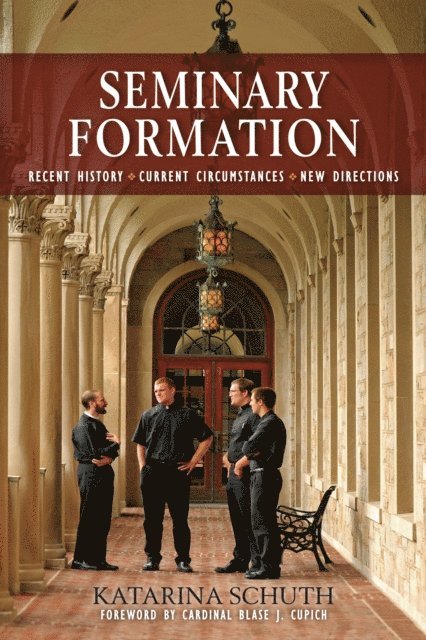
The past thirty years have witnessed tremendous societal and ecclesial changes that continue to inform ministry education in the 21st century. In Seminary Formation, Katarina Schuth, OSF, examines the many aspects of theologate-level schools including their structures and missions, organization and leadership, student enrollment, backgrounds of both seminarians and lay students, and the evolution and development of degree programs, including human and spiritual, intellectual and pastoral formation. Seminary Formation also helpfully includes substantial commentaries on Schuth’s research by Ronald Rolheiser, Thomas Walters, Leon M. Hutton, Barbara Reid, and Peter Vaccari. An exploration of the changes in seminaries and schools of theology, with statistical analysis, from 1985 to the present, Seminary Formation anticipates the challenges ahead and considers new directions for the future.

Inbunden, Engelska, 1989
579 kr
Tillfälligt slut
This document represents the final report of the Cheswick team, a cooperative effort among five team members, which stands now as a collective contribution. The team's hope is that this report will strengthen cooperative ventures in North American theological education. The structure of the report is as follows: Chapter I provides an introduction to the research methods and theoretical underpinnings of the study. Chapter II offers a brief overview of the evolution of cooperation in theological education. Special attention is given to the consortia movement of the 1960s and 1970s. Chapter III describes the major findings that emerged from the questionnaire survey and the interviews conducted in the United States and Canada. It reports on the wide variety of cooperative undertakings which exists in theological education as it is practiced in the mid-1980s. Finally, Chapter IV concludes with recommendations based on the findings of the research. The appendices include the questionnaires and lists of persons interviewed.