Kate Ronald - Böcker
Visar alla böcker från författaren Kate Ronald. Handla med fri frakt och snabb leverans.
2 produkter
2 produkter
365 kr
Tillfälligt slut
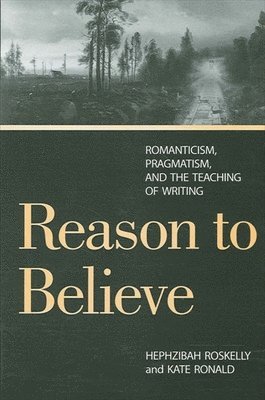
Explores current theories of teaching and demonstrates that English studies can benefit from the work of nineteenth-century American romanticism and pragmatism, both of which affirm the possibility of growth and development. The book argues eloquently for the importance of hope and relies extensively for its theoretical underpinnings on the influential writings of Cornel West and Paulo Freire.Reason to Believe is about teaching and the possibility of making positive change in education. The authors explore the way that American pragmatism and the rhetoric of North American romanticism work together to create a method for restoring hope to teachers and responsiveness to the systems they work within. What the book calls romantic/pragmatic rhetoric offers teachers a way to locate the roots of their beliefs and methods, to name them, and thus to act to change and challenge systems that have become in William James' phrase "tyrannical machines."
672 kr
Skickas inom 7-10 vardagar
“I say that even later someone will remember us.”—Sappho, Fragment 147, sixth century, BCSappho’s prediction came true; fragments of work by the earliest woman writer in Western literate history have in fact survived into the twenty-first century. But not without peril. Sappho’s writing remains only in fragments, partly due to the passage of time, but mostly as a result of systematic efforts to silence women’s voices. Sappho’s hopeful boast captures the mission of this anthology: to gather together women engaged in the art of persuasion—across differences of race, class, sexual orientation, historical and physical locations—in order to remember that the rhetorical tradition indeed includes them.Available Means offers seventy women rhetoricians—from ancient Greece to the twenty-first century—a room of their own for the first time. Editors Joy Ritchie and Kate Ronald do so in the feminist tradition of recovering a previously unarticulated canon of women’s rhetoric. Women whose voices are central to such scholarship are included here, such as Aspasia (a contemporary of Plato’s), Margery Kempe, Margaret Fuller, and Ida B. Wells. Added are influential works on what it means to write as a woman—by Virginia Woolf, Adrienne Rich, Nancy Mairs, Alice Walker, and Hélène Cixous. Public “manifestos” on the rights of women by Hortensia, Mary Astell, Maria Stewart, Sarah and Angelina Grimké, Anna Julia Cooper, Margaret Sanger, and Audre Lorde also join the discourse.But Available Means searches for rhetorical tradition in less obvious places, too. Letters, journals, speeches, newspaper columns, diaries, meditations, and a fable (Rachel Carson’s introduction to Silent Spring) also find places in this room. Such unconventional documents challenge traditional notions of invention, arrangement, style, and delivery, and blur the boundaries between public and private discourse. Included, too, are writers whose voices have not been heard in any tradition. Ritchie and Ronald seek to “unsettle” as they expand the women’s rhetorical canon.Arranged chronologically, Available Means is designed as a classroom text that will allow students to hear women speaking to each other across centuries, and to see how women have added new places from which arguments can be made. Each selection is accompanied by an extensive headnote, which sets the reading in context. The breadth of material will allow students to ask such questions as “How might we define women’s rhetoric? How have women used and subverted traditional rhetoric?”A topical index at the end of the book provides teachers a guide through the rhetorical riches. Available Means will be an invaluable text for rhetoric courses of all levels, as well as for women’s studies courses.