Katharina Natter – författare
Visar alla böcker från författaren Katharina Natter. Handla med fri frakt och snabb leverans.
12 produkter
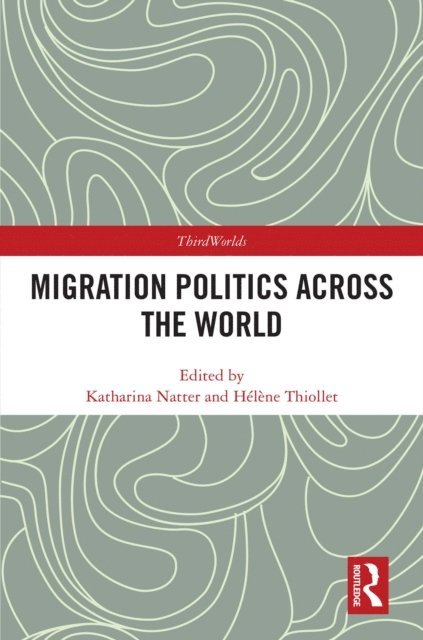
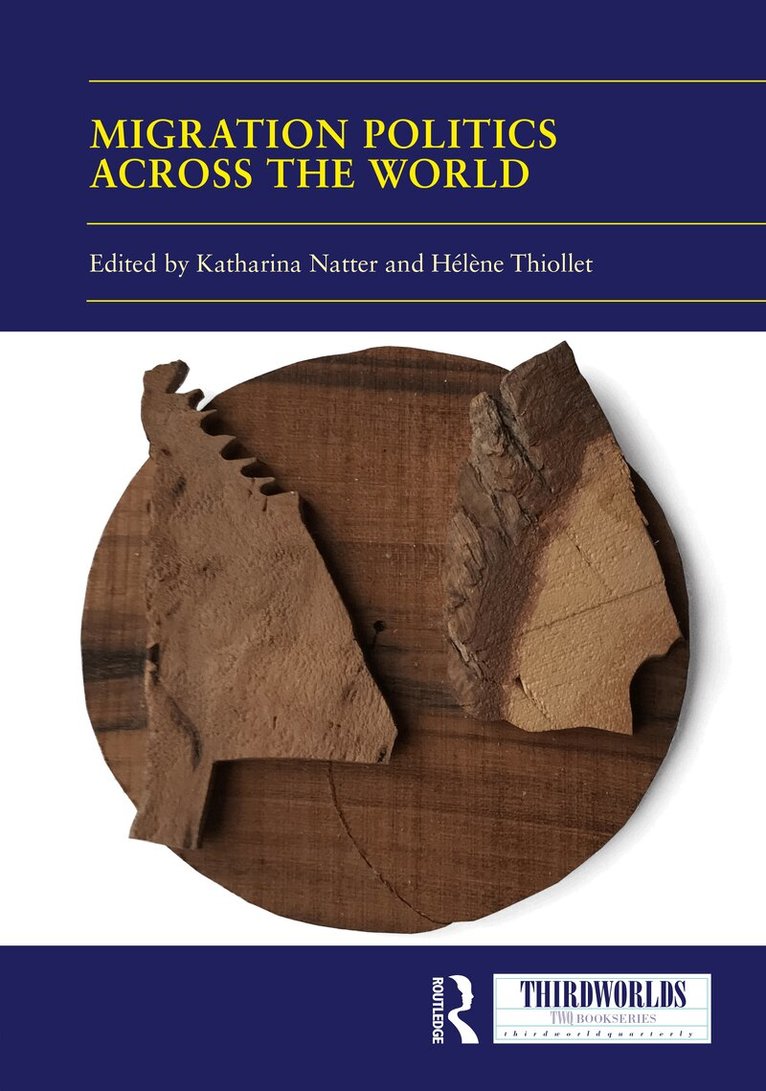
Migration Politics across the World
Av Helene Thiollet, Katharina Natter
E-bok, 2023
685 kr
Lägg i varukorg
This book breaks new ground in scholarship on the politics of migration. The edited volume brings together in-depth case studies from Argentina, Tunisia, Japan, South Korea, the United States, Australia, the Philippines, China, and Saudi Arabia to showcase the complex interplay between migration …
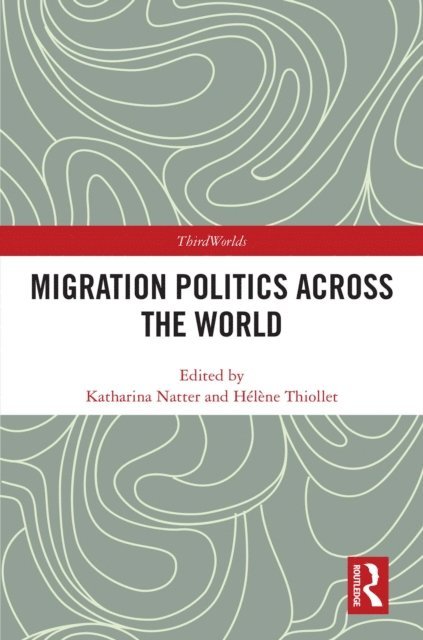
Migration Politics across the World
Av Helene Thiollet, Katharina Natter
E-bok, 2023
685 kr
Lägg i varukorg
This book breaks new ground in scholarship on the politics of migration. The edited volume brings together in-depth case studies from Argentina, Tunisia, Japan, South Korea, the United States, Australia, the Philippines, China, and Saudi Arabia to showcase the complex interplay between migration …
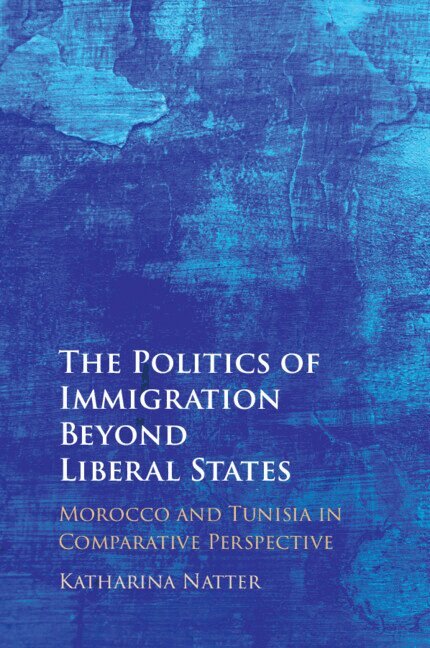
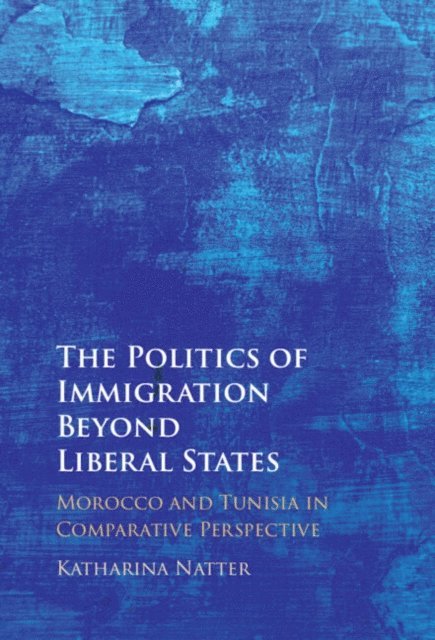
The Politics of Immigration Beyond Liberal States
Morocco and Tunisia in Comparative Perspective
Häftad, 2024
504 kr
Lägg i varukorg
Immigration presents a fundamental challenge to the nation-state and is a key political priority for governments worldwide. However, knowledge of the politics of immigration remains largely limited to liberal states of the Global North. In this book, Katharina Natter draws on extensive fieldwork …
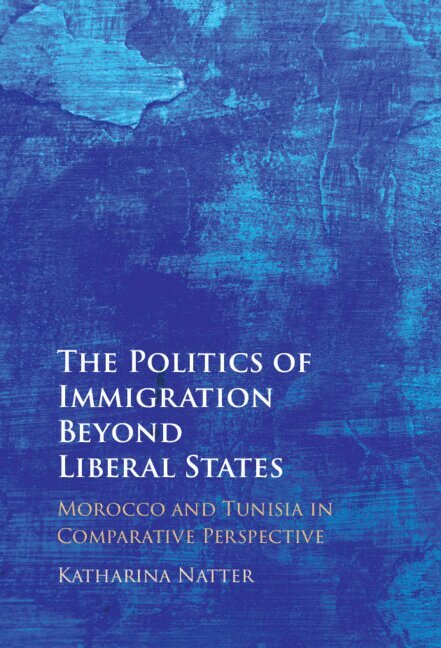
The Politics of Immigration Beyond Liberal States
Morocco and Tunisia in Comparative Perspective
Inbunden, 2022
1351 kr
Lägg i varukorg
Immigration presents a fundamental challenge to the nation-state and is a key political priority for governments worldwide. However, knowledge of the politics of immigration remains largely limited to liberal states of the Global North. In this book, Katharina Natter draws on extensive fieldwork …
Politics of Immigration Beyond Liberal States
Morocco and Tunisia in Comparative Perspective
E-bok, 2022
489 kr
Lägg i varukorg
Immigration presents a fundamental challenge to the nation-state and is a key political priority for governments worldwide. However, knowledge of the politics of immigration remains largely limited to liberal states of the Global North. In this book, Katharina Natter draws on extensive fieldwork …
Politics of Immigration Beyond Liberal States
Morocco and Tunisia in Comparative Perspective
E-bok, 2022
479 kr
Lägg i varukorg
Immigration presents a fundamental challenge to the nation-state and is a key political priority for governments worldwide. However, knowledge of the politics of immigration remains largely limited to liberal states of the Global North. In this book, Katharina Natter draws on extensive fieldwork …
Migration Politics across the World
Av Katharina Natter, Hélène Thiollet
Inbunden, 2023
2311 kr
Lägg i varukorg
This book breaks new ground in scholarship on the politics of migration. The edited volume brings together in-depth case studies from Argentina, Tunisia, Japan, South Korea, the United States, Australia, the Philippines, China, and Saudi Arabia to showcase the complex interplay between migration …
Migration Politics across the World
Av Katharina Natter, Hélène Thiollet
Häftad, 2025
649 kr
Lägg i varukorg
This book breaks new ground in scholarship on the politics of migration. The edited volume brings together in-depth case studies from Argentina, Tunisia, Japan, South Korea, the United States, Australia, the Philippines, China, and Saudi Arabia to showcase the complex interplay between migration …
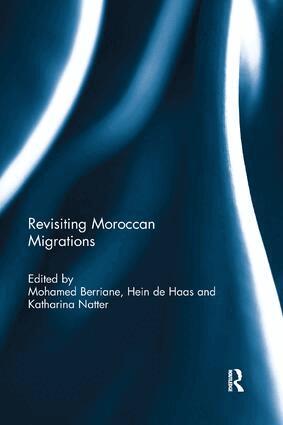
Revisiting Moroccan Migrations
Av Mohammed Berriane, Hein De Haas m. fl.
Häftad, 2019
750 kr
Lägg i varukorg
Over the 20th century, Morocco has become one of the world’s major emigration countries. But since 2000, growing immigration and settlement of migrants from sub-Saharan Africa, the Middle East, and Europe confronts Morocco with an entirely new set of social, cultural, political and legal issues. …
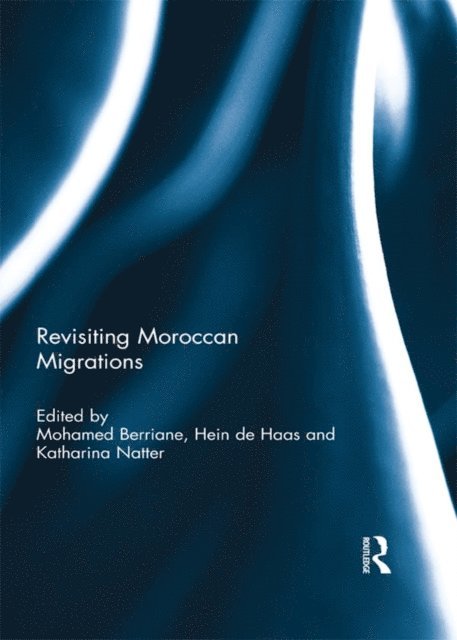
Revisiting Moroccan Migrations
Av Mohammed Berriane, Hein De Haas m. fl.
Inbunden, 2016
2512 kr
Lägg i varukorg
Over the 20th century, Morocco has become one of the world’s major emigration countries. But since 2000, growing immigration and settlement of migrants from sub-Saharan Africa, the Middle East, and Europe confronts Morocco with an entirely new set of social, cultural, political and legal issues. …
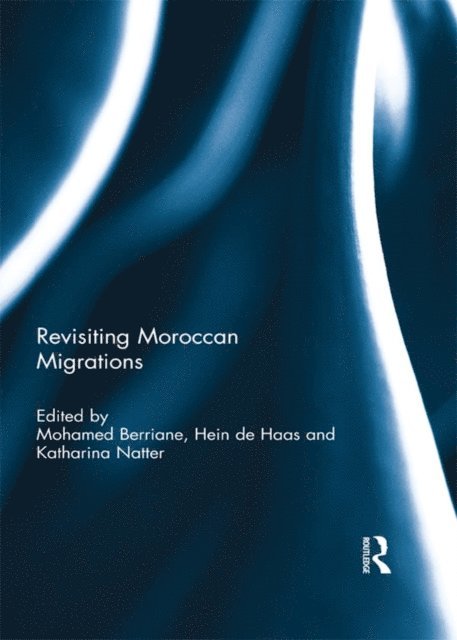
Revisiting Moroccan Migrations
Av Katharina Natter, Hein De Haas m. fl.
E-bok, 2018
883 kr
Lägg i varukorg
Over the 20th century, Morocco has become one of the world’s major emigration countries. But since 2000, growing immigration and settlement of migrants from sub-Saharan Africa, the Middle East, and Europe confronts Morocco with an entirely new set of social, cultural, political and legal issues. …
Revisiting Moroccan Migrations
Av Katharina Natter, Hein De Haas m. fl.
E-bok, 2018
883 kr
Lägg i varukorg
Over the 20th century, Morocco has become one of the world’s major emigration countries. But since 2000, growing immigration and settlement of migrants from sub-Saharan Africa, the Middle East, and Europe confronts Morocco with an entirely new set of social, cultural, political and legal issues. …