Katherine Hite - Böcker
Visar alla böcker från författaren Katherine Hite. Handla med fri frakt och snabb leverans.
8 produkter
8 produkter
The New Politics of Inequality in Latin America
Rethinking Participation and Representation
Häftad, Engelska, 1997
2 059 kr
Skickas inom 7-10 vardagar
Against a broader backdrop of globalization and worldwide moves toward political democracy, The New Politics of Inequality in Latin America examines the unfolding relationships among social change, equity, and the democratic representation of the poor in Latin America. Recent Latin American governments have turned away from redistributive policies; at the same time, popular political and social organizations have been generally weakened, inequality has increased, and the gap between rich and poor has grown. Hanging in the balance is the consolidation and the quality of new or would-be democracies; this volume suggests that governments must find not just short-term programmes to alleviate poverty, but long-term means to ensure the effective integration of the poor into political life. The New Politics of Inequality in Latin America bridges the intellectual chasm between, on the one hand, studies of grassroots politics, and on the other, explorations of elite politics and formal institution-building. It will be of interest to students and scholars of contemporary Latin American politics and society and, more generally, in the vicissitudes of democracy and citizenship in the late twentieth-century global system.
The New Politics of Inequality in Latin America
Rethinking Participation and Representation
Inbunden, Engelska, 1997
2 367 kr
Skickas inom 5-8 vardagar
Against a broader backdrop of globalization and worldwide moves toward political democracy, The New Politics of Inequality in Latin America examines the unfolding relationships among social change, equity, and the democratic representation of the poor in Latin America. Recent Latin American governments have turned away from redistributive policies; at the same time, popular political and social organizations have been generally weakened, inequality has increased, and the gap between rich and poor has grown. Hanging in the balance is the consolidation and the quality of new or would-be democracies; this volume suggests that governments must find not just short-term programmes to alleviate poverty, but long-term means to ensure the effective integration of the poor into political life. The New Politics of Inequality in Latin America bridges the intellectual chasm between, on the one hand, studies of grassroots politics, and on the other, explorations of elite politics and formal institution-building. It will be of interest to students and scholars of contemporary Latin American politics and society and, more generally, in the vicissitudes of democracy and citizenship in the late twentieth-century global system.
856 kr
Tillfälligt slut
-- International Politics
1 344 kr
Skickas inom 10-15 vardagar
Authoritarian Legacies and Democracy in Latin America and Southern Europe brings together well-known comparative political scientists to define and explore the effects of authoritarian rule in post-authoritarian regimes in Southern Europe, the Southern Cone, and Brazil. Contributors to this volume use the research of historians, social psychologists, anthropologists, and sociologists to formulate their conceptualizations of legacies. Their analysis is also sensitive to the experiences of those who live with the consequences of authoritarian regimes. Each chapter offers a multi-case comparison either from within Latin America or between Latin America and Southern Europe.Among the challenges for democracies in Latin America and Southern Europe are weakened political parties, politicized militaries, compromised judiciaries, corrupt police forces, and widespread citizen distrust. Utilizing a historical-sociological methodology that incorporates both the formal-legal and cultural dimensions of legacies, these essayists offer a fruitful examination of the political structures and institutions bequeathed by authoritarian regimes. They look at such core institutions as political parties, executives, legislatures, constitutions, and interest groups as well as symbolic-discursive dimensions related to individual and collective memories, citizenship, public perception, and trust. They also suggest policy directions to eradicate authoritarian legacies from democratic institutions and praxis.Authoritarian Legacies and Democracy in Latin America and Southern Europe encourages comparativists to consider more systematically the many manifestations of authoritarian legacies as challenges to democracy. This volume will appeal to all students and scholars interested in comparative politics, Latin America, Southern Europe, and democratization.
314 kr
Skickas inom 10-15 vardagar
Authoritarian Legacies and Democracy in Latin America and Southern Europe brings together well-known comparative political scientists to define and explore the effects of authoritarian rule in post-authoritarian regimes in Southern Europe, the Southern Cone, and Brazil. Contributors to this volume use the research of historians, social psychologists, anthropologists, and sociologists to formulate their conceptualizations of legacies. Their analysis is also sensitive to the experiences of those who live with the consequences of authoritarian regimes. Each chapter offers a multi-case comparison either from within Latin America or between Latin America and Southern Europe.Among the challenges for democracies in Latin America and Southern Europe are weakened political parties, politicized militaries, compromised judiciaries, corrupt police forces, and widespread citizen distrust. Utilizing a historical-sociological methodology that incorporates both the formal-legal and cultural dimensions of legacies, these essayists offer a fruitful examination of the political structures and institutions bequeathed by authoritarian regimes. They look at such core institutions as political parties, executives, legislatures, constitutions, and interest groups as well as symbolic-discursive dimensions related to individual and collective memories, citizenship, public perception, and trust. They also suggest policy directions to eradicate authoritarian legacies from democratic institutions and praxis.Authoritarian Legacies and Democracy in Latin America and Southern Europe encourages comparativists to consider more systematically the many manifestations of authoritarian legacies as challenges to democracy. This volume will appeal to all students and scholars interested in comparative politics, Latin America, Southern Europe, and democratization.
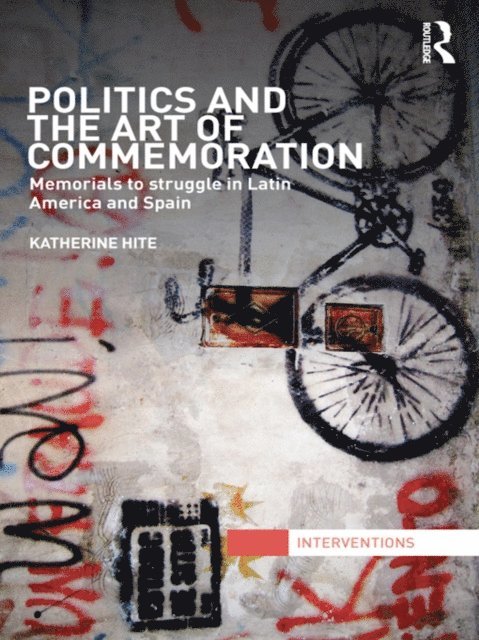
Politics and the Art of Commemoration
Memorials to struggle in Latin America and Spain
Inbunden, Engelska, 2011
2 246 kr
Skickas inom 10-15 vardagar
Memorials are proliferating throughout the globe. States recognize the political value of memorials: memorials can convey national unity, a sense of overcoming violent legacies, a commitment to political stability or the strengthening of democracy. Memorials represent fitful negotiations between states and societies symbolically to right wrongs, to recognize loss, to assert distinct historical narratives that are not dominant.This book explores relationships among art, representation and politics through memorials to violent pasts in Spain and Latin America. Drawing from curators, art historians, psychologists, political theorists, holocaust studies scholars, as well as the voices of artists, activists, and families of murdered and disappeared loved ones, Politics and the Art of Commemoration uses memorials as conceptual lenses into deep politics of conflict and as suggestive arenas for imagining democratic praxis. Tracing deep histories of political struggle and suggesting that today’s commemorative practices are innovating powerful forms of collective political action, this work will be of great interest to students and scholars of international relations, Latin American studies and memory studies.
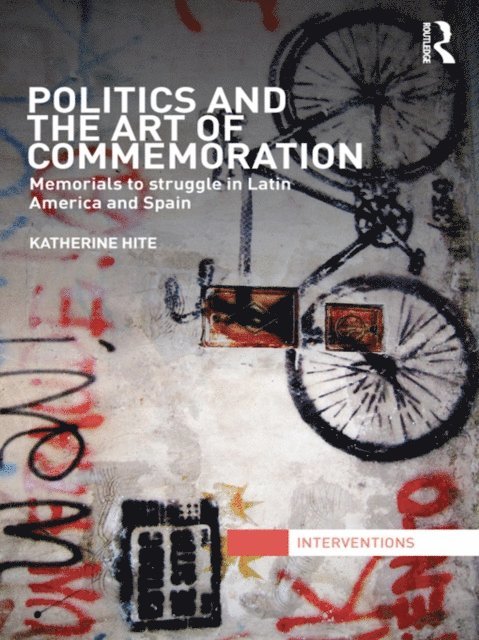
Politics and the Art of Commemoration
Memorials to struggle in Latin America and Spain
Häftad, Engelska, 2013
833 kr
Skickas inom 10-15 vardagar
Memorials are proliferating throughout the globe. States recognize the political value of memorials: memorials can convey national unity, a sense of overcoming violent legacies, a commitment to political stability or the strengthening of democracy. Memorials represent fitful negotiations between states and societies symbolically to right wrongs, to recognize loss, to assert distinct historical narratives that are not dominant.This book explores relationships among art, representation and politics through memorials to violent pasts in Spain and Latin America. Drawing from curators, art historians, psychologists, political theorists, holocaust studies scholars, as well as the voices of artists, activists, and families of murdered and disappeared loved ones, Politics and the Art of Commemoration uses memorials as conceptual lenses into deep politics of conflict and as suggestive arenas for imagining democratic praxis. Tracing deep histories of political struggle and suggesting that today’s commemorative practices are innovating powerful forms of collective political action, this work will be of great interest to students and scholars of international relations, Latin American studies and memory studies.
Sustaining Human Rights in the Twenty-First Century
Strategies from Latin America
Inbunden, Engelska, 2013
587 kr
Tillfälligt slut
These essays take a much-needed look at the course of human rights strategies rooted in the last century's struggles against brutally repressive dictators. Those struggles continue today across Latin America. Augmented by the pursuit of broader political, cultural, labor, and environmental rights, they hold accountable a much wider cast of national governments, local governments, international agencies, and multinational corporations. In "Sustaining Human Rights in the Twenty-first Century", some of the Western Hemisphere's leading human rights experts shape and bolster new approaches, from the concepts of rights to transnational efforts, by placing the struggle for rights in historical and comparative perspective. The contributors provide an historical framework, describe formal and legal institutions, and discuss the citizens' movements and conceptions of citizenship that produce distinct kinds of political identities and struggles.