Katherine Nelson - Böcker
Visar alla böcker från författaren Katherine Nelson. Handla med fri frakt och snabb leverans.
14 produkter
14 produkter
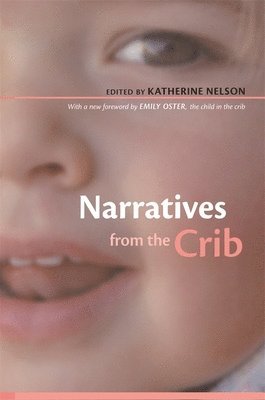
Narratives from the Crib
With a New Foreword by Emily Oster, the Child in the Crib
Häftad, Engelska, 2006
340 kr
Skickas inom 10-15 vardagar
This classic psychological case study focuses on one talkative child’s emerging ability to use language, her capacity for understanding, for imagining, and for making inferences and solving problems. In wide-ranging essays, scholars offer multifaceted linguistic and psychological analyses of two-year-old Emily’s bedtime conversations with her parents and pre-sleep monologues, taped over a fifteen-month period. In a foreword written for this new edition, Emily, now an adult, reflects on the experience of having been a research subject without knowing it.
519 kr
Skickas inom 7-10 vardagar
These essays by leading theorists and researchers in sociocultural, cognitive, developmental and educational psychology honour the memory of Sylvia Scribner, whose work is recognized by each of the authors as seminal to their own thinking. The themes include the relationship between history and culture, the importance of context to thinking, the place of literacy in human activity and thought, and cognition in school and in the workplace. The volume presents applications of activity theory to fundamental issues in human behaviour at work, in school, and in problem solving situations, and it analyses historical-societal processes in science and culture. Scribner's conviction that science holds a responsibility to human welfare and understanding is carried on in these chapters. Sociocultural Psychology is crucial reading for researchers and graduate students in sociocultural, cognitive, developmental and educational psychology.
1 414 kr
Skickas inom 7-10 vardagar
These essays by leading theorists and researchers in sociocultural, cognitive, developmental and educational psychology honour the memory of Sylvia Scribner, whose work is recognized by each of the authors as seminal to their own thinking. The themes include the relationship between history and culture, the importance of context to thinking, the place of literacy in human activity and thought, and cognition in school and in the workplace. The volume presents applications of activity theory to fundamental issues in human behaviour at work, in school, and in problem solving situations, and it analyses historical-societal processes in science and culture. Scribner's conviction that science holds a responsibility to human welfare and understanding is carried on in these chapters. Sociocultural Psychology is crucial reading for researchers and graduate students in sociocultural, cognitive, developmental and educational psychology.
1 082 kr
Skickas inom 7-10 vardagar
Contemporary study of language and cognition in infancy and early childhood has received considerable, well deserved attention. However, little effort has been directed to the means by which language becomes a cognitive and communicative tool, as well as what the full implications of this development may be. This book highlights a transition from the study of language and cognition to that of language in cognition. It presents an integrative theory of cognitive development, emphasizing the important role that language plays in taking the two to five year old child to new levels of cognitive operations in memory, forming concepts, categories, processing narratives, and understanding other people's intentions. Biological evolution is considered the source of both language and culture but it is argued that qualitatively different modes of thinking and knowing emerge therefrom.
582 kr
Skickas inom 7-10 vardagar
Contemporary study of language and cognition in infancy and early childhood has received considerable, well deserved attention. However, little effort has been directed to the means by which language becomes a cognitive and communicative tool, as well as what the full implications of this development may be. This book highlights a transition from the study of language and cognition to that of language in cognition. It presents an integrative theory of cognitive development, emphasizing the important role that language plays in taking the two to five year old child to new levels of cognitive operations in memory, forming concepts, categories, processing narratives, and understanding other people's intentions. Biological evolution is considered the source of both language and culture but it is argued that qualitatively different modes of thinking and knowing emerge therefrom.
289 kr
Skickas inom 10-15 vardagar
Katherine Nelson re-centers developmental psychology with a revived emphasis on development and change, rather than foundations and continuity. She argues that children be seen not as scientists but as members of a community of minds, striving not only to make sense, but also to share meanings with others. A child is always part of a social world, yet the child's experience is private. So, Nelson argues, we must study children in the context of the relationships, interactive language, and culture of their everyday lives.Nelson draws philosophically from pragmatism and phenomenology, and empirically from a range of developmental research. Skeptical of work that focuses on presumed innate abilities and the close fit of child and adult forms of cognition, her dynamic framework takes into account whole systems developing over time, presenting a coherent account of social, cognitive, and linguistic development in the first five years of life. Nelson argues that a child's entrance into the community of minds is a slow, gradual process with enormous consequences for child development, and the adults that they become. Original, deeply scholarly, and trenchant, Young Minds in Social Worlds will inspire a new generation of developmental psychologists.
2 030 kr
Skickas inom 10-15 vardagar
This book examines a key issue in current cognitive theories - the nature of representation. Each chapter is characterized by attempts to frame hot topics in cognitive development within the landscape of current developmental theorizing and the past legacy of genetic epistemology. The chapters address four questions that are fundamental to any developmental line of inquiry:How should we represent the workings and contents of the mind?How does the child construct mental models during the course of development?What are the origins of these models? andWhat accounts for the novelties that are the products and producers of developmental change?These questions are situated in a historical context, Piagetian theory, and contemporary researchers attempt to trace how they draw upon, depart from, and transform the Piagetian legacy to revisit classic issues such as the child's awareness of the workings of mental life, the child's ability to represent the world, and the child's growing ability to process and learn from experience. The theoretical perspectives covered include constructivism, connectionism, theory-theory, information processing, dynamical systems, and social constructivist approaches. The research areas span imitation, mathematical reasoning, biological knowledge, language development, and theory of mind.Written by major contributors to the field, this work will be of interest to students and researchers wanting a brief but in-depth overview of the contemporary field of cognitive development.
1 526 kr
Kommande
Originally published in 1986, Event Knowledge: Structure and Function in Development was first undertaken because the authors were interested in certain phenomena of cognitive development in early childhood. In particular, they were struck by the discrepancy between young children’s apparent competence in everyday activities and their apparent incompetence on certain cognitive tasks. The research was designed in an attempt to identify the basis for children’s competence in everyday life. It evolved into an effort to find links between the everyday and the experimental realms, the hope that they could explain both the successes in one and failures in the other.Based on initial concerns and assumptions, the program of research described here was designed to explore how young children’s knowledge of their everyday world – its spatial-temporal structure, the people and objects that occupy it, and their activities – is organized and used, both in practical tasks and in abstract thinking. The approach was novel and it was hoped it would provide the foundation for a new approach to a theory of cognitive development. Today it can be read in its historical context.
784 kr
Skickas inom 10-15 vardagar
This book examines a key issue in current cognitive theories - the nature of representation. Each chapter is characterized by attempts to frame hot topics in cognitive development within the landscape of current developmental theorizing and the past legacy of genetic epistemology. The chapters address four questions that are fundamental to any developmental line of inquiry:How should we represent the workings and contents of the mind?How does the child construct mental models during the course of development?What are the origins of these models? andWhat accounts for the novelties that are the products and producers of developmental change?These questions are situated in a historical context, Piagetian theory, and contemporary researchers attempt to trace how they draw upon, depart from, and transform the Piagetian legacy to revisit classic issues such as the child's awareness of the workings of mental life, the child's ability to represent the world, and the child's growing ability to process and learn from experience. The theoretical perspectives covered include constructivism, connectionism, theory-theory, information processing, dynamical systems, and social constructivist approaches. The research areas span imitation, mathematical reasoning, biological knowledge, language development, and theory of mind.Written by major contributors to the field, this work will be of interest to students and researchers wanting a brief but in-depth overview of the contemporary field of cognitive development.
Del 19 - Springer Series in Language and Communication
Young Children’s Knowledge of Relational Terms
Some Ifs, Ors, and Buts
Häftad, Engelska, 2011
520 kr
Skickas inom 10-15 vardagar
An appreciation of temporal and logical relationships is one of the essential and defining features of human cognition. A central question in developmental psy chology, and in the philosophical speculations out of which psychology evolved, has been how children come to understand temporal and logical relationships. For many recent investigators, this question has been translated into empiri cal studies of children's acquisition of relational terms-words such as before, after, because, so, if, but, and or that permit the linguistic expression of logi cal relationships. In the mid 1970s, Katherine Nelson began to study young children's knowledge about routine activities in which they participated. The goal of this research was to understand how children represented their personal experiences and how these representations contributed to further cognitive development. A primary method used in the early phases of this research involved simply asking children to describe familiar events. They were asked, for example, "What happens when you have lunch at school?" or "What happens at a birthday party?" Hundreds of transcripts of children's responses to such questions were available when Lucia French became an NICHD Postdoctoral Fellow in Developmental Psychology at City University of New York in 1979.
381 kr
Skickas
202 kr
Skickas inom 5-8 vardagar
250 kr
Skickas inom 5-8 vardagar
164 kr
Skickas inom 5-8 vardagar