Kathleen Blake Yancey - Böcker
Visar alla böcker från författaren Kathleen Blake Yancey. Handla med fri frakt och snabb leverans.
9 produkter
9 produkter
569 kr
Skickas inom 3-6 vardagar
403 kr
Tillfälligt slut
312 kr
Tillfälligt slut
786 kr
Skickas inom 10-15 vardagar
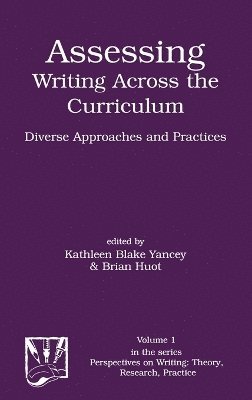
This work discusses the assessment of writing across the curriculum. It is the first volume in a series analyzing perspectives on writing. The series provides a broad-based forum for monographs and collections in a range of topics that employ diverse theoretical research and pedagogical approaches. The editors emphasize inclusion, both conceptually and methodologically, in the series to highlight the strength and vibrancy of work in rhetoric, composition and writing.
489 kr
Skickas inom 10-15 vardagar
226 kr
Skickas inom 10-15 vardagar
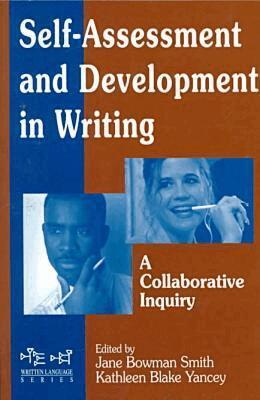
This collection explores student self-assessment and its role in the development of writing. Chapters address both theoretical and practical issues and make connections to extend the work done by teacher evaluation of student writing, peer evaluation and in portfolios.
466 kr
Skickas inom 10-15 vardagar
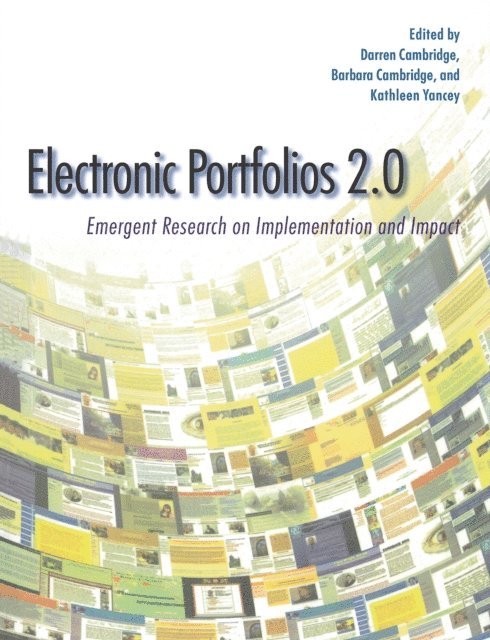
Higher education institutions of all kinds—across the United States and around the world—have rapidly expanded the use of electronic portfolios in a broad range of applications including general education, the major, personal planning, freshman learning communities, advising, assessing, and career planning.Widespread use creates an urgent need to evaluate the implementation and impact of eportfolios. Using qualitative and quantitative methods, the contributors to this book—all of whom have been engaged with the Inter/National Coalition for Electronic Portfolio Research—have undertaken research on how eportfolios influence learning and the learning environment for students, faculty members, and institutions.This book features emergent results of studies from 20 institutions that have examined effects on student reflection, integrative learning, establishing identity, organizational learning, and designs for learning supported by technology. It also describes how institutions have responded to multiple challenges in eportfolio development, from engaging faculty to going to scale. These studies exemplify how eportfolios can spark disciplinary identity, increase retention, address accountability, improve writing, and contribute to accreditation. The chapters demonstrate the applications of eportfolios at community colleges, small private colleges, comprehensive universities, research universities, and a state system.
ePortfolio as Curriculum
Models and Practices for Developing Students’ ePortfolio Literacy
Inbunden, Engelska, 2019
2 040 kr
Skickas inom 10-15 vardagar
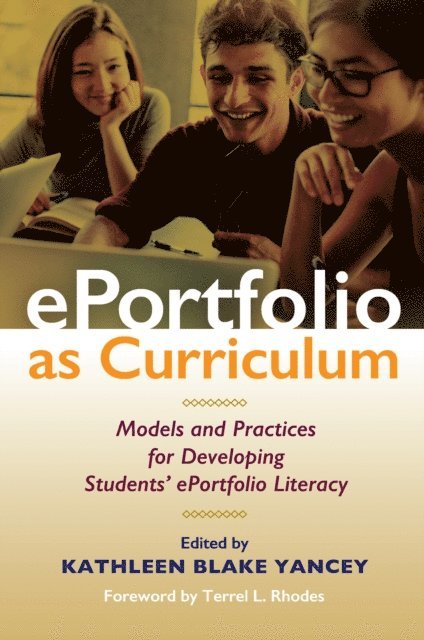
At a moment when the ePortfolio has been recognized as a high impact practice – as a unique site for hosting student integrative learning and as a powerful genre for assessment – this book provides faculty, staff, and administrators with a set of frameworks and models useful for guiding students in designing and creating ePortfolios that clearly communicate their purpose and effectively use the affordances of the medium.In short, this book both illustrates and provides guidance on how to support the development of students’ ePortfolio literacy. The ePortfolio curricular models provided in ePortfolio as Curriculum include both those integrated within existing disciplinary courses and those offered through credit-bearing stand-alone courses.In taking up questions focused on what students need to know and do in becoming informed, effective ePortfolio makers, the contributors to this volume – from the standpoint of their course outcomes and institutional contexts – present various approaches to developing an ePortfolio curriculum. Individually and collectively, the chapters explain ways to engage students in understanding the potential purposes, structures, audiences, and designs of ePortfolios; in developing the reflective practices for contextualizing and informing the selection and curation of artifacts; and in creating appropriate focus and coherence.Synthesizing insights from the previous chapters, the concluding chapter identifies six consistent features of an ePortfolio curriculum that support the development of students' ePortfolio literacy. In addition, Kathleen Blake Yancey identifies and defines seven common ePortfolio curricular dimensions that contribute to students' ePortfolio literacy, among them student agency, digital identity, and campus and global citizenship. Not least, she describes new practices emerging from ePortfolio curricula, including new ePortfolio-specific genres; new metaphors used to characterize ePortfolios and their practices; and new issues that the ePortfolio curriculum raises.
ePortfolio as Curriculum
Models and Practices for Developing Students’ ePortfolio Literacy
Häftad, Engelska, 2019
453 kr
Skickas inom 10-15 vardagar
At a moment when the ePortfolio has been recognized as a high impact practice – as a unique site for hosting student integrative learning and as a powerful genre for assessment – this book provides faculty, staff, and administrators with a set of frameworks and models useful for guiding students in designing and creating ePortfolios that clearly communicate their purpose and effectively use the affordances of the medium.In short, this book both illustrates and provides guidance on how to support the development of students’ ePortfolio literacy. The ePortfolio curricular models provided in ePortfolio as Curriculum include both those integrated within existing disciplinary courses and those offered through credit-bearing stand-alone courses.In taking up questions focused on what students need to know and do in becoming informed, effective ePortfolio makers, the contributors to this volume – from the standpoint of their course outcomes and institutional contexts – present various approaches to developing an ePortfolio curriculum. Individually and collectively, the chapters explain ways to engage students in understanding the potential purposes, structures, audiences, and designs of ePortfolios; in developing the reflective practices for contextualizing and informing the selection and curation of artifacts; and in creating appropriate focus and coherence.Synthesizing insights from the previous chapters, the concluding chapter identifies six consistent features of an ePortfolio curriculum that support the development of students' ePortfolio literacy. In addition, Kathleen Blake Yancey identifies and defines seven common ePortfolio curricular dimensions that contribute to students' ePortfolio literacy, among them student agency, digital identity, and campus and global citizenship. Not least, she describes new practices emerging from ePortfolio curricula, including new ePortfolio-specific genres; new metaphors used to characterize ePortfolios and their practices; and new issues that the ePortfolio curriculum raises.