Kathleen Deagan – författare
Visar alla böcker från författaren Kathleen Deagan. Handla med fri frakt och snabb leverans.
7 produkter
7 produkter
Inbunden, Engelska, 2024
758 kr
Skickas inom 5-8 vardagar
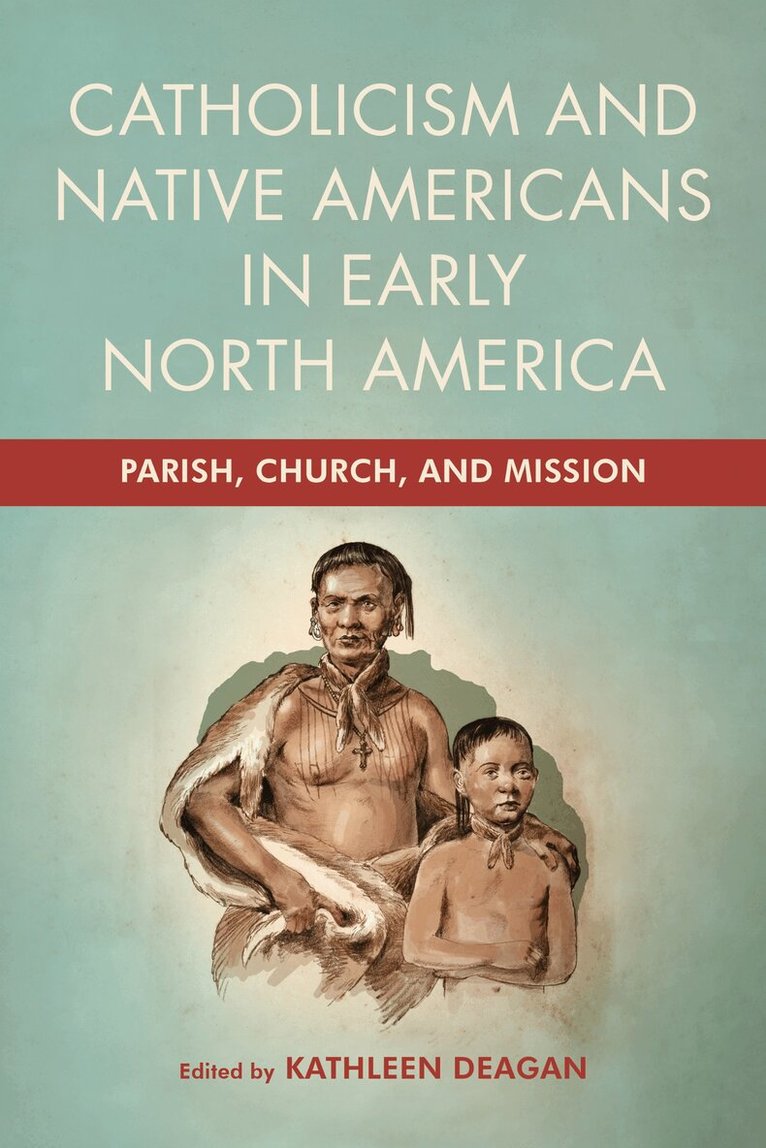
Catholicism and Native Americans in Early North America interrogates the profound cultural impacts of Catholic policies and practice in La Florida during the sixteenth and seventeenth centuries.Catholicism and Native Americans in Early North America explores the ways in which the church negotiated the founding of a Catholic society in colonial America, beginning in St. Augustine, Florida, in 1565. Although the church was deeply involved in all aspects of daily life and institutional organization, the book underscores the tensions inherent in creating and sustaining a Catholic tradition in an unfamiliar and socially diverse population.Using new primary academic scholarship, the contributors explore missionaries' accommodations to Catholic practice in the process of conversion; the ways in which social and racial differentiation were played out in the treatment of the dead; Native literacy and the production of religious texts; the impacts of differing conversion philosophies among various religious orders; and the historical and theological backgrounds of Catholicism in sixteenth- and seventeenth-century America. Bringing together insights from archaeology, social history, linguistics, and theology, this groundbreaking volume moves beyond the missions to reveal how Native people, friars, secular priests, and Spanish parishioners practiced Catholicism across what is now the southeastern United States.Contributors: Kathleen Deagan, Keith Ashley, George Aaron Broadwell, José Antonio Crespo-Francés Y Valero, Timothy J. Johnson, Rochelle Marrinan, Susan Richbourg Parker, David Hurst Thomas, Gifford Waters
Häftad, Engelska, 2013
510 kr
Skickas inom 5-8 vardagar
In 1493 Christopher Columbus led a fleet of seventeen ships and more than twelve hundred men to found a royal trading colony in America. Columbus had high hopes for his settlement, which he named La Isabela after the queen of Spain, but just five years later it was in ruins. It remains important, however, as the first site of European settlement in America and the first place of sustained interaction between Europeans and the indigenous Taínos.Kathleen Deagan and José María Cruxent now tell the story of this historic enterprise. Drawing on their ten-year archaeological investigation of the site of La Isabela, along with research into Columbus-era documents, they contrast Spanish expectations of America with the actual events and living conditions at America’s first European town. Deagan and Cruxent argue that La Isabela failed not because Columbus was a poor planner but because his vision of America was grounded in European experience and could not be sustained in the face of the realities of American life. Explaining that the original Spanish economic and social frameworks for colonization had to be altered in America in response to the American landscape and the non-elite Spanish and Taíno people who occupied it, they shed light on larger questions of American colonialism and the development of Euro-American cultural identity.
E-bok
Engelska, 2025214 kr
Läs direkt efter köp
The illustrated story of the history and groundbreaking discovery of an important historical site, fully updated on the 30th anniversary of its first publicationMore than 300 years ago, enslaved people of African descent risked their lives to escape from slavery on English plantations in South Carolina. Hearing that Spaniards in Florida promised religious sanctuary, they made their way south to St. Augustine, Florida. The Spanish established the fort and town of Gracia Real de Santa Teresa de Mose, the first legally sanctioned free Black community in what is now the United States. This book tells the story of Fort Mose and the people who lived there.Fort Mose traces the roots of this eighteenth-century free Black town from Africa through Iberia and Hispanic America to the colonial southeastern United States. It also tells how archaeologists, historians, local residents, teachers, and politicians worked together in the late twentieth century to bring the rich but neglected history of free Black people in the Spanish colonies to the public. The site of Fort Mose is now a major point on the Florida Black Heritage Trail and has been designated a National Historic Landmark and a UNESCO Site of Memory. Research continues at the location to the present day.This second edition is updated with new information uncovered about Fort Mose, its inhabitants, and its historical significance. It reflects recent developments in community involvement and preservation at the site. And as the first edition did, it challenges the idea that the American Black colonial experience was only that of slavery, offering a story of a courageous group of people of African descent who realized their vision of self-determination before the American Revolution.Funding for this publication was provided through a grant from Florida Humanities with funds from the National Endowment for the Humanities. Any views, findings, conclusions, or recommendations expressed in this publication do not necessarily represent those of Florida Humanities or the National Endowment for the Humanities.
Häftad, Engelska, 2025
290 kr
Skickas inom 5-8 vardagar
Häftad, Engelska, 2026
610 kr
Kommande
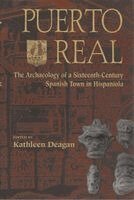
Essays on the history and excavation of a key site for understanding early Spanish colonization in the CaribbeanPuerto Real, Haiti, is the site of the largest and most intensive archaeological excavation of any Spanish colony in the Caribbean. It is a primary data source for understanding all Spanish colonial ventures in the region and a vital archival source for anyone concerned with the early history of European colonization in the New World.The essays in this volume are written by the international specialists who carried out the fieldwork at Puerto Real. They include a firsthand account by William H. Hodges, who discovered the site and brought it to the attention of archaeologists in Haiti and the United States, and discussion of the multiracial interactions of the Spaniards, Indigenous people, and Africans who lived there.
Häftad, Engelska, 2023
571 kr
Skickas inom 5-8 vardagar
Inbunden, Engelska, 2023
1 039 kr
Skickas inom 10-15 vardagar
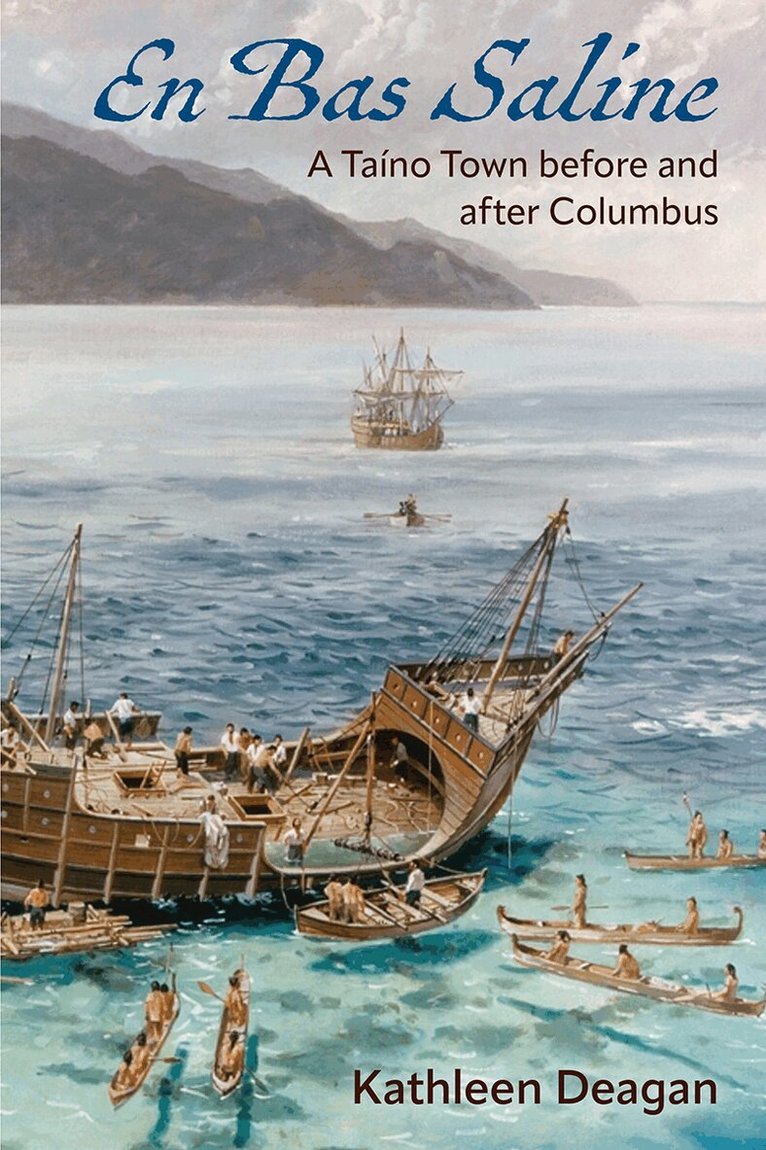
Life in an Indigenous town during an understudied era of Haitian historyThis book details the Indigenous Taíno occupation at En Bas Saline in Hispaniola between AD 1250 and 1520, showing how the community coped with the dramatic changes imposed by Spanish contact. En Bas Saline is the largest late precontact Taíno town recorded in what is now Haiti; the only one that has been extensively excavated and analyzed; and one of few with archaeologically documented occupation both before and after the arrival of Columbus in 1492. It is thought to be the site of La Navidad, Columbus’s first settlement, where the cacique Guacanagarí offered refuge and shelter after the sinking of the Santa Maria. Kathleen Deagan provides an intrasite and spatial analysis of En Bas Saline by focusing on households, foodways, ceramics, and crafts and offers insights into social organization and chiefly power in this political center through domestic and ornamental material culture. Postcontact changes are seen in patterns of gendered behavior, as well as in the power base of the caciques, challenging the traditional assumption that Taíno society was devastatingly disrupted almost immediately after contact. En Bas Saline is the only archaeological account of the consequences of contact from the perspective of the Taíno peoples’ lived experience.A volume in the Florida Museum of Natural History: Ripley P. Bullen Series