Kathleen S. Ives - Böcker
Visar alla böcker från författaren Kathleen S. Ives. Handla med fri frakt och snabb leverans.
6 produkter
6 produkter
AI Applications in Online Higher Education Administration
Strategies for Maximizing Returns and Improving Outcomes
Häftad, Engelska, 2026
613 kr
Skickas inom 10-15 vardagar
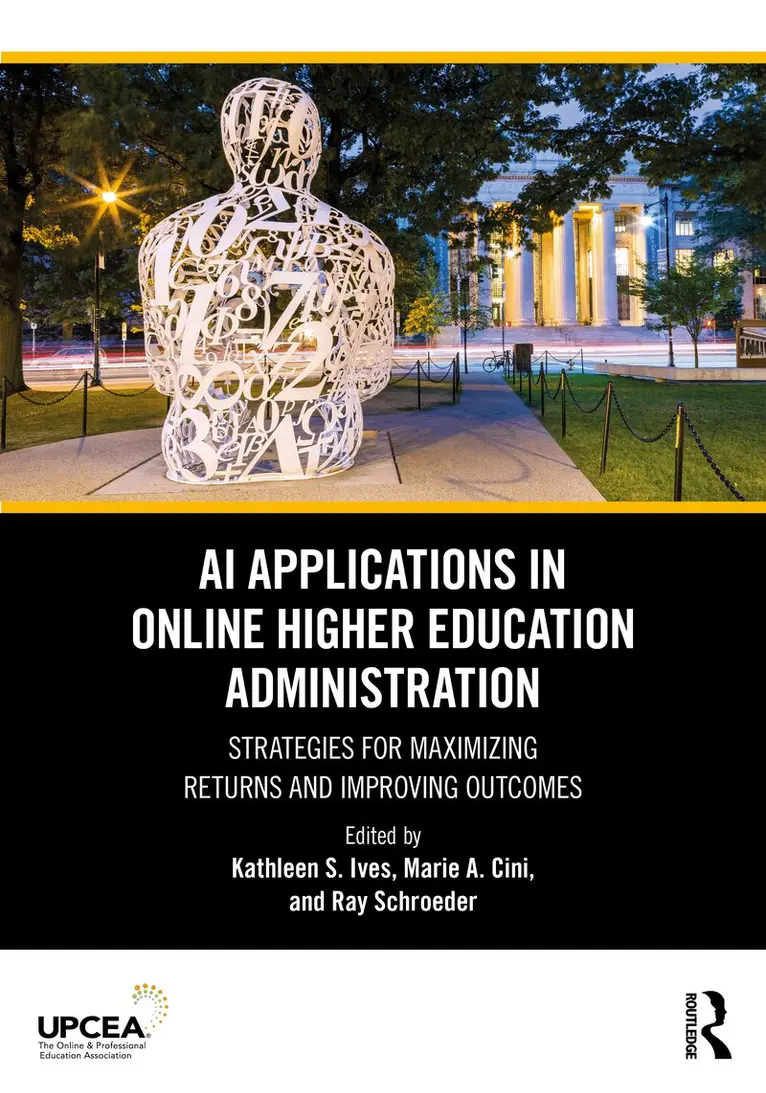
AI is reshaping higher education—fast. This book brings together faculty, instructional designers, technologists, and academic leaders who are on the front lines of that change. Their chapters offer honest reflections, practical examples, and thoughtful perspectives on how AI is influencing course design, assessment, student support, policy, and leadership. Rather than hype or fear, the contributors offer grounded insight: what it takes to integrate AI in ways that are ethical, equitable, and truly student-centered. They explore both opportunities and risks, with an eye toward long-term impact—not just short-term solutions. Whether you're charting an institutional AI strategy or simply trying to understand what’s ahead, this collection is a timely guide. It doesn’t treat AI as a magic fix, but as a tool—one that, when used wisely, can help higher education become more human, not less.
AI Applications in Online Higher Education Administration
Strategies for Maximizing Returns and Improving Outcomes
Inbunden, Engelska, 2026
2 029 kr
Skickas inom 10-15 vardagar
AI is reshaping higher education—fast. This book brings together faculty, instructional designers, technologists, and academic leaders who are on the front lines of that change. Their chapters offer honest reflections, practical examples, and thoughtful perspectives on how AI is influencing course design, assessment, student support, policy, and leadership. Rather than hype or fear, the contributors offer grounded insight: what it takes to integrate AI in ways that are ethical, equitable, and truly student-centered. They explore both opportunities and risks, with an eye toward long-term impact—not just short-term solutions. Whether you're charting an institutional AI strategy or simply trying to understand what’s ahead, this collection is a timely guide. It doesn’t treat AI as a magic fix, but as a tool—one that, when used wisely, can help higher education become more human, not less.
Leading the eLearning Transformation of Higher Education
Leadership Strategies for the Next Generation
Inbunden, Engelska, 2020
2 029 kr
Skickas inom 10-15 vardagar
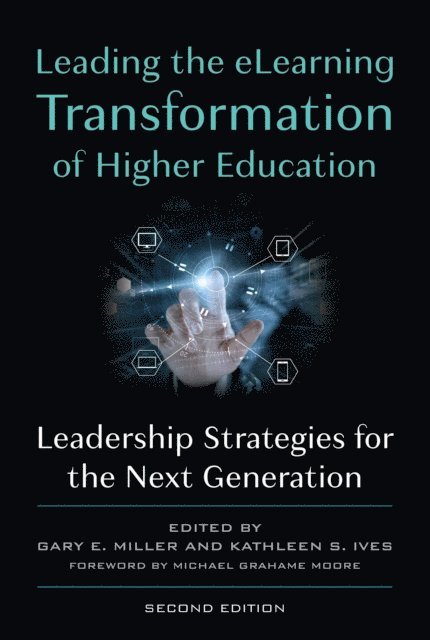
Published in Association with eLearning has entered the mainstream of higher education as an agent of strategic change. This transformation requires eLearning leaders to develop the skills to innovate successfully at a time of heightened competition and rapid technological change.In this environment eLearning leaders must act within their institutions as much more than technology managers and assume the prime role of helping their institutions understand the opportunities that eLearning presents for faculty, for students, and for client organizations in the community. They need to prepare to participate in policy development around these opportunities. They must understand the multiple dimensions of practice in the field—operations, administration, and working within the complex culture of a higher education institution—while also functioning as scholars of the field who can bring the best ideas from other institutions to help shape policy around eLearning.The second edition builds on the success of the first edition and presents both the collective expertise of veterans who have pioneered the field for 20 years, and of a rising generation of eLearning leaders that are transforming online programs at their own institutions, to address these challenges.This edition has been updated and expanded to reflect the increasing complexity of the field with seven new chapters and the revision of eight chapters that appeared in the first edition. New and updated topics include:·The evolving role of the chief online learning officer·Issues of diversity as more women and minorities enter leadership roles in the field·The increasing role of learning analytics and data-based decisions·The potential tensions involved in cohort-based versus individualized instruction·The increasing need for faculty professional development·The affordances of cloud computing, adaptive learning, artificial intelligence, the internet of things, and mobile learning to the field·The open educational resources movement and the implications for institutional policy and practice·The challenges of an increasingly complex competitive environment·AccessibilityThere are few comparable positions in higher education than that of eLearning leaders who work across multiple academic and support units and whose work fundamentally affects the institution as a whole. This volume is written for them.
Leading the eLearning Transformation of Higher Education
Leadership Strategies for the Next Generation
Häftad, Engelska, 2020
468 kr
Skickas inom 10-15 vardagar
Published in Association with eLearning has entered the mainstream of higher education as an agent of strategic change. This transformation requires eLearning leaders to develop the skills to innovate successfully at a time of heightened competition and rapid technological change.In this environment eLearning leaders must act within their institutions as much more than technology managers and assume the prime role of helping their institutions understand the opportunities that eLearning presents for faculty, for students, and for client organizations in the community. They need to prepare to participate in policy development around these opportunities. They must understand the multiple dimensions of practice in the field—operations, administration, and working within the complex culture of a higher education institution—while also functioning as scholars of the field who can bring the best ideas from other institutions to help shape policy around eLearning.The second edition builds on the success of the first edition and presents both the collective expertise of veterans who have pioneered the field for 20 years, and of a rising generation of eLearning leaders that are transforming online programs at their own institutions, to address these challenges.This edition has been updated and expanded to reflect the increasing complexity of the field with seven new chapters and the revision of eight chapters that appeared in the first edition. New and updated topics include:·The evolving role of the chief online learning officer·Issues of diversity as more women and minorities enter leadership roles in the field·The increasing role of learning analytics and data-based decisions·The potential tensions involved in cohort-based versus individualized instruction·The increasing need for faculty professional development·The affordances of cloud computing, adaptive learning, artificial intelligence, the internet of things, and mobile learning to the field·The open educational resources movement and the implications for institutional policy and practice·The challenges of an increasingly complex competitive environment·AccessibilityThere are few comparable positions in higher education than that of eLearning leaders who work across multiple academic and support units and whose work fundamentally affects the institution as a whole. This volume is written for them.
Using ROI for Strategic Planning of Online Education
A Process for Institutional Transformation
Inbunden, Engelska, 2022
2 029 kr
Skickas inom 10-15 vardagar
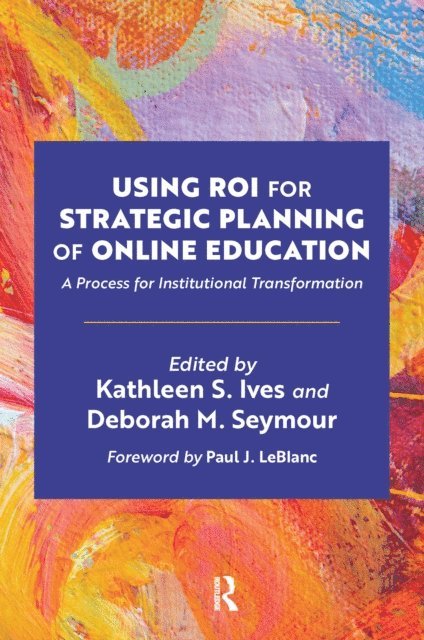
Published in association with While higher education has rarely employed ROI methodology—focusing more on balancing its revenue streams, such as federal, state, and local appropriations, tuition, and endowments with its costs—the rapid growth of online education and the history of how it has evolved, with its potential for institutional transformation and as a major source of revenue, as well as its need for substantial and long-term investment, makes the use of ROI an imperative. This book both demonstrates how ROI is a critical tool for strategic planning and outlines the process for determining ROI.The book’s expert contributors lay the foundation for developing new practices to meet the compelling challenges of online education and identify new models that offer the potential for transforming the educational system, meeting new workforce demands, and ultimately improving the economy. The opening chapters of the book explore the dimensions of ROI as a strategic planning process, offering guiding principles as well as methods of measurement and progress tracking, and demonstrate the impact of ROI across the institution.The book identifies the role of previously overlooked constituents—such as online professionals as critical partners for developing institutional strategy and institutional stakeholders for vital input on inclusivity, diversity, and equity—and their increasingly important role in impacting the ROI of online programs.Subsequent chapters offer a range of approaches to ROI reflecting the strategic priorities and types of return institutions seek from their investment in online programming, whether they be increased profits or surpluses via reduced expenses or increased operating efficiencies or the development of increased brand awareness for their programs. They also address the growing competitive environment of recent commercial entrants and online program managers (OPMs). The contributors offer best practices for setting goals and identifying benchmarks for increasing and measuring payback, including the creation of cross-functional ROI teams from across an institution; and further address the advantages and disadvantages of universities partnering with external providers, or even other colleges and universities, to provide online programs with them and for them. This book offers presidents and senior administrators, faculty engaged in shared governance, online learning administrators, and stakeholders representing student, community and employer interests with a rigorous process for developing an online strategy.
Using ROI for Strategic Planning of Online Education
A Process for Institutional Transformation
Häftad, Engelska, 2022
468 kr
Skickas inom 10-15 vardagar
Published in association with While higher education has rarely employed ROI methodology—focusing more on balancing its revenue streams, such as federal, state, and local appropriations, tuition, and endowments with its costs—the rapid growth of online education and the history of how it has evolved, with its potential for institutional transformation and as a major source of revenue, as well as its need for substantial and long-term investment, makes the use of ROI an imperative. This book both demonstrates how ROI is a critical tool for strategic planning and outlines the process for determining ROI.The book’s expert contributors lay the foundation for developing new practices to meet the compelling challenges of online education and identify new models that offer the potential for transforming the educational system, meeting new workforce demands, and ultimately improving the economy. The opening chapters of the book explore the dimensions of ROI as a strategic planning process, offering guiding principles as well as methods of measurement and progress tracking, and demonstrate the impact of ROI across the institution.The book identifies the role of previously overlooked constituents—such as online professionals as critical partners for developing institutional strategy and institutional stakeholders for vital input on inclusivity, diversity, and equity—and their increasingly important role in impacting the ROI of online programs.Subsequent chapters offer a range of approaches to ROI reflecting the strategic priorities and types of return institutions seek from their investment in online programming, whether they be increased profits or surpluses via reduced expenses or increased operating efficiencies or the development of increased brand awareness for their programs. They also address the growing competitive environment of recent commercial entrants and online program managers (OPMs). The contributors offer best practices for setting goals and identifying benchmarks for increasing and measuring payback, including the creation of cross-functional ROI teams from across an institution; and further address the advantages and disadvantages of universities partnering with external providers, or even other colleges and universities, to provide online programs with them and for them. This book offers presidents and senior administrators, faculty engaged in shared governance, online learning administrators, and stakeholders representing student, community and employer interests with a rigorous process for developing an online strategy.