
Kathryn Clarke Albright - Böcker
Visar alla böcker från författaren Kathryn Clarke Albright. Handla med fri frakt och snabb leverans.
2 produkter
2 produkter
340 kr
Skickas inom 7-10 vardagar
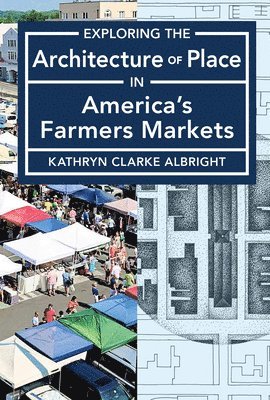
Exploring the Architecture of Place in America's Farmers Markets explores the elusive architectural states of these beloved community-gathering places. From classic market buildings such as Findlay Market in Cincinnati, to open-air pavilions in Durham North Carolina and pop-up canopy markets in Staunton, Virginia, the country currently has over 8,700 seasonal and year-round farmers markets.Architect, teacher, and founder of the Friends of the Farmers Market, Katheryn Clarke Albright combines historically informed architectural observation with interview material and images drawn from conversations with farmers, vendors, market managers and shoppers.Using eight scales of interaction and interface, Albright presents in-depth case studies to demonstrate how architectural elements and spatial conditions foster social and economic exchange between vendors, shoppers, and the community at large. Albright looks ahead to an emerging typology—the mobile market—bringing local farmers and healthy foods to underserved neighborhoods.The impact farmers markets make on their local communities inspires place-making, improves the local economy, and preserves rural livelihoods. Developed organically and distinctively out of the space they occupy, these markets create and revitalize communities as rich as the produce they sell.
Architecture Educators and Practitioners in Collaboration
Chicago Studio over 25 years
Häftad, Engelska, 2026
366 kr
Kommande
The book tells the unwritten story of Chicago Studio over 25 years—a semester-long, place-based, experiential learning program harnessing the city as a learning lab through engagement of practitioners, city leaders and neighbourhoods, while also providing pedagogical assessment and a look going forward. The authors have played various roles—lead educator, host firm, mentor—for the programme at various times and have come together to write their collective story. Architects usually write about buildings and their practices, but here the authors write about pedagogy and the collaboration between educators and practitioners. The book presents this unique model and what constitutes the elements for its resilience. It also includes pedagogical assessment of Chicago Studio with other transformational pedagogies globally. Originating in 2002, more than 400 students have benefitted from this programme. It developed from a network of professional and alumni relationships, and persisted as the network grew. The architects, allied professionals, city and community leaders rigorously supported the program through interactions with students – as mentor, critic, community activist, etc. Some contributors are well-known while others are emerging professionals. All have an unwavering commitment – every semester, every year. Over 20 Chicago architecture practices have served as host firms, over 250 allied practitioners, and many other community organisations and neighbourhood residents have impacted the students’ education.