Kathryn Crameri - Böcker
Visar alla böcker från författaren Kathryn Crameri. Handla med fri frakt och snabb leverans.
5 produkter
5 produkter
196 kr
Skickas inom 7-10 vardagar
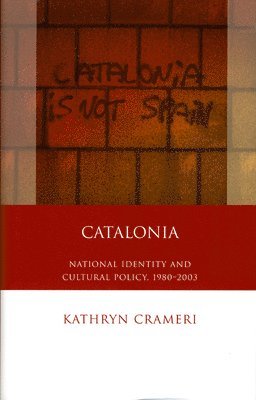
This book examines the cultural policy of the Catalan Autonomous Government under the leadership of Jordi Pujol and his party, Convergencia i Unio, which were in power from the post-Franco transitional period of 1980 to Pujol's retirement in 2003. Examining issues of national identity and cultural nationalism in the context of globalization, multiculturalism and the commodification of culture, the book looks at how Pujol's government attempted to tackle these challenges.
1 703 kr
Skickas inom 7-10 vardagar
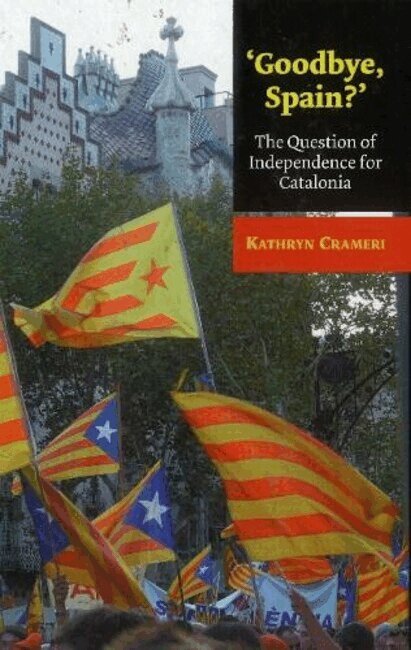
Support for independence in the Autonomous Community of Catalonia has risen significantly since 2005. Opinion polls confirm that the idea of holding a legally-binding referendum on independence is now supported by 80% of Catalans. Many commentators on nationalism in Western Europe had come to the conclusion that there was no serious threat to the established nation-states from secessionism within their borders. In The Identity of Nations (2007), Montserrat Guibernau wrote that decentralisation 'tames secessionism, both by offering significant power and resources to the national minorities it seeks to accommodate and by enticing regional political elites with the power, prestige and perks associated with devolution'. Scott Greer, in Nationalism and Self-Government (2007), wrote that secession 'seems unlikely' in the Catalan case because the regional political elites have too much to lose by such a move and are most concerned with winning further autonomy in specific areas that stabilise their own hold on regional power a conclusion called into question by the recent radicalisation in Catalan politics and civil society. Causes for these striking changes in public sentiment include changes in the Catalan political landscape since 2003, problems of infrastructure, public apathy with the political process, disillusionment with the Spanish government, a rise in anti-Catalan feeling from other Spaniards (and a rise in 'anti-Spanish' feeling among Catalans), the effects of the global financial crisis, and the bumpy ride experienced by Catalonia's new Statute of Autonomy. One notable change has been a shift in the dominant discourse of Catalan nationalism from concerns regarding language, culture and identity toward the political and economic welfare of Catalans. These political and economic discourses have overlaid rather than replaced cultural aspects. Published in association with the Canada Blanch Centre for Contemporary Spanish Studies / Catalan Observatory.
466 kr
Skickas inom 7-10 vardagar
Support for independence in the Autonomous Community of Catalonia has risen significantly since 2005. Opinion polls confirm that the idea of holding a legally-binding referendum on independence is now supported by 80% of Catalans. Many commentators on nationalism in Western Europe had come to the conclusion that there was no serious threat to the established nation-states from secessionism within their borders. In The Identity of Nations (2007), Montserrat Guibernau wrote that decentralisation 'tames secessionism, both by offering significant power and resources to the national minorities it seeks to accommodate and by enticing regional political elites with the power, prestige and perks associated with devolution'. Scott Greer, in Nationalism and Self-Government (2007), wrote that secession 'seems unlikely' in the Catalan case because the regional political elites have too much to lose by such a move and are most concerned with winning further autonomy in specific areas that stabilise their own hold on regional power a conclusion called into question by the recent radicalisation in Catalan politics and civil society. Causes for these striking changes in public sentiment include changes in the Catalan political landscape since 2003, problems of infrastructure, public apathy with the political process, disillusionment with the Spanish government, a rise in anti-Catalan feeling from other Spaniards (and a rise in 'anti-Spanish' feeling among Catalans), the effects of the global financial crisis, and the bumpy ride experienced by Catalonia's new Statute of Autonomy. One notable change has been a shift in the dominant discourse of Catalan nationalism from concerns regarding language, culture and identity toward the political and economic welfare of Catalans. These political and economic discourses have overlaid rather than replaced cultural aspects. Published in association with the Canada Blanch Centre for Contemporary Spanish Studies / Catalan Observatory.
1 097 kr
Skickas inom 10-15 vardagar
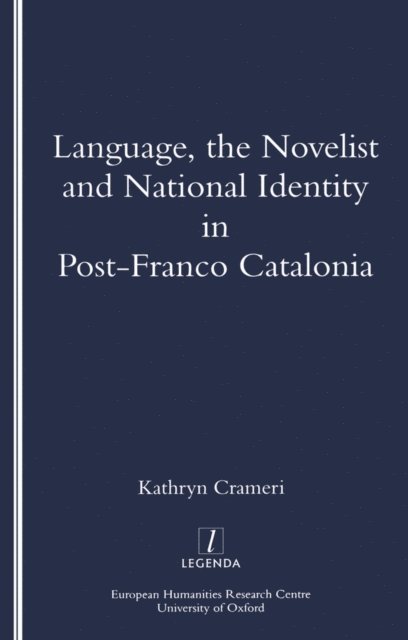
Kathryn Crameri reveals some of the complex responses of writers and literary critics to the new possibilities for the expression of Catalan identities which resulted from Spain's transition from dictatorship to democracy. The study begins by considering the cultural and political context of the Catalan novel from the 'Renaixenca' to the present day, and then offers a detailed analysis of novels by four very different writers - Montserrat Roig, Manuel de Pedrolo, Juan Marse (who writes in Spanish) and Biel Mesquida - all of whom seem to share an underlying thematic preoccupation with both individual and national 'transitions' and the intricate relationship between language and identity. These writers challenge institutionalised visions of the link between Catalanism, the Catalan language and Catalan literature, and offer a more pluralistic and personalised version of what it is to call oneself a Catalan.
128 kr
Skickas inom 11-20 vardagar