Kathryn Strom - Böcker
Visar alla böcker från författaren Kathryn Strom. Handla med fri frakt och snabb leverans.
4 produkter
4 produkter
Del 31 - Advances in Research on Teaching
Decentering the Researcher in Intimate Scholarship
Critical Posthuman Methodological Perspectives in Education
Inbunden, Engelska, 2018
1 106 kr
Skickas inom 7-10 vardagar
"Intimatescholarship" refers to qualitative methodologies, such as self-study and autoethnography, that directly engage the personalexperience, knowledge, and/or practices of the researcher(s) as the focus ofinquiry. While intimate scholarship offers entrypoints into non-binary thinkingby blurring the line between researcher/researched, much work in this genrecontinues to reinforce a humanist "I". In this volume, we ask what happens whenthe researcher in forms of intimate scholarship is decentered, or is consideredas merely one part of an entangled material-discursive formation.Chapters in this volume highlight ways that researchersof teaching and teacher education can advance conversations in education while exploring theories with an ontological view of theworld as fundamentally multiple, dynamic, and fluid. Drawing on a range of methods, authors "put to work" posthuman, non-linear, and multiplistic theories and concepts todisrupt and decenter the "I" in intimate methodologies. Also featured in this volumeare conversations with leading posthuman scholars, whohighlight the possibilities and challenges of decentering the researcher inintimate scholarship as a practice of social justice research.
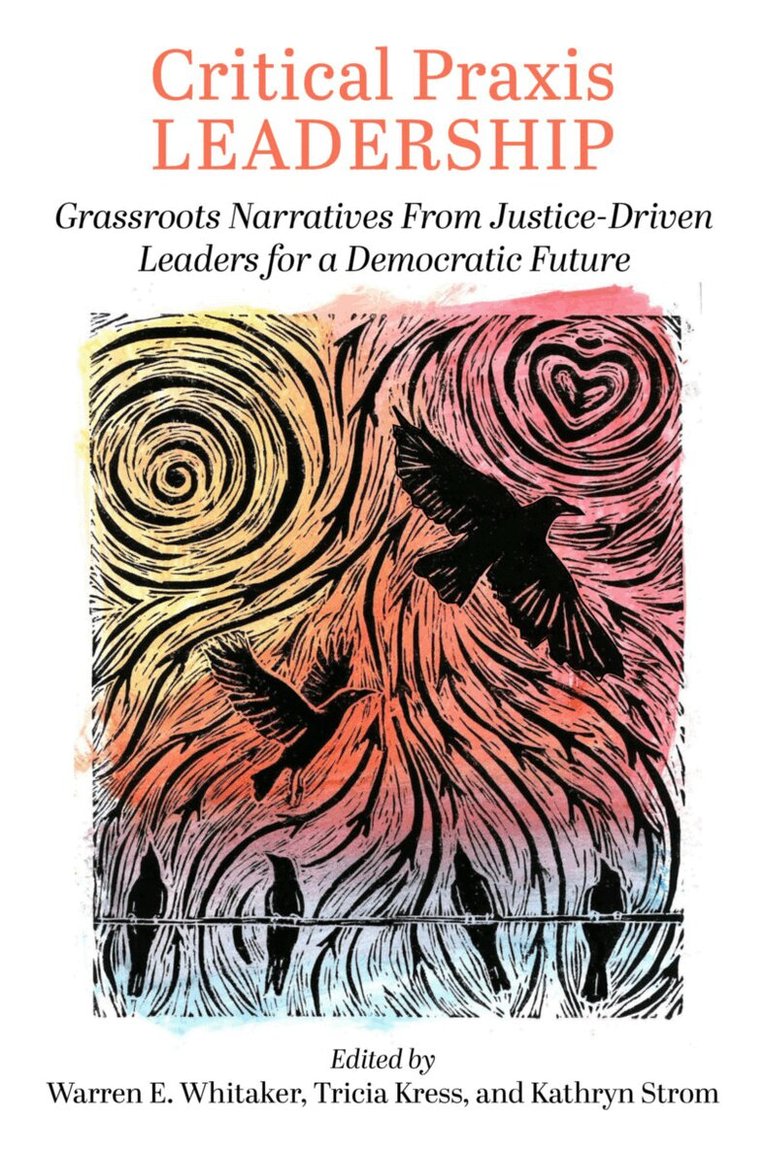
Critical Praxis Leadership
Grassroots Narratives from Justice-Driven Leaders for a Democratic Future
Häftad, Engelska, 2025
454 kr
Skickas inom 7-10 vardagar
Critical Praxis Leadership: Grassroots Narratives from Justice-Driven Leaders for a Democratic Future is a powerful new book written for a broad audience of educators devoted to achieving equity in public education. In the wake of the past 50 years of surging neoliberal economics, policy and ideology that have given rise to emboldened far-Right movements, the weaknesses of democracy as a political project for promoting equity and justice are revealing themselves in multiple spheres of social life. In the U.S., protectionist and isolationist policies enmeshed with xenophobia, racism, misogyny, homo- and transphobia, and ablism lay bare the historical architecture of inequitable and unjust social structures that provide fuel for the engines of economic and social disparity. Education, long saddled with the Sisyphean task of leveling the playing field and affording economic advancement for economically and socially marginalized populations, has been effectively reeled into an administrative agenda aimed toward maintaining social reproduction which continues to funnel Black, Brown, female, disabled and queer bodies into subordinate social roles and carceral institutions or vanquish them entirely from social life. Within this shameless historical moment of cruelty, it is crucial to highlight the stories and experiences of leaders dedicated to cultivating equitable and just environments amid this global crisis. Justice-driven leaders who engage in critical praxis leadership emphasize grassroots efforts for genuine, actionable change rather than performative gestures or media attention. Their work unfolds in diverse contexts, motivated by different factors and involving varied groups of people. Critical Praxis Leadership features theoretically rich, practically grounded narratives from PK-12 and higher education leaders who strive to become justice-driven in their day-to-day work. As PK-12 school administrators, higher education administrators, union leaders, and community leaders reflect on the ways their praxis is informed by Black feminist, anti/decolonial, posthuman, anti-oppressive and other critical frameworks, readers will be immersed in real-life experiences by a variety of voices. They will get an inside look into how justice-driven leaders strive to live their philosophy in their practice and navigate complex situations while striving toward equitable change in institutions of learning. Practical for professors and students alike, readers will experience real world narratives, praxis-oriented questions and activities, and evocative artwork. While walking alongside current leaders in the field, readers are invited to unpack their own philosophies of justice-driven leadership and engage with thinking/doing justice-driven leadership differently to refine their visions of leadership through a lens of complexity and futurity. The activities and narratives in this book remind readers of the ever-presence of the past in who we are and who we wish to be as educational leaders working within historically rooted institutions designed to maintain systems of power and oppression. They remind readers of the deep colonial and racist roots that still shape the lives of learners and leaders alike, and they propose a movement toward a just future. Readers are encouraged to revisit the past, reclaim their knowledge of how social and institutional systems came to be what they are, and choose to do leadership differently as best they can, always working toward justice that lay on the horizon. Perfect for courses such as: Foundations of Educational Leadership, School Leaders as Change Agents, Leadership in Higher Education, Critical Perspective on Educational Leadership, Leadership for Equity and Inclusion, and Collaborative Approaches to Educational Leadership
313 kr
Skickas inom 7-10 vardagar
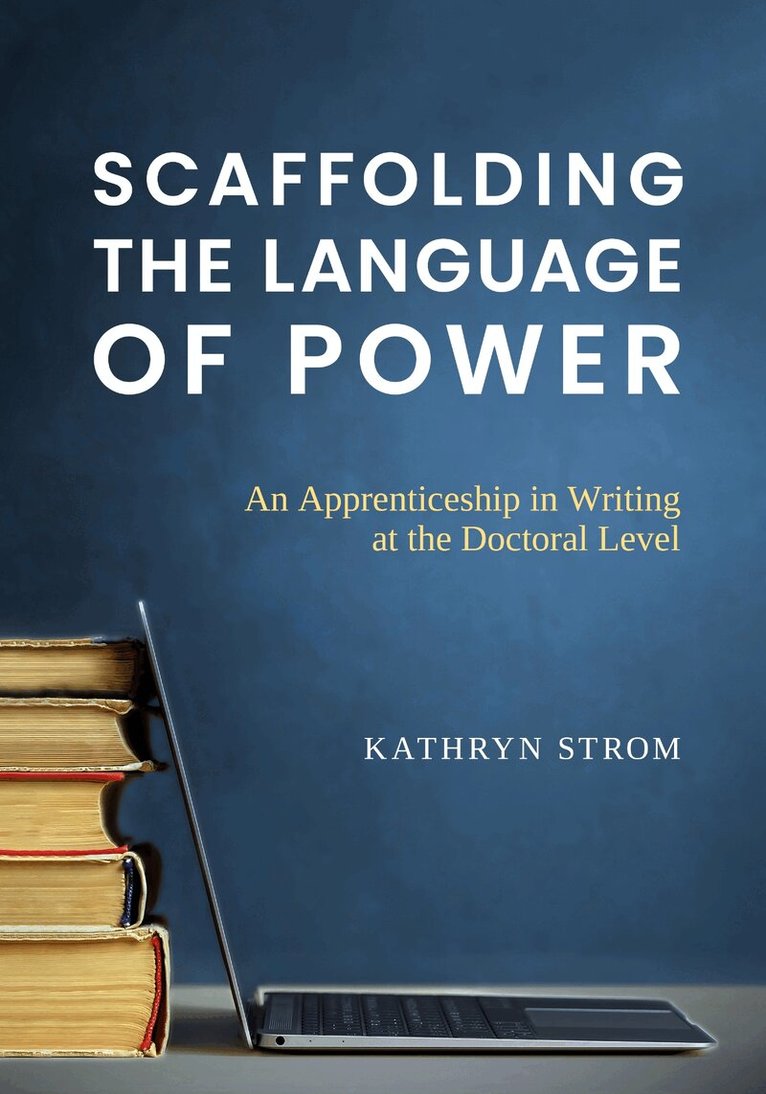
This workbook is a supplement to the textbook Scaffolding the Language of Power: An Apprenticeship in Doctoral-Level Writing. One of the features of the textbook is accompanying activities that are scaffolded and carefully sequenced to help students identify key ideas and generate text that can be used to build out the elements of each major dissertation task (e.g., problem statement, literature review, and so on). However, these are mainly offered in abbreviated form due to space limitations.This supplemental workbook contains all the activities from the textbook in expanded form so that students can engage more fully with warm-ups, free-writes, analyses of mentor texts and examples, graphic organizers, and guided writing exercises. These activities are also accompanied with additional free-write prompts as well as bonus discussion questions for extended sense-making.Individual chapters include:1. Introduction: A Three-Pronged Approach to Writing at the Doctoral Level. This chapter provides discussion questions that help students make meaning of the three key ideas of the three main ideas that inform the book: critical perspectives on language, systemic functional linguistics, and sociocultural theory/scaffolding. Additional free-writing prompts are included that help students make personal connections to these ideas from their past and present experiences.2. The Rules: Writing as a Pedagogical Act. This chapter provides discussion questions and personal connection prompts for the first "rule" of the Language of Power framework: doctoral writing is organized and scaffolded. Exercises are then provided for readers to practice five different organization and scaffolding strategies, including headings/chunking, road maps, topic sentences, signal phrases, and transitions/connectors.3. The Rest of the Rules of the Language of Power. This chapter explores the remaining five rules of the "Language of Power" framework. Discussion questions and personal connection prompts are provided for each rule. Exercises are provided that help students practice key skills, including making well-reasoned arguments, identifying and using compelling evidence, writing with specificity and detail, synthesizing information, and developing original voice.4. The Problem Statement. This chapter provides discussion questions regarding the problem statement and its purposes: to explain the problem, convince the reader that the issue is indeed a problem, and describe how the proposed study will begin to address that problem. Exercises are provided that help students articulate the particular problem that will be driving their study, with graphic organizers that break down each part of the problem statement, including the problem summary, the problem background, the rationale of the study, and the purpose statement. Writing activities are also provided that help students take the text generated from these organizers, craft them into problem statement sections, and edit them.5. The Literature Review. This chapter provides discussion questions and personal connection prompts relating to the purposes and processes of the literature review. Activities and tools are provided for article analysis and pre-writing, as well as exercises in which readers analyze exemplars for writing moves. Graphic organizers and writing exercises are provided to help students create an overall schema for their literature review, identify and articulate gaps in the literature, build out levels of claims, and select and summarize exemplars.6. The Theoretical Framework. This chapter provides discussion questions and personal connection prompts regarding the theoretical foundation of the dissertation and its purposes. Graphic organizers and writing exercises are provided to help students craft a rationale for using the framework, define their theories or perspectives, provide a background of the theory or theories, and discuss the key concepts of the framework.7. The Methodology Chapter. This chapter provides activities that help students think through and describe their research design in clear and detailed terms. Exercises and graphic organizers are provided that help readers generate a description of their their methodology, participants and setting, data sources and procedures, analysis methods, trustworthiness, and positionality. Additional exercises are offered to help students map connections between their methodology, theoretical framework, and study purpose to ensure a coherent design.8. The Findings Chapter. This chapter provides warm-ups and discussion questions for building out the "results" chapter of the dissertation. Activities and exercises help readers create an overarching organizational structure for their findings, anchor them with major assertions, support those claims with compelling evidence, and provide analytic explanation. Additional activities are provided to help students reflect on the ways that they purposefully scaffold their readers' understanding throughout the chapter and the ways that they meet the trustworthiness criteria they created for themselves in the previous chapter.9. The Discussion and Recommendations Chapter. This chapter provides discussion prompts to help students think through the purposes of the discussion and recommendations sections of the dissertation and begin generating text for both. Activities and graphic organizers support students to develop conclusions based on the findings, connect their findings and conclusions to extant literature, generate theoretical readings of their findings and conclusions, and draw out recommendations for addressing the initial problem they identified in the first chapter. Final exercises help students generate main take-aways and contributions, which they will use to develop their dissertation conclusion and abstract.
965 kr
Skickas inom 7-10 vardagar
BookScaffolding the Language of Power: An Apprenticeship in Doctoral Level Writing offers an accessible, practical, hands-on guide to developing the skills needed to successfully write a doctoral dissertation or thesis. This textbook-workbook hybrid can be used both as a program/course text and as a supplement for individual doctoral students in education and related social science and humanities fields.The book is built on three main ideas. First, writing is fundamentally connected to issues of social justice. Doctoral-level writing is part of the "language of power" in academia, which builds on the linguistic patterns of the dominant culture and serves as a gatekeeping mechanism. Second, writing is genre-based. This means that doctoral level writing is a particular way of using language, or a specific genre, with distinct rules and structures that can be taught. And third, writing can be scaffolded. Approaching writing as a pedagogical act that supports readers' understanding through purposeful scaffolding is not just a way to successfully complete a doctoral dissertation—it is a way to make academic writing more accessible in general.Workbook:The workbook is a supplement to the textbook featuring accompanying activities that are scaffolded and carefully sequenced to help students identify key ideas and generate text that can be used to build out the elements of each major dissertation task (e.g., problem statement, literature review, and so on).This supplemental workbook contains all the activities from the textbook in expanded form so that students can engage more fully with warm-ups, free-writes, analysis of mentor texts and examples, graphic organizers, and guided writing exercises. These activities are also accompanied with additional free-write prompts as well as bonus discussion questions for extended sense-making.Individual chapters include:1. Introduction: A Three-Pronged Approach to Writing at the Doctoral Level.2. The Rules: Writing as a Pedagogical Act.3. The Rest of the Rules of the Language of Power.4. The Problem Statement..5. The Literature Review.6. The Theoretical Framework.7. The Methodology Chapter.8. The Findings Chapter.9. The Discussion and RecommendationsThis book and workbook combo is appropriate for any course on academic writing in EdD or PhD programs. It is also useful for courses that teach how to write a problem statement, literature review, and/or theoretical framework. Additional courses include: Qualitative Research; Qualitative Practicum/pilot study courses; and Dissertation seminar and support courses.