2 544 kr
Skickas inom 10-15 vardagar
2 544 kr
Skickas inom 10-15 vardagar
745 kr
Skickas inom 10-15 vardagar
873 kr
Läs direkt efter köp
Beyond Women’s Words unites feminist scholars, artists, and community activists working with the stories of women and other historically marginalized subjects to address the contributions and challenges of doing feminist oral history.
Feminists who work with oral history methods want to tell stories that matter. They know, too, that the telling of those stories—the processes by which they are generated and recorded, and the different contexts in which they are shared and interpreted—also matters—a lot. Using Sherna Berger Gluck and Daphne Patai’s classic text, Women’s Words, as a platform to reflect on how feminisms, broadly defined, have influenced, and continue to influence, the wider field of oral history, this remarkable collection brings together an international, multi-generational, and multidisciplinary line-up of authors whose work highlights the great variety in understandings of, and approaches to, feminist oral histories.
Through five thematic sections, the volume considers Indigenous modes of storytelling, feminism in diverse locales around the globe, different theoretical approaches, oral history as performance, digital oral history, and oral history as community-engagement. Beyond Women’s Words is ideal for students of oral history, anthropology, public history, women’s and gender history, and Women’s and Gender Studies, as well as activists, artists, and community-engaged practitioners.
873 kr
Läs direkt efter köp
Beyond Women’s Words unites feminist scholars, artists, and community activists working with the stories of women and other historically marginalized subjects to address the contributions and challenges of doing feminist oral history.
Feminists who work with oral history methods want to tell stories that matter. They know, too, that the telling of those stories—the processes by which they are generated and recorded, and the different contexts in which they are shared and interpreted—also matters—a lot. Using Sherna Berger Gluck and Daphne Patai’s classic text, Women’s Words, as a platform to reflect on how feminisms, broadly defined, have influenced, and continue to influence, the wider field of oral history, this remarkable collection brings together an international, multi-generational, and multidisciplinary line-up of authors whose work highlights the great variety in understandings of, and approaches to, feminist oral histories.
Through five thematic sections, the volume considers Indigenous modes of storytelling, feminism in diverse locales around the globe, different theoretical approaches, oral history as performance, digital oral history, and oral history as community-engagement. Beyond Women’s Words is ideal for students of oral history, anthropology, public history, women’s and gender history, and Women’s and Gender Studies, as well as activists, artists, and community-engaged practitioners.
365 kr
Skickas inom 5-8 vardagar
394 kr
Läs direkt efter köp
394 kr
Läs direkt efter köp
287 kr
Kommande
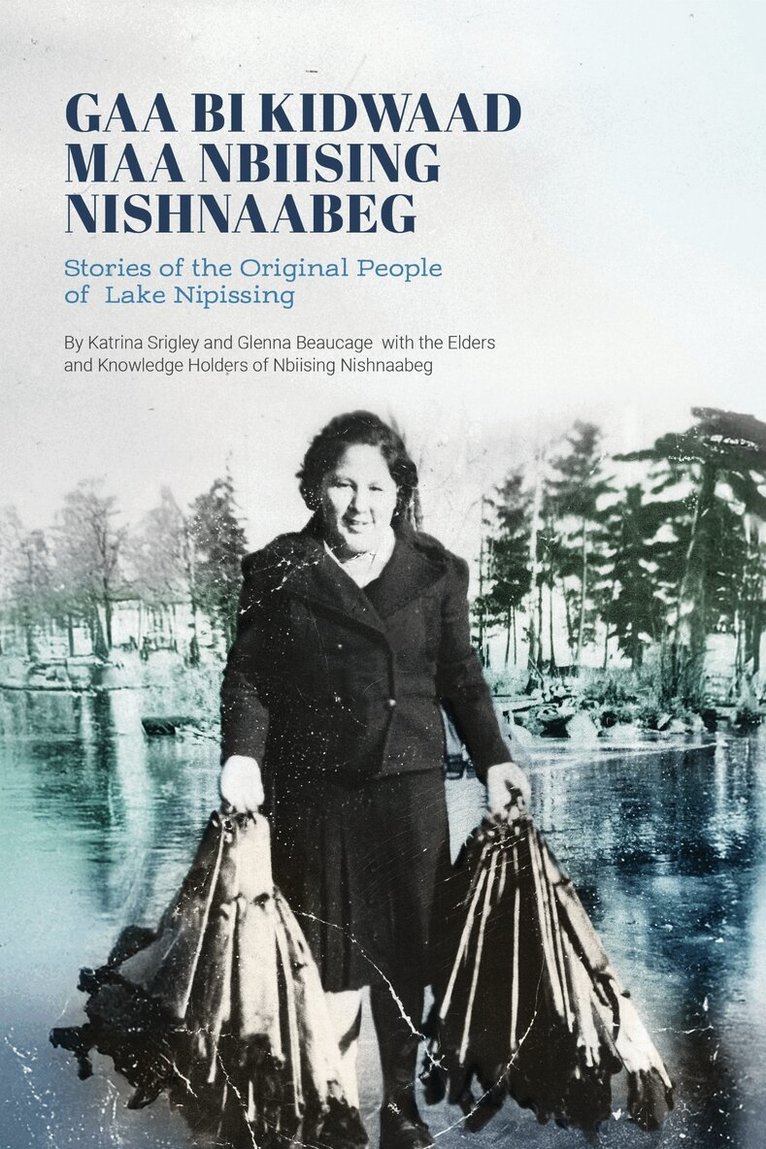
Gaa Bi Kidwaad Maa Nbiising Nishnaabeg:The Stories of the Original People of Lake Nipissing shares the history of Nbissing Nishnaabeg (the people of Nipissing First Nation) from the perspectives of the community, the land, and the lake that holds their name. This social and cultural history explores themes of creation and language; women and gender; family, community, and nation; governance and education; and land and water through the dbaajmowin(an) (everyday stories) and aansokan(an) (sacred stories) of Nbissing. These stories live in the memories of Elders and knowledge holders, on the land and waterways, in Nishnaabemwin (the language), and in community and archival records.
The stories are accompanied by photographs from Nipissing First Nation’s extensive heritage collection, which challenge the silences and erasures imposed by settler colonialism. Telling stories of strength, joy, and resilience, they document the historical, social, and cultural continuities and changes of the 20th century for this territory and its people.
In centring Nbissing Nishnaabeg histories and ways of knowing, as well as text in Nishnaabemwin, Gaa Bi Kidwaad Maa Nbiising Nishnaabeg reshapes what we understand about Nbiising, the little waters of the Great Lakes region. At its heart, this book acknowledges and demonstrates the possibility of history to cultivate, strengthen, and support diverse connections to place and kin, offering direction to the next seven generations.