Kayo Matsushita - Böcker
Visar alla böcker från författaren Kayo Matsushita. Handla med fri frakt och snabb leverans.
3 produkter
3 produkter
Del 1 - Translation, Interpreting and Transfer
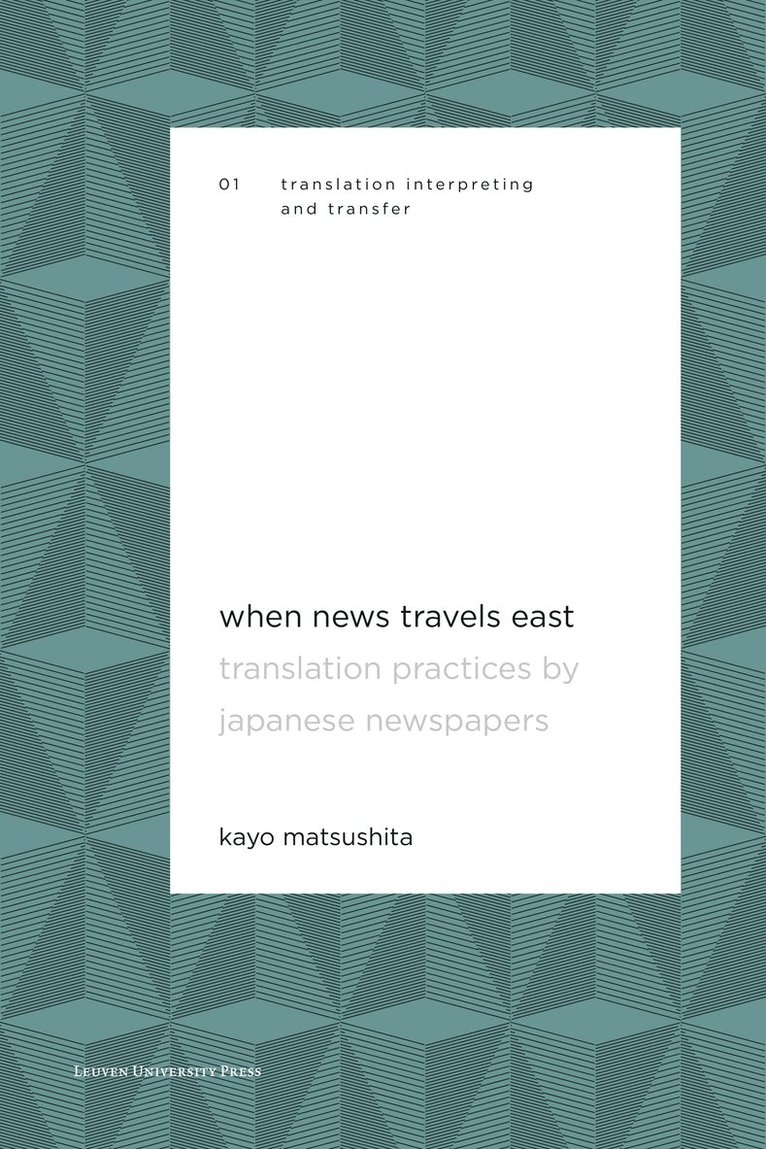
When News Travels East
Translation Practices by Japanese Newspapers
Häftad, Engelska, 2019
531 kr
Skickas inom 11-20 vardagar
Journalism and unique translation practices by Japanese media todayInternational news stories provided to the public basically rely on translation. Most of this translation is done not by translators, but by journalists with practically no training in translation. What happens when the norms of journalism and those of translation clash? In this book, the author, a trained conference interpreter and former international journalist, investigates translator decisions in the practice of Japanese news translation. Her extensive analysis of texts from six major Japanese newspapers and interviews with Japanese “journalators” focuses on direct quotations, where accuracy is a journalistic priority but can generate loss of communication impact if implemented rigidly. She argues that many shifts from accuracy can be explained as risk management strategies. When News Travels East provides invaluable insight from an insider about news translation in Japan and beyond and paves the way for further research in the field.This publication is GPRC-labeled (Guaranteed Peer-Reviewed Content).
1 749 kr
Skickas inom 10-15 vardagar
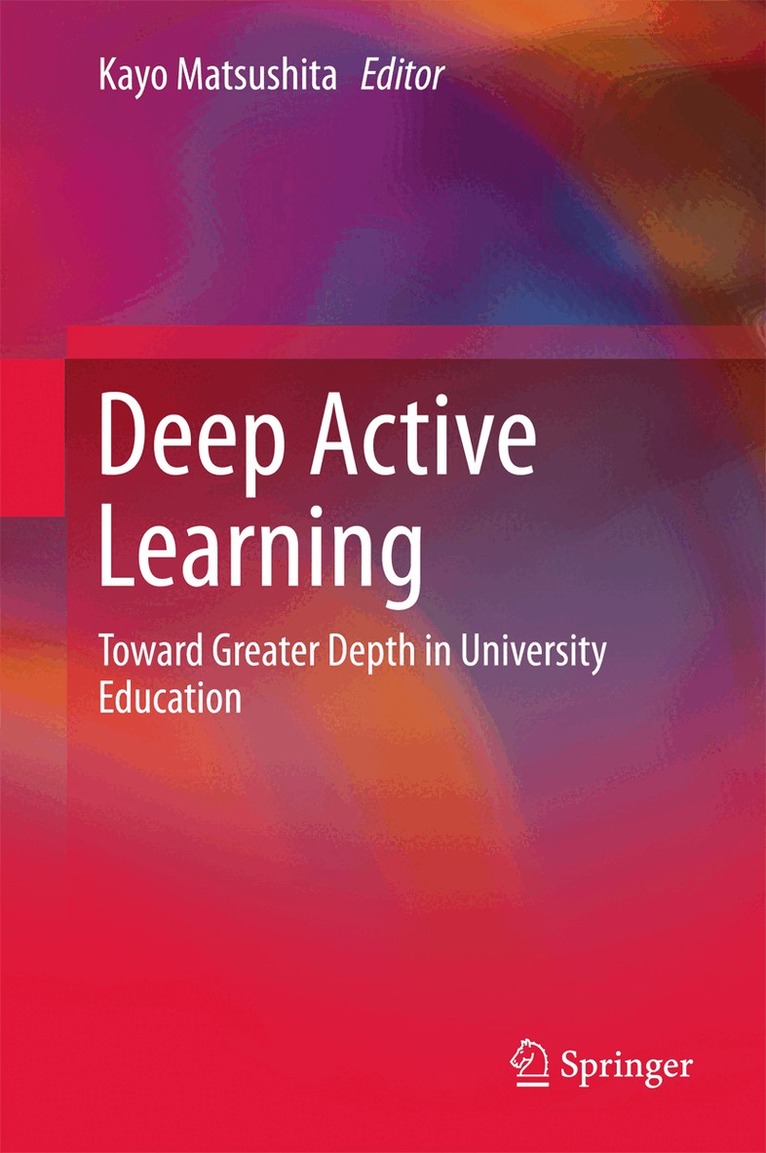
This is the first book to connect the concepts of active learning and deep learning, and to delineate theory and practice through collaboration between scholars in higher education from three countries (Japan, the United States, and Sweden) as well as different subject areas (education, psychology, learning science, teacher training, dentistry, and business).It is only since the beginning of the twenty-first century that active learning has become key to the shift from teaching to learning in Japanese higher education. However, “active learning” in Japan, as in many other countries, is just an umbrella term for teaching methods that promote students’ active participation, such as group work, discussions, presentations, and so on.What is needed for students is not just active learning but deep active learning. Deep learning focuses on content and quality of learning whereas active learning, especially in Japan, focuses on methods of learning. Deep active learning is placed at the intersection of active learning and deep learning, referring to learning that engages students with the world as an object of learning while interacting with others, and helps the students connect what they are learning with their previous knowledge and experiences as well as their future lives.What curricula, pedagogies, assessments and learning environments facilitate such deep active learning? This book attempts to respond to that question by linking theory with practice.
1 749 kr
Skickas inom 10-15 vardagar
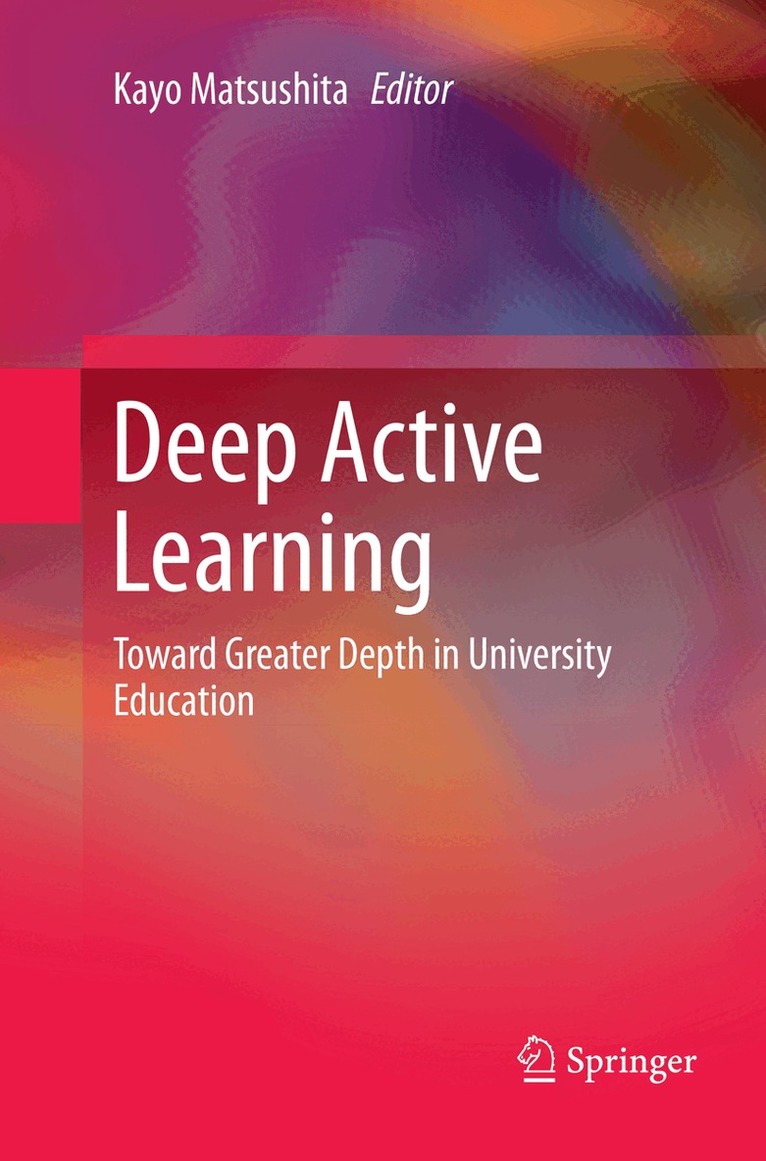
This is the first book to connect the concepts of active learning and deep learning, and to delineate theory and practice through collaboration between scholars in higher education from three countries (Japan, the United States, and Sweden) as well as different subject areas (education, psychology, learning science, teacher training, dentistry, and business).It is only since the beginning of the twenty-first century that active learning has become key to the shift from teaching to learning in Japanese higher education. However, “active learning” in Japan, as in many other countries, is just an umbrella term for teaching methods that promote students’ active participation, such as group work, discussions, presentations, and so on.What is needed for students is not just active learning but deep active learning. Deep learning focuses on content and quality of learning whereas active learning, especially in Japan, focuses on methods of learning. Deep active learning is placed at the intersection of active learning and deep learning, referring to learning that engages students with the world as an object of learning while interacting with others, and helps the students connect what they are learning with their previous knowledge and experiences as well as their future lives.What curricula, pedagogies, assessments and learning environments facilitate such deep active learning? This book attempts to respond to that question by linking theory with practice.