Kayri Havens-Young – författare
Visar alla böcker från författaren Kayri Havens-Young. Handla med fri frakt och snabb leverans.
3 produkter
3 produkter
E-bok
PDF, Engelska, 2014677 kr
Läs direkt efter köp
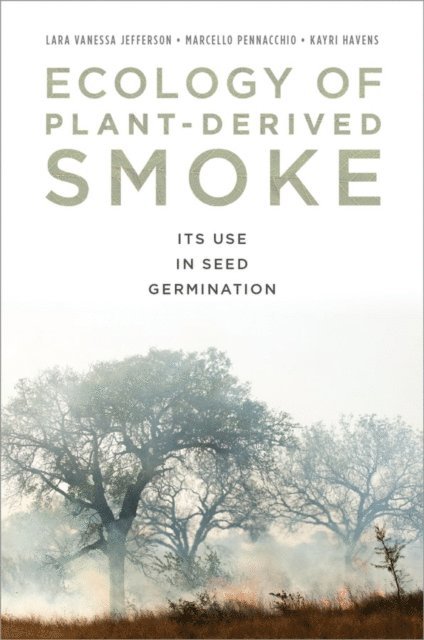
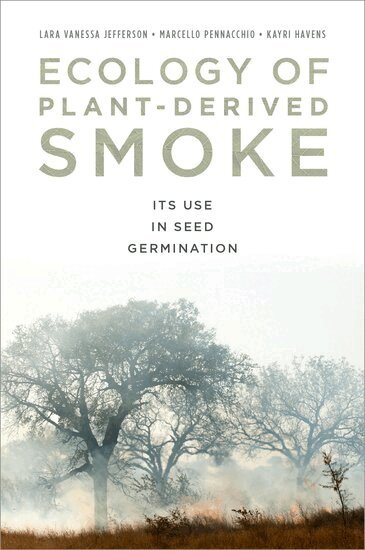
Ecology of Plant-Derived Smoke is the continuation of the research and discussion presented in Uses & Abuses of Plant-Derived Smoke, published in 2010. Both books are the first of their kind in what is now an ever-expanding and exciting field of research. This volume focuses on the use of plant-derived smoke as a tool, used for promoting seed germination and growth.Our ancestors may have used smoke in this capacity for centuries. Only recently has the scientific community delved into understanding the ecology of smoke as a seed dormancy-breaking mechanism in fire-prone environments. Most research to date has focused on the fire-prone Mediterranean environments of the western U.S.A., Western Australia and South Africa. These environments are among the richest floristic regions in the world, and require ecological understanding in order to be managed properly. This includes knowledge of that role that smoke plays in these ecosystems. Ecology of Plant Derived Smoke presents accounts of 1355 species of plants, from 120 families, whose seed have been tested for their response to aerosol smoke, smoke water, and plant-derived smoke. Each account includes a short summary of research findings, along with any other relevant information. Ecology of Plant-Derived Smoke is a comprehensive resource for ecologists seeking to understand the properties of smoke as they relate to ecosystems.
Inbunden, Engelska, 2014
1 065 kr
Skickas inom 5-8 vardagar
Ecology of Plant-Derived Smoke is the continuation of the research and discussion presented in Uses & Abuses of Plant-Derived Smoke, published in 2010. Both books are the first of their kind in what is now an ever-expanding and exciting field of research. This volume focuses on the use of plant-derived smoke as a tool, used for promoting seed germination and growth.Our ancestors may have used smoke in this capacity for centuries. Only recently has the scientific community delved into understanding the ecology of smoke as a seed dormancy-breaking mechanism in fire-prone environments. Most research to date has focused on the fire-prone Mediterranean environments of the western U.S.A., Western Australia and South Africa. These environments are among the richest floristic regions in the world, and require ecological understanding in order to be managed properly. This includes knowledge of that role that smoke plays in these ecosystems. Ecology of Plant Derived Smoke presents accounts of 1355 species of plants, from 120 families, whose seed have been tested for their response to aerosol smoke, smoke water, and plant-derived smoke. Each account includes a short summary of research findings, along with any other relevant information. Ecology of Plant-Derived Smoke is a comprehensive resource for ecologists seeking to understand the properties of smoke as they relate to ecosystems.
Häftad, Engelska, 2004
637 kr
Skickas inom 11-20 vardagar
Faced with widespread and devastating loss of biodiversity in wild habitats, scientists have developed innovative strategies for studying and protecting targeted plant and animal species in "off-site" facilities such as botanic gardens and zoos. Such ex situ work is an increasingly important component of conservation and restoration efforts.Ex Situ Plant Conservation, edited by Edward O. Guerrant Jr., Kayri Havens, and Mike Maunder, is the first book to address integrated plant conservation strategies and to examine the scientific, technical, and strategic bases of the ex situ approach. The book examines where and how ex situ investment can best support in situ conservation. Ex Situ Plant Conservation outlines the role, value, and limits of ex situ conservation as well as updating best management practices for the field, and is an invaluable resource for plant conservation practitioners at botanic gardens, zoos, and other conservation organizations; students and faculty in conservation biology and related fields; managers of protected areas and other public and private lands; and policymakers and members of the international community concerned with species conservation.