K.D. Muller – författare
Visar alla böcker från författaren K.D. Muller. Handla med fri frakt och snabb leverans.
3 produkter
3 produkter
E-bok
PDF, Engelska, 2014779 kr
Läs direkt efter köp
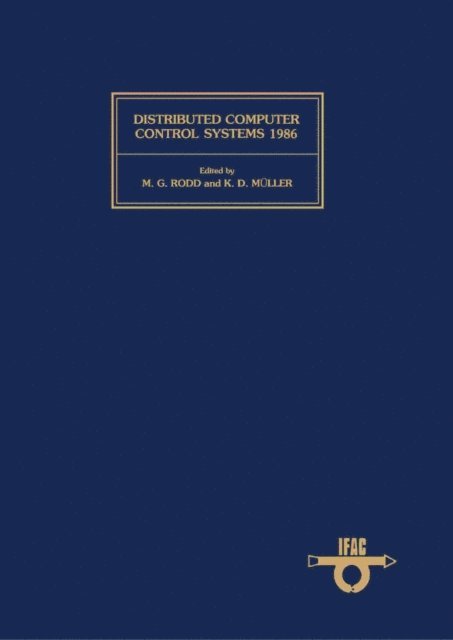
This seventh IFAC workshop on distributed control systems (DCCS) discusses the ideas of real-time synchronization and data consistency in industry, with emphasis on the Manufacturing Automation Protocol (MAP). The volume also debates the gulf between the computer scientist''s approach to language and the needs of the application programmer. In addition to treating relevant topics, each session has an introductory paper and a panel discussion, to give a complete picture of the progress and research in this computer field today.
Del 19 - Research Group for European Migration Problems
Pioneer Settlement in South Brazil: The Case of Toledo, Paraná
Häftad, Engelska, 1974
565 kr
Skickas inom 10-15 vardagar
In the period since the end of world War II numerous develop ing countries have employed colonization, or planned pioneer settlement, as one method of building a more reliable and bal anced economy. It is felt that the traditional, single-sided sys tems of farm ownership and production with their latifundium and minifundium holdings will gradually and peacefully become less prominent as better settlement systems are introduced and extended. Marked increases in population pressure, large tracts of unused or underused land, and modern improvements in set tlement planning are among other compelling reasons for star ting colonization programs. Of all the areas in the world, the continent of South America probably has the widest variety of planned pioneer settlements as well as the most sizeable programs. Brazil, the largest country on the continent, is actively engaged in populating the vast, emp ty spaces of its interior, and provides excellent opportunities for the scholarly investigation of new frontier settlement types. In addition to the academic discussion of the origin and develop ment of these expressions of man's expansion into marginal ar eas, the critical examination of relatively new attempts at land settlement is a useful thing because what is to be learned from such studies may be directly applicable to other pioneer zones and, moreover, may be of vital significance to overall economic improvement on the continent. In this monograph, my student, K. Muller, analyzes the South Brazilian frontier colony of Toledo, Parana, founded in 1946.
E-bok
PDF, Engelska, 2012708 kr
Läs direkt efter köp
In the period since the end of world War II numerous develop ing countries have employed colonization, or planned pioneer settlement, as one method of building a more reliable and bal anced economy. It is felt that the traditional, single-sided sys tems of farm ownership and production with their latifundium and minifundium holdings will gradually and peacefully become less prominent as better settlement systems are introduced and extended. Marked increases in population pressure, large tracts of unused or underused land, and modern improvements in set tlement planning are among other compelling reasons for star ting colonization programs. Of all the areas in the world, the continent of South America probably has the widest variety of planned pioneer settlements as well as the most sizeable programs. Brazil, the largest country on the continent, is actively engaged in populating the vast, emp ty spaces of its interior, and provides excellent opportunities for the scholarly investigation of new frontier settlement types. In addition to the academic discussion of the origin and develop ment of these expressions of man''s expansion into marginal ar eas, the critical examination of relatively new attempts at land settlement is a useful thing because what is to be learned from such studies may be directly applicable to other pioneer zones and, moreover, may be of vital significance to overall economic improvement on the continent. In this monograph, my student, K. Muller, analyzes the South Brazilian frontier colony of Toledo, Parana, founded in 1946.