Keijiro Araki – författare
Visar alla böcker från författaren Keijiro Araki. Handla med fri frakt och snabb leverans.
10 produkter
IFM'99
Proceedings of the 1st International Conference on Integrated Formal Methods, York, 28–29 June 1999
Av Kenji Taguchi, Andy Galloway m. fl.
E-bok, 2012
1502 kr
Lägg i varukorg
Formal methods have been established as the rigorous engineering methodology for the system development. Applying formal methods to a large and complex system development often requires the modelling of different aspects of such a system. For instance, complex systems (such as integrated avionics …
IFM’99
Proceedings of the 1st International Conference on Integrated Formal Methods, York, 28–29 June 1999
Av Keijiro Araki, Andy Galloway m. fl.
Häftad, 1999
1126 kr
Lägg i varukorg
Formal methods have been established as the rigorous engineering methodology for the system development. Applying formal methods to a large and complex system development often requires the modelling of different aspects of such a system. For instance, complex systems (such as integrated avionics …
RIMS Symposium on Software Science and Engineering II
Proceedings of the Symposia 1983 and 1984, Kyoto, Japan
Av Eiichi Goto, Keijiro Araki m. fl.
Häftad, 1986
566 kr
Lägg i varukorg
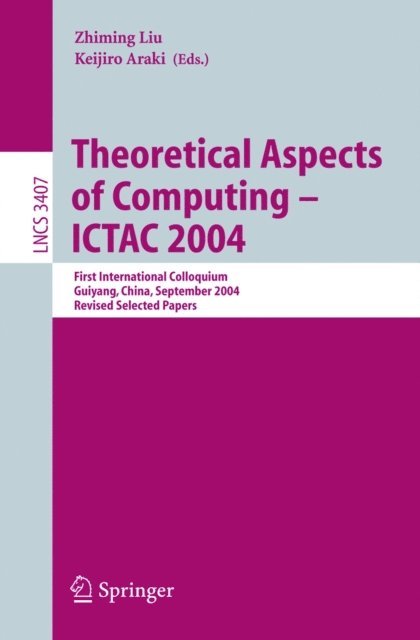
Theoretical Aspects of Computing - ICTAC 2004
First International Colloquium Guiyand, China, September 20-24, 2004, Revised Selected Papers
Häftad, 2005
1126 kr
Lägg i varukorg
This volume contains the proceedings of ICTAC 2004, the 1st International Colloquium on Theoretical Aspects of Computing, which was held in Guiyang, China on 20-24 September 2004. ICTAC was founded by the International Institute for Software Technology of the United Nations University (UNU-IIST). …
Theoretical Aspects of Computing - ICTAC 2004
First International Colloquium Guiyand, China, September 20-24, 2004, Revised Selected Papers
E-bok, 2005
1502 kr
Lägg i varukorg
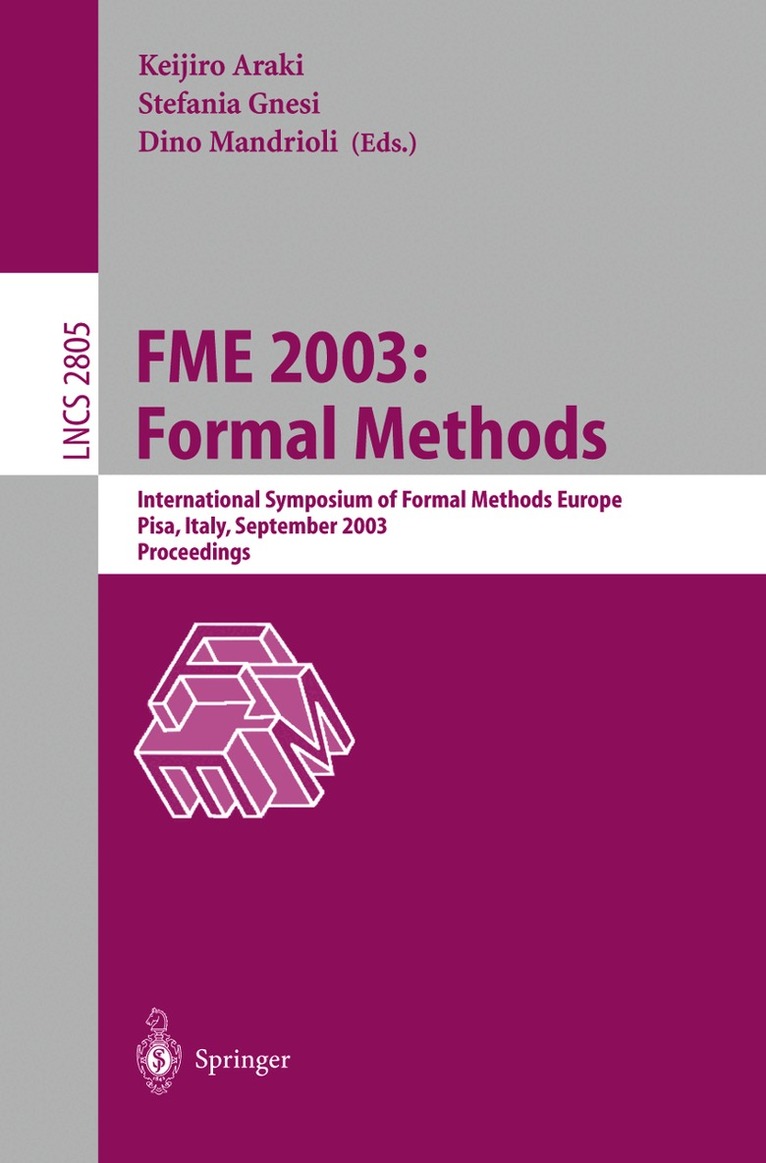
FME 2003: Formal Methods
International Symposium of Formal Methods Europe. Pisa Italy, September 8-14, 2003, Proceedings
Av Keijiro Araki, Stefania Gnesi m. fl.
Häftad, 2003
1126 kr
Lägg i varukorg
ThisvolumecontainstheproceedingsofFM2003,the12thInternationalFormal Methods Europe Symposium which was held in Pisa, Italy on September 8–14, 2003. Formal Methods Europe (FME, www. fmeurope. org) is an independent - sociation which aims to stimulate the use of and research on formal methods for …
FME 2003: Formal Methods
International Symposium of Formal Methods Europe. Pisa Italy, September 8-14, 2003, Proceedings
Av Dion Mandrioli, Stefania Gnesi m. fl.
E-bok, 2003
1470 kr
Lägg i varukorg
ThisvolumecontainstheproceedingsofFM2003,the12thInternationalFormal Methods Europe Symposium which was held in Pisa, Italy on September 8–14, 2003. Formal Methods Europe (FME, www. fmeurope. org) is an independent - sociation which aims to stimulate the use of and research on formal methods for …
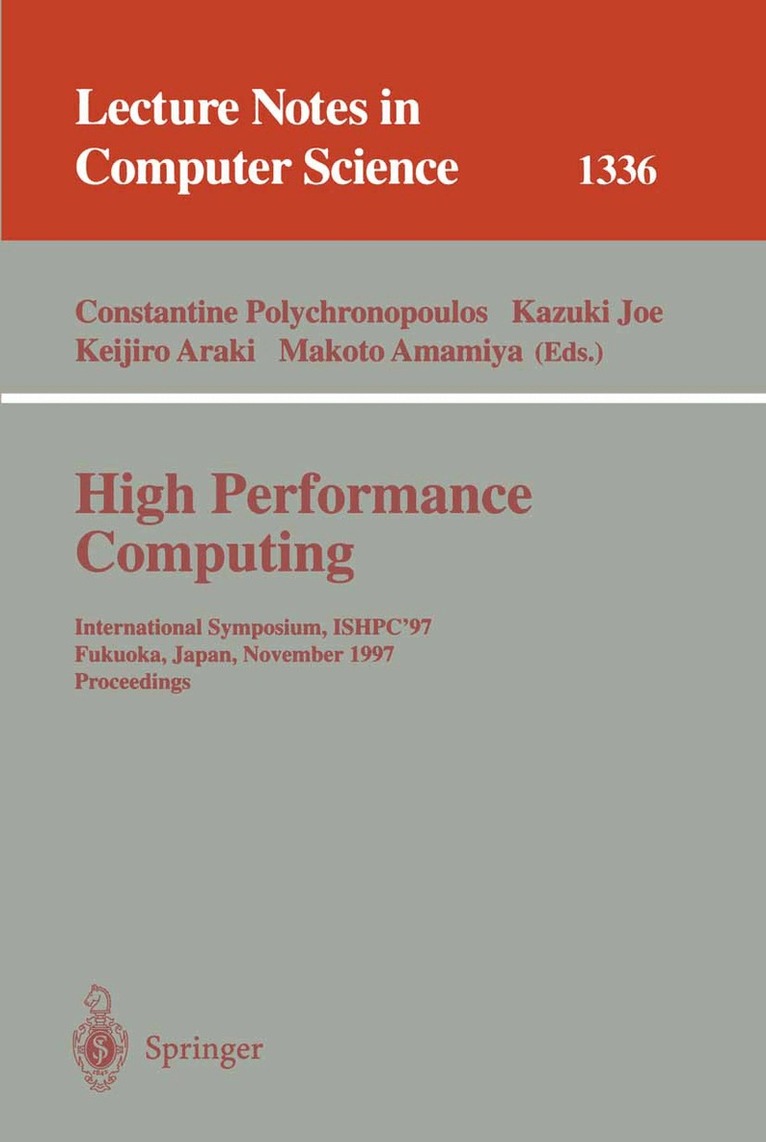
High Performance Computing
International Symposium, ISHPC'97, Fukuoka, Japan, November 4-6, 1997, Proceedings
Av Constantine Polychronopoulos, Kazuki Joe m. fl.
Häftad, 1997
566 kr
Lägg i varukorg
This book constitutes the refereed proceedings of the International Symposium on High Performance Computing, ISHPC '97, held in Fukuoka, Japan in November 1997.The volume presents four distinguished papers and 16 revised regular papers selected from more than 40 submissions on the basis of at least …
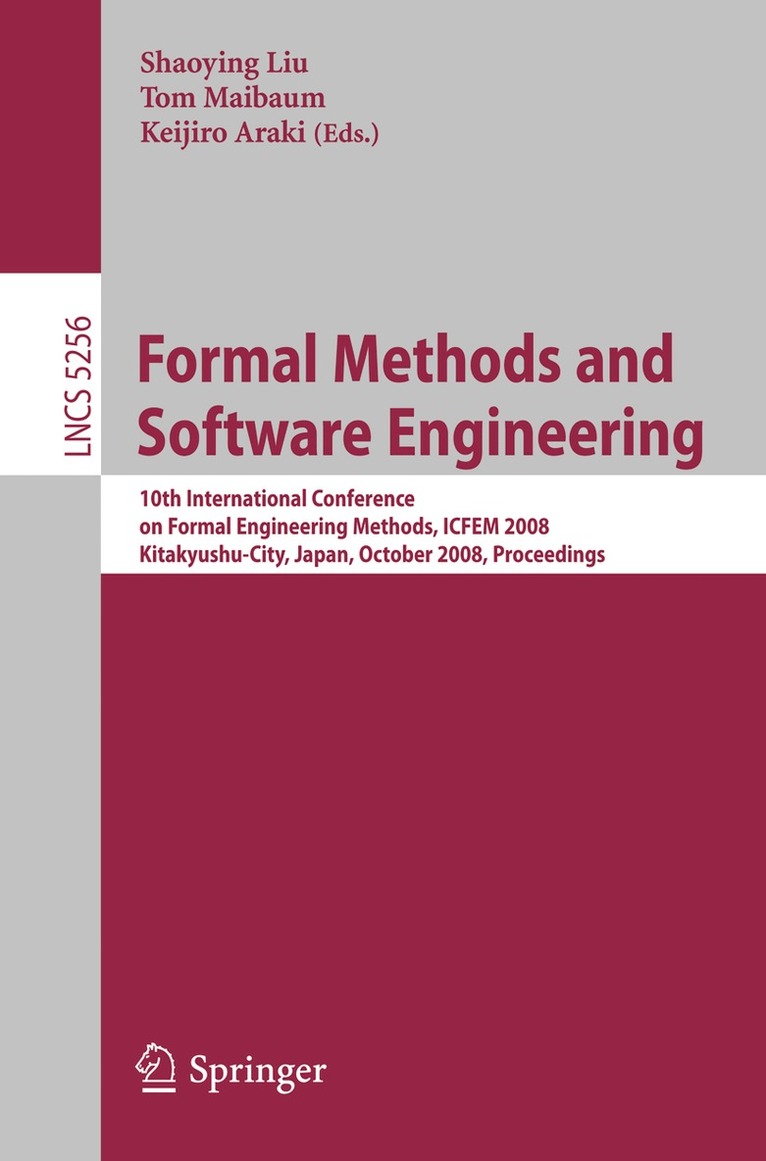
Formal Methods and Software Engineering
10th International Conference on Formal Engineering Methods ICFEM 2008, Kitakyushu-City, Japan, October 27-31, 2008, Proceedings
Av Shaoying Liu, Tom Maibaum m. fl.
Häftad, 2008
566 kr
Lägg i varukorg
Formal engineering methods are intended to o?er e?ective means for integ- tion of formal methods and practical software development technologies in the context of software engineering. Their purpose is to provide e?ective, rigorous, and systematic techniques for signi?cant improvement of software …
Formal Methods and Software Engineering
10th International Conference on Formal Engineering Methods ICFEM 2008, Kitakyushu-City, Japan, October 27-31, 2008, Proceedings
Av Keijiro Araki, Tom Maibaum m. fl.
E-bok, 2008
755 kr
Lägg i varukorg
Formal engineering methods are intended to o?er e?ective means for integ- tion of formal methods and practical software development technologies in the context of software engineering. Their purpose is to provide e?ective, rigorous, and systematic techniques for signi?cant improvement of software …