Keith D. Miller – författare
Visar alla böcker från författaren Keith D. Miller. Handla med fri frakt och snabb leverans.
4 produkter
4 produkter
E-bok
Engelska, 2003568 kr
Läs direkt efter köp
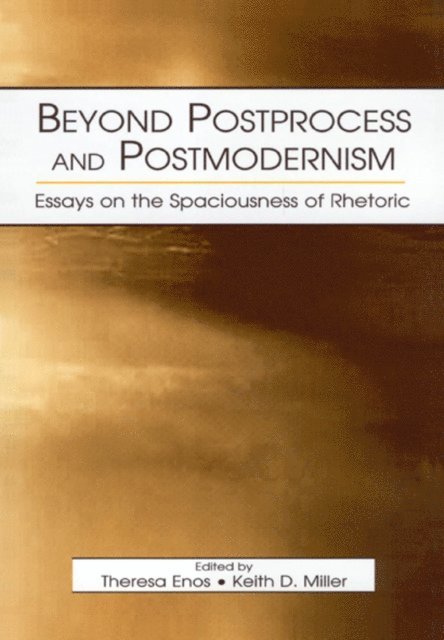
In this collection of original essays, editors Theresa Enos and Keith D. Miller join their contributors--a veritable "who''s who" in composition scholarship--in seeking to illuminate and complicate many of the tensions present in the field of rhetoric and composition. The contributions included here emphasize key issues in past and present work, setting the stage for future thought and study. The book also honors the late Jim Corder, a major figure in the development of the rhetoric and composition discipline. In the spirit of Corder''s unfinished work, the contributors to this volume absorb, probe, stretch, redefine, and interrogate classical, modern, and postmodern rhetorics--and challenge their limitations. Beyond Postprocess and Postmodernism: Essays on the Spaciousness of Rhetoric will be of interest to scholars, teachers, and students in rhetoric and composition, English, and communication studies. Offering a provocative discussion of postprocess composition theories and pedagogies and postmodern rhetorics, as well as the first thorough consideration of Jim Corder''s contributions, this work is certain to influence the course of future study and research.
E-bok
PDF, Engelska, 2003568 kr
Läs direkt efter köp
In this collection of original essays, editors Theresa Enos and Keith D. Miller join their contributors--a veritable "who''s who" in composition scholarship--in seeking to illuminate and complicate many of the tensions present in the field of rhetoric and composition. The contributions included here emphasize key issues in past and present work, setting the stage for future thought and study. The book also honors the late Jim Corder, a major figure in the development of the rhetoric and composition discipline. In the spirit of Corder''s unfinished work, the contributors to this volume absorb, probe, stretch, redefine, and interrogate classical, modern, and postmodern rhetorics--and challenge their limitations. Beyond Postprocess and Postmodernism: Essays on the Spaciousness of Rhetoric will be of interest to scholars, teachers, and students in rhetoric and composition, English, and communication studies. Offering a provocative discussion of postprocess composition theories and pedagogies and postmodern rhetorics, as well as the first thorough consideration of Jim Corder''s contributions, this work is certain to influence the course of future study and research.
Inbunden, Engelska, 2011
1 257 kr
Skickas inom 10-15 vardagar
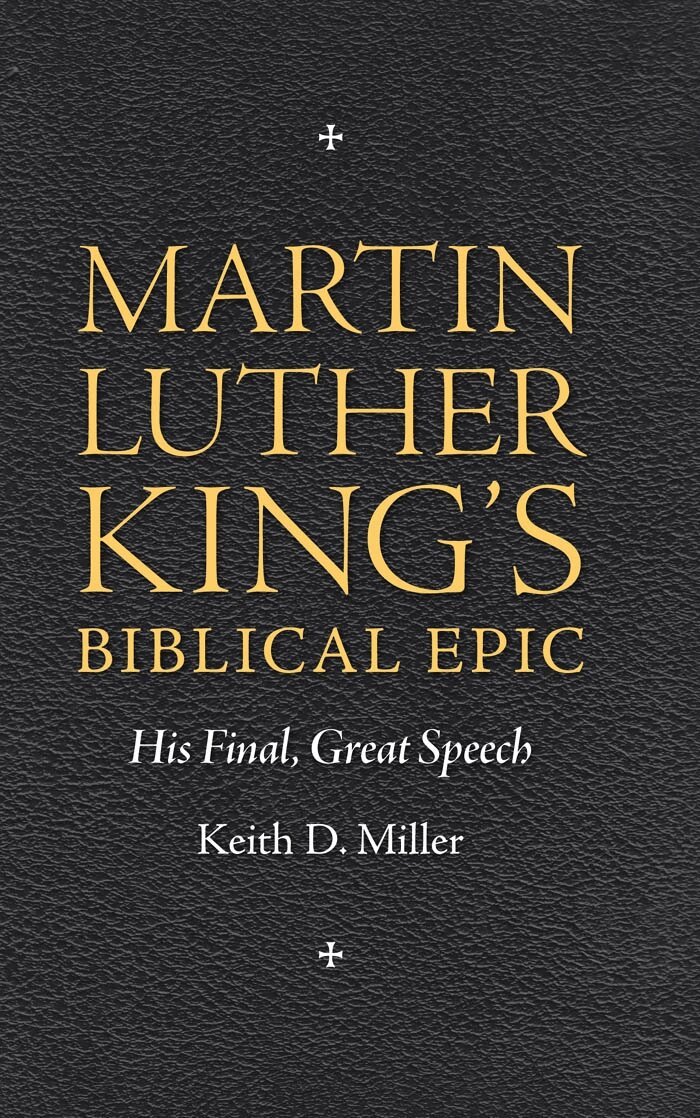
In his final speech ""I've Been to the Mountaintop,"" Martin Luther King Jr. delivered his support of African American garbage workers on strike in Memphis. Although some consider this oration King's finest, it is mainly known for its concluding two minutes, wherein King compares himself to Moses and seems to predict his own assassination. But King gave an hour-long speech, and the concluding segment can only be understood in relation to the whole. King scholars generally focus on his theology, not his relation to the Bible or the circumstance of a Baptist speaking in a Pentecostal setting. Even though King cited and explicated the Bible in hundreds of speeches and sermons, Martin Luther King's Biblical Epic is the first book to analyze his approach to the Bible and its importance to his rhetoric and persuasiveness.Martin Luther King's Biblical Epic argues that King challenged dominant Christian supersessionist conceptions of Judaism in favor of a Christianity that affirms Judaism as its wellspring. In his final speech, King implicitly but strongly argues that one can grasp Jesus only by first grasping Moses and the Hebrew prophets. This book also traces the roots of King's speech to its Pentecostal setting and to the Pentecostals in his audience. In doing so, Miller puts forth the first scholarship to credit the mostly unknown, but brilliant African American architect who created the large yet compact church sanctuary, which made possible the unique connection between King and his audience on the night of his last speech.
Häftad, Engelska, 2013
390 kr
Skickas inom 10-15 vardagar
In his final speech ""I've Been to the Mountaintop,"" Martin Luther King Jr. delivered his support of African American garbage workers on strike in Memphis. Although some consider this oration King's finest, it is mainly known for its concluding two minutes, wherein King compares himself to Moses and seems to predict his own assassination. But King gave an hour-long speech, and the concluding segment can only be understood in relation to the whole. King scholars generally focus on his theology, not his relation to the Bible or the circumstance of a Baptist speaking in a Pentecostal setting. Even though King cited and explicated the Bible in hundreds of speeches and sermons, Martin Luther King's Biblical Epic is the first book to analyze his approach to the Bible and its importance to his rhetoric and persuasiveness.Martin Luther King's Biblical Epic argues that King challenged dominant Christian supersessionist conceptions of Judaism in favor of a Christianity that affirms Judaism as its wellspring. In his final speech, King implicitly but strongly argues that one can grasp Jesus only by first grasping Moses and the Hebrew prophets. This book also traces the roots of King's speech to its Pentecostal setting and to the Pentecostals in his audience. In doing so, Miller puts forth the first scholarship to credit the mostly unknown, but brilliant African American architect who created the large yet compact church sanctuary, which made possible the unique connection between King and his audience on the night of his last speech.