Keith Gottschalk – författare
Visar alla böcker från författaren Keith Gottschalk. Handla med fri frakt och snabb leverans.
3 produkter
3 produkter
Häftad, Engelska, 2014
672 kr
Skickas inom 5-8 vardagar
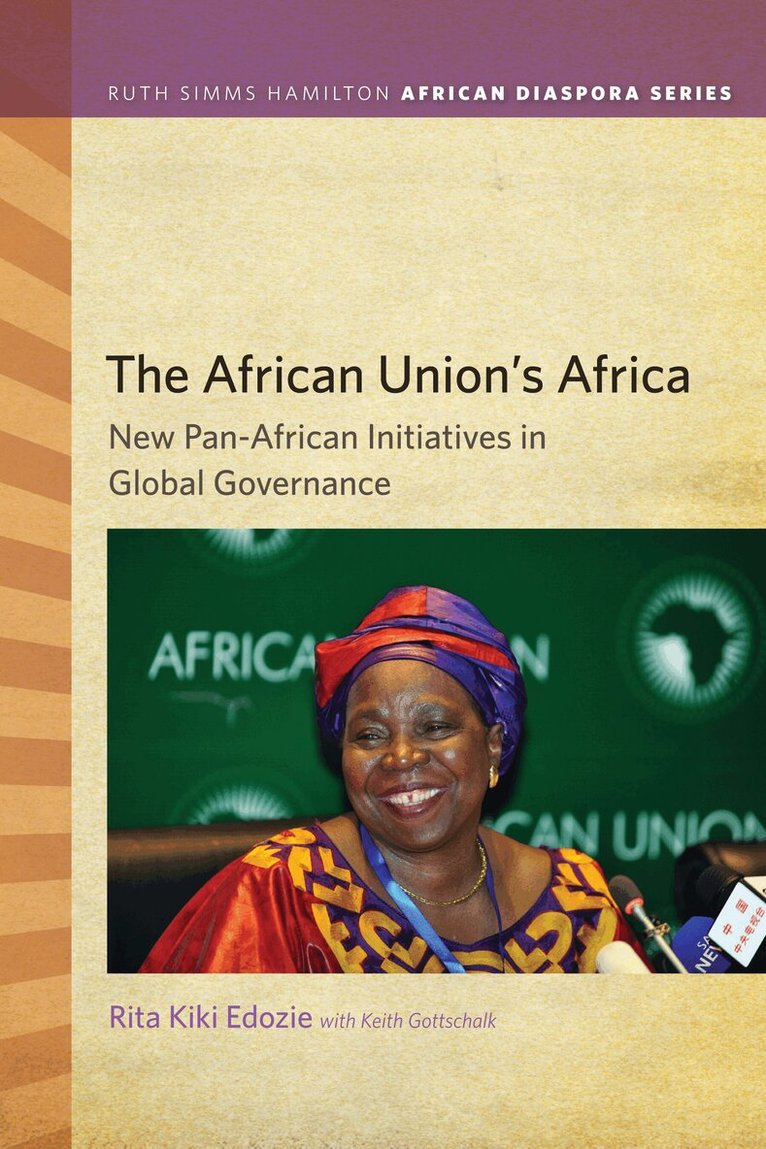
The African Union’s Africa: New Pan-African Initiatives in Global Governance examines the initiatives of the Pan-African global governance institution the African Union (AU) as the organization and its precursor commemorate their Jubilee as international actors. Taking a unique approach, the book seeks to explain the AU through a theoretical framework referred to as “the African Union phenomenon,” capturing the international organization’s efforts to transform the national politics of Africa as well as to globalize the practice of African politics. The authors examine Africa’s self-determined international norms and values such as Pan-Africanism, African Solutions to African Problems, Hybrid Democracy, Pax Africana, and the African Economic Community to demonstrate that Africa—the world’s least developed region—is composed of crucial values, institutions, agents, actors, and forces that are, through the AU, contributing to the advancement of contemporary global development. The book reveals how in the areas of cultural identity, democracy, security, and economic development Africans are infusing new politics, economics, and cultures into globalization representing the collective will and imprint of African agency, decisions, ideas, identities, practices, and contexts. Via a Pan-African vision, the AU is having both regional and global impact, generating exciting possibilities and complicated challenges.
E-bok
PDF, Engelska, 2014445 kr
Läs direkt efter köp
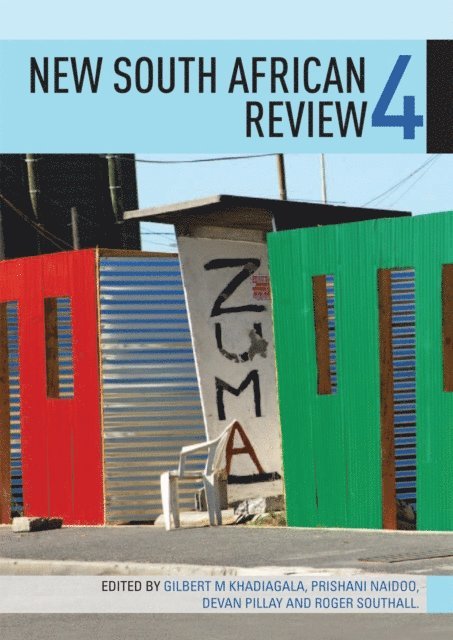
The death of Nelson Mandela on 5 December 2013 was in a sense a wake-up call for South Africans, and a time to reflect on what has been achieved since ‘those magnificent days in late April 1994’ (as the editors of this volume put it) ‘when South Africans of all colours voted for the first time in a democratic election’. In a time of recall and reflection it is important to take account, not only of the dramatic events that grip the headlines, but also of other signposts that indicate the shape and characteristics of a society. The New South African Review looks, every year, at some of these signposts, and the essays in this fourth volume of the series again examine and analyse a broad spectrum of issues affecting the country. They tackle topics as diverse as the state of organised labour; food retailing; electricity generation; access to information; civil courage; the school system; and – looking outside the country to its place in the world – South Africa’s relationships with north-east Asia, with Israel and with its neighbours in the southern African region. Taken together, these essays give a multidimensional perspective on South Africa’s democracy as it turns twenty, and will be of interest to general readers while being particularly useful to students and researchers.
E-bok
Engelska, 2014445 kr
Läs direkt efter köp
The death of Nelson Mandela on 5 December 2013 was in a sense a wake-up call for South Africans, and a time to reflect on what has been achieved since ‘those magnificent days in late April 1994’ (as the editors of this volume put it) ‘when South Africans of all colours voted for the first time in a democratic election’. In a time of recall and reflection it is important to take account, not only of the dramatic events that grip the headlines, but also of other signposts that indicate the shape and characteristics of a society. The New South African Review looks, every year, at some of these signposts, and the essays in this fourth volume of the series again examine and analyse a broad spectrum of issues affecting the country. They tackle topics as diverse as the state of organised labour; food retailing; electricity generation; access to information; civil courage; the school system; and – looking outside the country to its place in the world – South Africa’s relationships with north-east Asia, with Israel and with its neighbours in the southern African region. Taken together, these essays give a multidimensional perspective on South Africa’s democracy as it turns twenty, and will be of interest to general readers while being particularly useful to students and researchers.