Keith Lambert – författare
Visar alla böcker från författaren . Handla med fri frakt och snabb leverans.
2 produkter
2 produkter
Inbunden, Engelska, 2001
3 788 kr
Skickas inom 5-8 vardagar
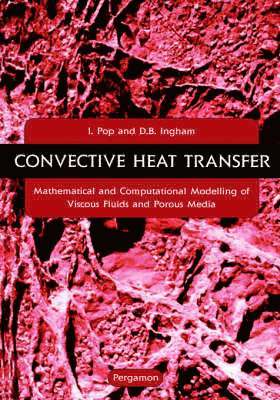
Interest in studying the phenomena of convective heat and mass transfer between an ambient fluid and a body which is immersed in it stems both from fundamental considerations, such as the development of better insights into the nature of the underlying physical processes which take place, and from practical considerations, such as the fact that these idealised configurations serve as a launching pad formodelling the analogous transfer processes in more realistic physical systems. Such idealised geometries also provide a test ground for checking the validity of theoreticalanalyses. Consequently, an immense research effort has been expended in exploring and understanding the convective heat and mass transfer processes between a fluid and submerged objects of various shapes. Among several geometries which have received considerable attention are plates, circular and elliptical cylinders, and spheres, although much information is also available for some other bodies, such ascorrugated surfaces or bodies of relatively complicated shapes.The book is a unified progress report which captures the spirit of the work in progress in boundary-layer heat transfer research and also identifies potential difficulties and areas for further study. In addition, this work provides new material on convective heat and mass transfer, as well as a fresh look at basic methods in heat transfer. Extensive references are included in order to stimulate further studies of the problems considered. A state-of-the-art picture of boundary-layer heat transfer today is presented by listing and commenting also upon the most recent successful efforts and identifying the needs for further research.
55 kr
Läs direkt efter köp
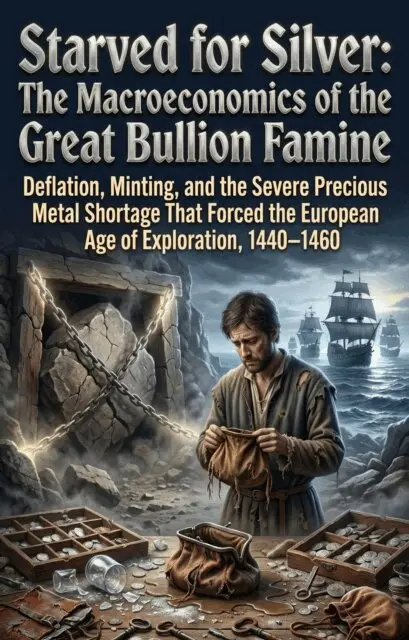
How does an entire continent's economy function when physical money simply ceases to exist? Before credit cards or fiat currency, the European economy relied entirely on silver and gold coins. In the mid-15th century, Europe suffered a catastrophic macroeconomic crisis known as the Great Bullion Famine, where the physical supply of precious metals completely dried up. Decades of massive trade deficits with the East had drained Europe of its silver, while domestic silver mines were simultaneously exhausted or flooded. With no new metal to mint coins, prices crashed in a severe deflationary spiral. Merchants could not pay debts, trade routes froze, and entire regional economies collapsed into poverty. Desperate to bypass the Ottoman monopolies and find new sources of gold and silver, European monarchs were heavily incentivized to fund highly risky, speculative maritime expeditions across unknown oceans. This fascinating economic history deconstructs the medieval liquidity crisis. It explores the hoarding of bullion, the desperate attempts by kings to debase their currencies, and the direct causal link between empty silver mines and Christopher Columbus's fateful voyage. Understand the economic engine of history. The Great Bullion Famine proves that the legendary Age of Exploration was not driven by pure curiosity, but by a desperate, continent-wide financial depression.