Keith Parsons - Böcker
Visar alla böcker från författaren Keith Parsons. Handla med fri frakt och snabb leverans.
3 produkter
3 produkter
294 kr
Skickas inom 5-8 vardagar
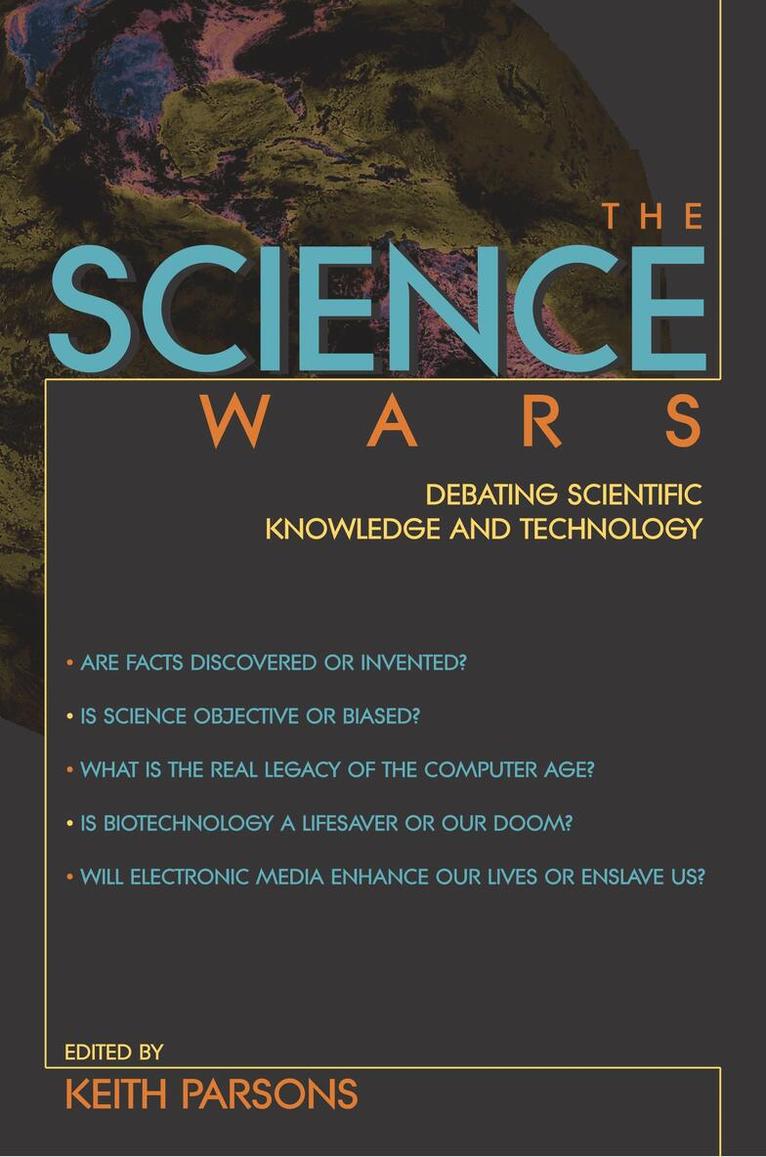
Is science our most precious possession or has our culture elevated science into a false idol? Is technology a useful servant or a malign genie? These questions are at the center of the "science wars" currently being waged over the role and future of science and technology in our society.This anthology presents the best debates on this important issue. Divided into two major sections, the first part deals with challenges to scientific knowledge, in particular its claims to objectivity and impartiality. Some conservative thinkers charge that many scientists follow a dogmatic naturalistic philosophy rather than truly objective standards of inquiry. Sociologists of knowledge claim that scientists "construct" scientific facts rather than "discover" them. And some feminists see patriarchal bias in traditional scientific ideals of method and rationality. Each of these claims will be presented and challenged by leading thinkers.The second part considers current controversies over technology and the applications of science. Have computers changed the world for the better? Is high-tech medicine the answer to our health needs? Will the biotechnology revolution feed billions and cure disease or lead us into the Brave New World? Do the electronic media offer harmless entertainment or subtle enslavement?This balanced selection of a variety of perspectives on the hotly contested role of science and technology in contemporary society will clarify this vital debate for both specialists and nonspecialists.
1 076 kr
Skickas inom 10-15 vardagar
A historical review of the most important scientific controversies that have shaped our knowledge of dinosaurs since the discovery of important fossils in the 1820s.In The Great Dinosaur Controversy: A Guide to the Debates, the major scientific disputes that have contributed to the understanding of dinosaurs come to light. Each chapter presents a major controversy then ponders the lessons learned and their impact on the scientific field.Colorful characters such as "anti-evolutionist" Robert Owen, "Darwin's bulldog," T.H. Huxley, and "dinosaur heretic" Robert Bakker, enliven the debates, which range from the origin of dinosaurs and their posture to their evolution or retrogression and whether they were warm- or cold-blooded. Two of the most recent debates concern how dinosaurs became extinct and whether or not birds are their descendents.Introductory chapter on the role of controversy in science focusing on the contributions of scientists such as Edward Cope and T. H. HuxleyIllustrations of the major figures involved in the debates
247 kr
Skickas inom 5-8 vardagar
A unique approach to the philosophy of science that focuses on the liveliest and most important controversies surrounding scienceIs science more rational or objective than any other intellectual endeavor? Are scientific theories accurate depictions of reality or just useful devices for manipulating the environment? These core questions are the focus of this unique approach to the philosophy of science. Unlike standard textbooks, this book does not attempt a comprehensive review of the entire field, but makes a selection of the most vibrant debates and issues.The author tackles such stimulating questions as: Can science meet the challenges of skeptics? Should science address questions traditionally reserved for philosophy and religion? Further, does science leave room for human values, free will, and moral responsibility?Written in an accessible, jargon-free style, the text succinctly presents complex ideas in an easily understandable fashion. By using numerous examples taken from diverse areas such as evolutionary theory, paleontology, and astronomy, the author piques readers' curiosity in current scientific controversies. Concise bibliographic essays at the end of each chapter invite readers to sample ideas different from the ones offered in the text and to explore the range of opinions on each topic.Rigorous yet highly readable, this excellent invitation to the philosophy of science makes a convincing case that understanding the nature of science is essential for understanding life itself.