Kelly A. Parker - Böcker
Visar alla böcker från författaren Kelly A. Parker. Handla med fri frakt och snabb leverans.
4 produkter
4 produkter
1 409 kr
Skickas inom 5-8 vardagar
A comprehensive and systematic reconstruction of the philosophy of Charles S. Peirce, perhaps America's most far-ranging and original philosopher, which reveals the unity of his complex and influential body of thought. We are still in the early stages of understanding the thought of C. S. Peirce (1839-1914). Although much good work has been done in isolated areas, relatively little considers the Peircean system as a whole. Peirce made it his life's work to construct a scientifically sophisticated and logically rigorous philosophical system, culminating in a realist epistemology and a metaphysical theory ("synechism") that postulates the connectedness of all things in a universal evolutionary process. In The Continuity of Peirce's Thought, Kelly Parker shows how the principle of continuity functions in phenomenology and semeiotics, the two most novel and important of Peirce's philosophical sciences, which mediate between mathematics and metaphysics. Parker argues that Peirce's concept of continuity is the central organizing theme of the entire Peircean philosophical corpus. He explains how Peirce's unique conception of the mathematical continuum shapes the broad sweep of his thought, extending from mathematics to metaphysics and in religion. He thus provides a convenient and useful overview of Peirce's philosophical system, situating it within the history of ideas and mapping interconnections among the diverse areas of Peirce's work. This challenging yet helpful book adopts an innovative approach to achieve the ambitious goal of more fully understanding the interrelationship of all the elements in the entire corpus of Peirce's writings. Given Peirce's importance in fields ranging from philosophy to mathematics to literary and cultural studies, this new book should appeal to all who seek a fuller, unified understanding of the career and overarching contributions of Peirce, one of the key figures in the American philosophical tradition.
1 209 kr
Skickas inom 10-15 vardagar
The essays in Pragmatist and American Philosophical Perspectives on Resilience offer a survey of the ways that “resilience” is becoming a key concept for understanding our world, as well as providing deeper insight about its specific actual and proposed applications. As a concept with multiple theoretical and practical meanings, “resilience” promises considerable explanatory power. At the same time, current uses of the concept can be diverse and at times inconsistent. The American philosophical tradition provides tools uniquely suited for clarifying, extending, and applying emerging concepts in more effective and suggestive ways. This collection explores the usefulness of theoretical work in American philosophy and pragmatism to practices in ecology, community, rurality, and psychology.
2 103 kr
Skickas inom 10-15 vardagar
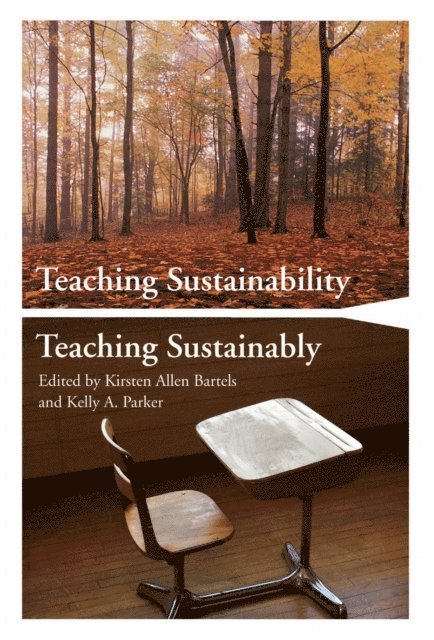
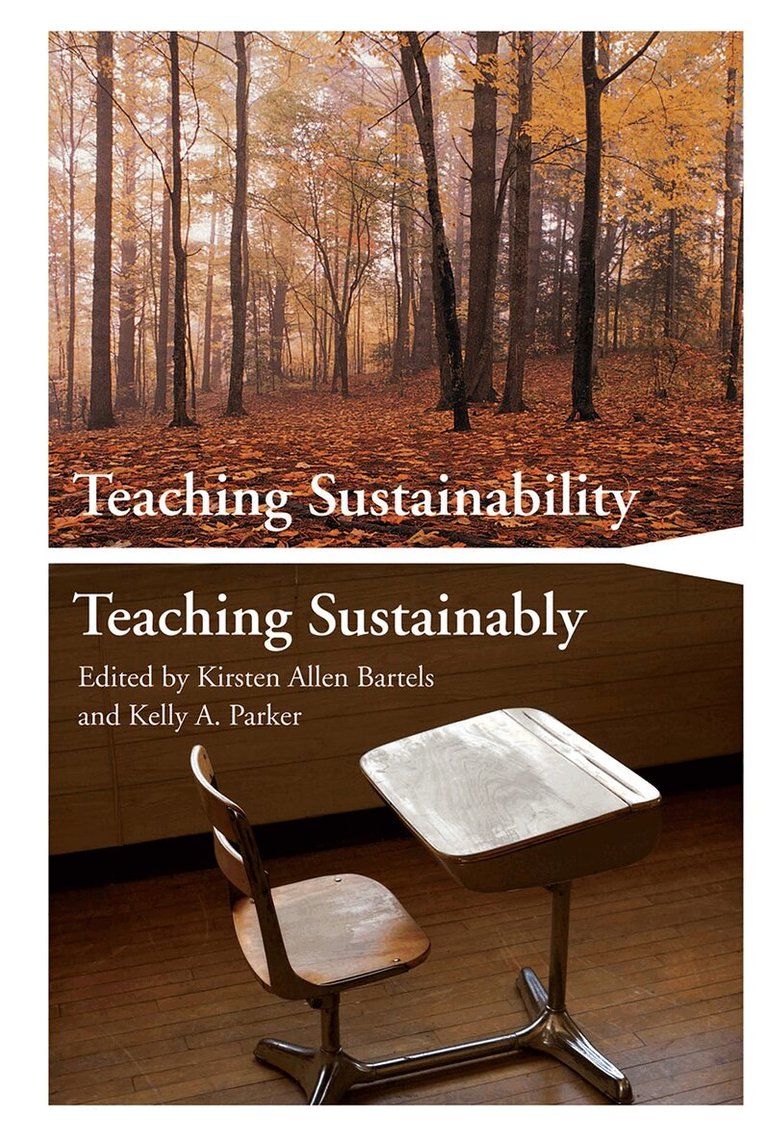
Over the coming decades, every academic discipline will have to respond to the paradigm of more sustainable life practices because students will be living in a world challenged by competition for resources and climate change, and will demand that every academic discipline demonstrate substantial and corresponding relevance.This book takes as its point of departure that integrating a component of sustainability into a discipline-specific course arises from an educator asking a simple question: in the coming decades, as humanity faces unprecedented challenges, what can my discipline or area of research contribute toward a better understanding of these issues? The discipline need not be future-oriented: an archaeologist, for instance, could incorporate into a course some aspects of sustainable archaeological practices in areas threatened by rapid climate change, as well as examples of sustainable or unsustainable ways of living practiced by members of the long-gone society under investigation. This book also argues that courses about sustainability need to cross disciplinary boundaries, both because of the inter-relatedness of the issues, and because students will require the ability to use interdisciplinary approaches to thrive through the multiple careers most of them will face.The contributions to this book are presented under four sections. “Sustainability as a Core Value in Education” considers the rationale for incorporating sustainability in disciplinary courses. “Teaching Sustainability in the Academic Disciplines” presents eight examples of courses from disciplines as varied as agriculture, composition, engineering, and teacher education. “Education as a Sustainable Practice” reviews how the physical environment of the classroom and the delivery of instruction need themselves to reflect the values being taught. The final section addresses the issues of leadership and long-term institutional change needed to embed sustainable practice as a core value on campus.
480 kr
Skickas inom 10-15 vardagar
Over the coming decades, every academic discipline will have to respond to the paradigm of more sustainable life practices because students will be living in a world challenged by competition for resources and climate change, and will demand that every academic discipline demonstrate substantial and corresponding relevance.This book takes as its point of departure that integrating a component of sustainability into a discipline-specific course arises from an educator asking a simple question: in the coming decades, as humanity faces unprecedented challenges, what can my discipline or area of research contribute toward a better understanding of these issues? The discipline need not be future-oriented: an archaeologist, for instance, could incorporate into a course some aspects of sustainable archaeological practices in areas threatened by rapid climate change, as well as examples of sustainable or unsustainable ways of living practiced by members of the long-gone society under investigation. This book also argues that courses about sustainability need to cross disciplinary boundaries, both because of the inter-relatedness of the issues, and because students will require the ability to use interdisciplinary approaches to thrive through the multiple careers most of them will face.The contributions to this book are presented under four sections. “Sustainability as a Core Value in Education” considers the rationale for incorporating sustainability in disciplinary courses. “Teaching Sustainability in the Academic Disciplines” presents eight examples of courses from disciplines as varied as agriculture, composition, engineering, and teacher education. “Education as a Sustainable Practice” reviews how the physical environment of the classroom and the delivery of instruction need themselves to reflect the values being taught. The final section addresses the issues of leadership and long-term institutional change needed to embed sustainable practice as a core value on campus.