Kelly-Ann Allen – författare
207 kr
Skickas
2 112 kr
Skickas inom 10-15 vardagar
3 404 kr
Skickas inom 10-15 vardagar
2 121 kr
Skickas inom 10-15 vardagar
484 kr
Skickas inom 10-15 vardagar
1 669 kr
Skickas inom 10-15 vardagar
244 kr
Läs direkt efter köp
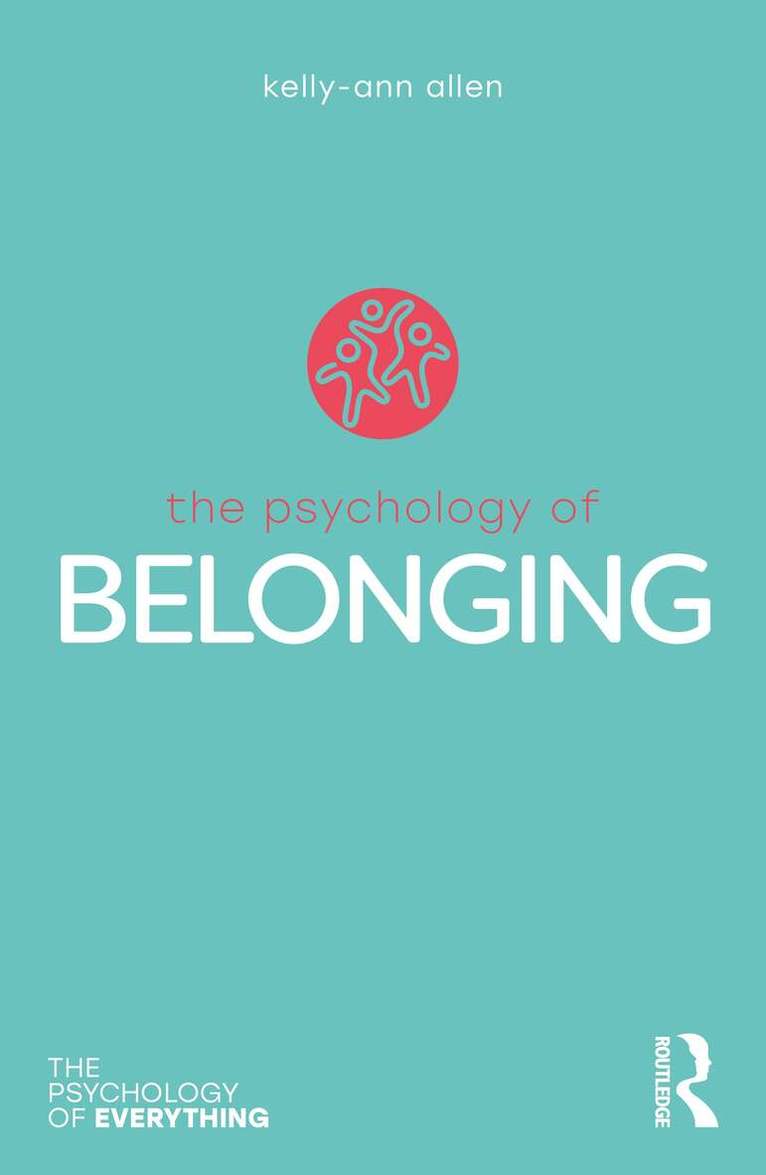
Can a sense of belonging increase life satisfaction? Why do we sometimes feel lonely? How can we sustain lasting human connections?
The Psychology of Belonging explores why feeling like we belong is so important throughout our lives, from childhood to old age, irrespective of culture, race or geography. With its virtues and shortcomings, belonging to groups such as families, social groups, schools, workplaces and communities is fundamental to our identity and wellbeing, even in a time when technology has changed the way we connect with each other.
In a world where loneliness and social isolation is on the rise, The Psychology of Belonging shows how meaningful connections can build a sense of belonging for all of us.
244 kr
Läs direkt efter köp
Can a sense of belonging increase life satisfaction? Why do we sometimes feel lonely? How can we sustain lasting human connections?
The Psychology of Belonging explores why feeling like we belong is so important throughout our lives, from childhood to old age, irrespective of culture, race or geography. With its virtues and shortcomings, belonging to groups such as families, social groups, schools, workplaces and communities is fundamental to our identity and wellbeing, even in a time when technology has changed the way we connect with each other.
In a world where loneliness and social isolation is on the rise, The Psychology of Belonging shows how meaningful connections can build a sense of belonging for all of us.
1 921 kr
Läs direkt efter köp
The Handbook of Positive Psychology in Schools offers the most current and comprehensive insights into how positive psychology principles provide a framework for young people to become active agents in their own learning. The third edition of this groundbreaking volume assembles the latest global research identifying fundamental assets—hope, optimism, gratitude, self-efficacy, emotional regulation, among others—that support students’ learning and well-being. Chapters examining social-ecological perspectives on classroom quality and school climate provide best practice guidance on schoolwide policies and practices. These 35 new chapters explore positive psychology’s ongoing influence and advances on prevention, intervention, and assessment practices in schools.
1 921 kr
Läs direkt efter köp
The Handbook of Positive Psychology in Schools offers the most current and comprehensive insights into how positive psychology principles provide a framework for young people to become active agents in their own learning. The third edition of this groundbreaking volume assembles the latest global research identifying fundamental assets—hope, optimism, gratitude, self-efficacy, emotional regulation, among others—that support students’ learning and well-being. Chapters examining social-ecological perspectives on classroom quality and school climate provide best practice guidance on schoolwide policies and practices. These 35 new chapters explore positive psychology’s ongoing influence and advances on prevention, intervention, and assessment practices in schools.
410 kr
Läs direkt efter köp
Are you an academic who struggles to know what to post on social media and how to disseminate your research effectively on different social media platforms?
Social media serves as a powerful communication tool, yet while most academics are aware of the benefits of social media, many are unsure of what to post, and how to do it in a way that is authentic, engaging, and above all, comfortable! This user-friendly practical guide is designed for all academics who aim to engage in social media platforms in an effective and productive way. This book explains how academics can build their reputation, develop networks, and disseminate their research. It includes 365 useful post prompts applicable to all mainstream social media platforms which help guide academics on what to post on the platforms they choose to engage with.
The book is designed for all academics at all levels and can be applied across various social media platforms including Facebook, Linkedin, Twitter, and Instagram.
410 kr
Läs direkt efter köp
Are you an academic who struggles to know what to post on social media and how to disseminate your research effectively on different social media platforms?
Social media serves as a powerful communication tool, yet while most academics are aware of the benefits of social media, many are unsure of what to post, and how to do it in a way that is authentic, engaging, and above all, comfortable! This user-friendly practical guide is designed for all academics who aim to engage in social media platforms in an effective and productive way. This book explains how academics can build their reputation, develop networks, and disseminate their research. It includes 365 useful post prompts applicable to all mainstream social media platforms which help guide academics on what to post on the platforms they choose to engage with.
The book is designed for all academics at all levels and can be applied across various social media platforms including Facebook, Linkedin, Twitter, and Instagram.
379 kr
Läs direkt efter köp
Written in a clear and accessible style, this book presents a wealth of practical information to guide the next generation of educational and developmental psychologists in Australia and New Zealand in pursuing a career in the field.
There are over 800 educational and developmental psychologists in Australia, and over 200 educational psychologists in New Zealand, who represent a diverse workforce. Pathways to becoming an educational and developmental psychologist have seen rapid shifts with updated key competencies that prospective educational and developmental psychologists need to be aware of. This book gives the reader a comprehensive understanding of what makes an educational and developmental psychologist and outlines seven steps required to become an endorsed educational and developmental psychologist. Specifically, it offers guidance on understanding the role and its history, tertiary study requirements, registration requirements, professional competencies, skills and attributes needed, work experience, professional associations and member groups, endorsement and supervision requirements, finding work, and starting work. With a primary focus on Australia, each chapter also features a section on the career in New Zealand, with a variety of psychologists sharing their expertise and reflections from their experiences in New Zealand.
This resource is essential reading for students, provisional psychologists, and practising psychologists. At the same time, it provides insights for other educational and health professionals who may work multi-, inter-, or transdisciplinary with educational and developmental psychologists.
379 kr
Läs direkt efter köp
Written in a clear and accessible style, this book presents a wealth of practical information to guide the next generation of educational and developmental psychologists in Australia and New Zealand in pursuing a career in the field.
There are over 800 educational and developmental psychologists in Australia, and over 200 educational psychologists in New Zealand, who represent a diverse workforce. Pathways to becoming an educational and developmental psychologist have seen rapid shifts with updated key competencies that prospective educational and developmental psychologists need to be aware of. This book gives the reader a comprehensive understanding of what makes an educational and developmental psychologist and outlines seven steps required to become an endorsed educational and developmental psychologist. Specifically, it offers guidance on understanding the role and its history, tertiary study requirements, registration requirements, professional competencies, skills and attributes needed, work experience, professional associations and member groups, endorsement and supervision requirements, finding work, and starting work. With a primary focus on Australia, each chapter also features a section on the career in New Zealand, with a variety of psychologists sharing their expertise and reflections from their experiences in New Zealand.
This resource is essential reading for students, provisional psychologists, and practising psychologists. At the same time, it provides insights for other educational and health professionals who may work multi-, inter-, or transdisciplinary with educational and developmental psychologists.
234 kr
Läs direkt efter köp
For effective use, this book should be purchased alongside the activity book, Conceptual PlayWorlds for Wellbeing: A Resource Book for the Lonely Little Cactus. Both books can be purchased together as a set, Building Conceptual PlayWorlds for Wellbeing: The Lonely Little Cactus Story Book and Accompanying Resource Book.
The Lonely Little Cactus is a children’s picture story book about a cactus that feels lonely living in the desert. Through a series of colourful interactions with desert dwellers, the little cactus learns strategies to cope with their feelings of loneliness.
Both entertaining and educational, the story book is aimed at children aged 4–8 years old and spreads the message that loneliness is a common emotion that is manageable and can be overcome. It teaches children an array of coping strategies and encourages them to try various approaches to managing a difficult situation to find the strategies that best work for them.
Offering a unique opportunity for children to learn about psychological strategies while being engaged in a beautiful narrative and visually captivating illustrations, this is the ideal resource for educators, support staff, practitioners and parents looking to help children understand and manage their feelings.
354 kr
Läs direkt efter köp
For effective use, this book should be purchased alongside the story book, The Lonely Little Cactus: A Story About Friendship, Coping, and Belonging. Both books can be purchased together as a set, Building Conceptual PlayWorlds for Wellbeing: The Lonely Little Cactus Story Book and Accompanying Resource Book.
This vital resource uses the evidence-driven Conceptual PlayWorlds model of intentional teaching developed by Professor Marilyn Fleer to provide supporting classroom or home-based activities to help children aged between four and eight solve challenges and learn wellbeing concepts through play.
Intended for use with the accompanying picture story book, The Lonely Little Cactus, a tale about a cactus that feels lonely living in the desert, this guide offers imagery-rich scenarios, including 20 unique activities, so children have an opportunity to experientially grasp wellbeing concepts that can be otherwise difficult to explain. This resource guides educators and teachers through a range of wellbeing activities, including:
Identifying feelings Coping (social support, problem solving, and self-regulation) Friendships (relationship building, working together, time with friends, social skills) Positive emotions (happiness, joy, doing something you love, enjoyment, fun) Relaxation strategies Belonging and inclusion (working together, collaboration, joining in play, including others)Offering a unique opportunity for children to learn about psychological strategies while being engaged in a beautiful narrative and visually captivating illustrations, this is the ideal resource for educators or teachers, support staff, practitioners, and families looking to help children understand and manage their feelings. While the context is centre-based, the activities can be done almost anywhere, such as in family homes, the Botanical Gardens, when on holidays, or when visiting a park.
234 kr
Läs direkt efter köp
For effective use, this book should be purchased alongside the activity book, Conceptual PlayWorlds for Wellbeing: A Resource Book for the Lonely Little Cactus. Both books can be purchased together as a set, Building Conceptual PlayWorlds for Wellbeing: The Lonely Little Cactus Story Book and Accompanying Resource Book.
The Lonely Little Cactus is a children’s picture story book about a cactus that feels lonely living in the desert. Through a series of colourful interactions with desert dwellers, the little cactus learns strategies to cope with their feelings of loneliness.
Both entertaining and educational, the story book is aimed at children aged 4–8 years old and spreads the message that loneliness is a common emotion that is manageable and can be overcome. It teaches children an array of coping strategies and encourages them to try various approaches to managing a difficult situation to find the strategies that best work for them.
Offering a unique opportunity for children to learn about psychological strategies while being engaged in a beautiful narrative and visually captivating illustrations, this is the ideal resource for educators, support staff, practitioners and parents looking to help children understand and manage their feelings.
351 kr
Läs direkt efter köp
For effective use, this book should be purchased alongside the story book, The Lonely Little Cactus: A Story About Friendship, Coping, and Belonging. Both books can be purchased together as a set, Building Conceptual PlayWorlds for Wellbeing: The Lonely Little Cactus Story Book and Accompanying Resource Book.
This vital resource uses the evidence-driven Conceptual PlayWorlds model of intentional teaching developed by Professor Marilyn Fleer to provide supporting classroom or home-based activities to help children aged between four and eight solve challenges and learn wellbeing concepts through play.
Intended for use with the accompanying picture story book, The Lonely Little Cactus, a tale about a cactus that feels lonely living in the desert, this guide offers imagery-rich scenarios, including 20 unique activities, so children have an opportunity to experientially grasp wellbeing concepts that can be otherwise difficult to explain. This resource guides educators and teachers through a range of wellbeing activities, including:
Identifying feelings Coping (social support, problem solving, and self-regulation) Friendships (relationship building, working together, time with friends, social skills) Positive emotions (happiness, joy, doing something you love, enjoyment, fun) Relaxation strategies Belonging and inclusion (working together, collaboration, joining in play, including others)Offering a unique opportunity for children to learn about psychological strategies while being engaged in a beautiful narrative and visually captivating illustrations, this is the ideal resource for educators or teachers, support staff, practitioners, and families looking to help children understand and manage their feelings. While the context is centre-based, the activities can be done almost anywhere, such as in family homes, the Botanical Gardens, when on holidays, or when visiting a park.
360 kr
Skickas inom 10-15 vardagar
1 911 kr
Skickas inom 10-15 vardagar
582 kr
Skickas inom 5-8 vardagar
310 kr
Skickas inom 10-15 vardagar
223 kr
Skickas inom 10-15 vardagar
333 kr
Skickas inom 10-15 vardagar
1 979 kr
Skickas inom 10-15 vardagar
241 kr
Skickas inom 10-15 vardagar
223 kr
Skickas inom 10-15 vardagar
310 kr
Skickas inom 10-15 vardagar
685 kr
Skickas inom 5-8 vardagar
201 kr
Läs direkt efter köp
For the most effective use, this book should be purchased alongside Mia Belongs Here and the activity book, Conceptual PlayWorlds for Belonging. The books can be purchased individually or together as a set, Building Conceptual PlayWorlds for Belonging: Stories and Activities to Build a Sense of Belonging.
School is Where We All Belong is a beautifully illustrated story book that helps to develop a sense of belonging in children, particularly at school. It narrates the different ways by which five characters identify their feelings of belonging to school through the five senses (hearing, touch, smell, taste and sight).
With its engaging illustrations and narrative, children are encouraged to share their own experiences at the end of each character’s story which allow them to develop a better sense of school belonging, sharing the message that belonging is largely experiential and special to each person.
School belonging is an important ingredient for many positive outcomes for student learning and wellbeing. This story provides a unique opportunity for children to practice mindfulness, to pause and fully engage with the place and moment they’re in. By focusing on their senses during the fun, interactive moments, this deceptively simple book promotes a greater sense of belonging in.