Kelly Benton – författare
33 kr
Läs direkt efter köp
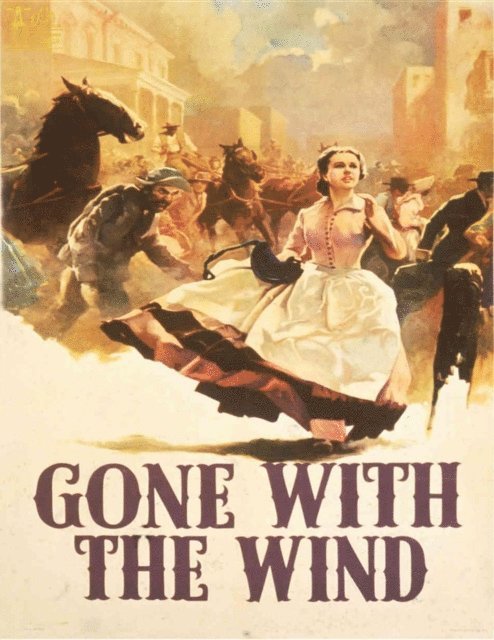
Margaret Mitchell wrote the bestselling 1936 novel Gone With the Wind, which was made into an enduring film classic.
Synopsis
Margaret Mitchell was born in Atlanta, Georgia, in November 1900. After a broken ankle immobilized her in 1926, Mitchell started writing a novel that would become Gone With the Wind. Published in 1936, Gone With the Wind made Mitchell an instant celebrity and earned her the Pulitzer Prize. The film version, also lauded far and wide, came out just three years later. More than 30 million copies of Mitchell’s Civil War masterpiece have been sold worldwide, and it has been translated into 27 languages. Mitchell was struck by a car and died in 1949, leaving behind Gone With the Wind as her only novel.
Early Life
Margaret Mitchell was born on November 8, 1900, in Atlanta, Georgia, into an Irish-Catholic family. At an early age, even before she could write, Mitchell loved to make up stories, and she would later write her own adventure books, crafting their covers out of cardboard. She wrote hundreds of books as a child, but her literary endeavors weren’t limited to novels and stories: At the private Woodberry School, Mitchell took her creativity in new directions, directing and acting in plays she wrote.
In 1918, Mitchell enrolled at Smith College in Northampton, Massachusetts. Four months later, tragedy would strike when Mitchell’s mother died of influenza. Mitchell finished out her freshman year at Smith and then returned to Atlanta to prepare for the upcoming debutante season, during which she met Berrien Kinnard Upshaw. The couple was married in 1922, but it ended abruptly four months later when Upshaw left for the Midwest and never returned.
The same year she was married, Mitchell landed a job with the Atlanta Journal Sunday magazine, where she ended up writing nearly 130 articles. Mitchell would get married a second time during this period, wedding John Robert Marsh in 1925. As seemed to be the case in Mitchell’s life, though, yet another good thing was to come to an end too quickly, as her journalist career ended in 1926 due to complications from a broken ankle.
With her broken ankle keeping Mitchell off her feet, however, in 1926 she began writing Gone With the Wind. Perched at an old sewing table, and writing the last chapter first and the other chapters randomly, she finished most of the book by 1929. A romantic novel about the Civil War and Reconstruction, Gone With the Wind is told from a Southern point of view, informed by Mitchell’s family and steeped in the history of the South and the tragedy of the war.
33 kr
Läs direkt efter köp
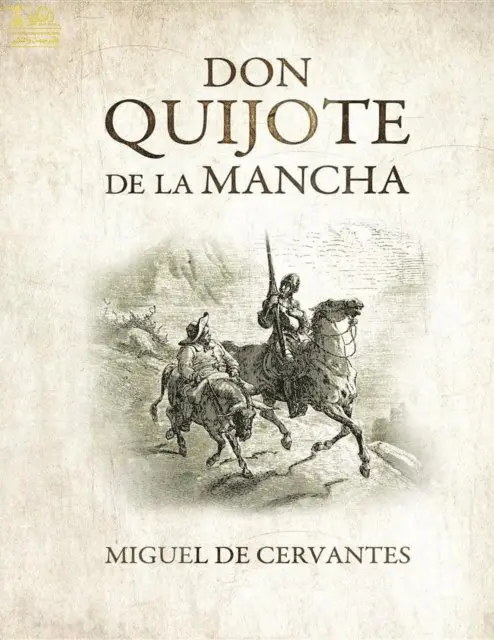
Miguel de Cervantes Saavedra (September 29, 1547 – April 22, 1616) was a Spanish novelist, poet and playwright, best known for his beloved Don Quixote, widely considered to be the first modern novel, the greatest novel in the Spanish language, and one of the most influential and enduring works in Western literature.
Before Cervantes, there was little European literature which could readily be identified within the genre of the novel. Medieval literature had notable examples of chivalric romance and allegory, and Cervantes' great predecessors Geoffrey Chaucer and Giovanni Boccaccio each wrote colorful, realistic tales of contemporary life that employed subtle literary techniques. Cervantes' Don Quixote, in contrast, was a revolutionary accomplishment, a sustained fictional narrative of more than one thousand pages that demonstrates a command of novelistic art that is little short of miraculous.
Cervantes infuses the story of the befuddled Don Quixote and his imagined chivalric adventures with a combination of pathos, riotous comedy, fast-paced action, and scrupulously realistic character portrayal—primarily the archetypal Don Quixote and his faithful, credulous companion, Sancho Panza. In the context of twentieth-century fiction, Cervantes employs astonishing post-modern devices, blurring the narrative voice and obscuring the line between fiction and commentary. Above all, Cervantes informs the novel with wisdom, insight into human psychology, and profound sympathy for humanity, despite its foibles.
With his younger contemporary William Shakespeare, who read Don Quixote and adapted the story for his lost play Cardenio, Cervantes is considered one the founders of early modern literature, concerned with the thoughts and mores of not just great men, but the common man as well. As with Shakespeare's plays for the London stage, Cervantes' work was accessible to the common Spaniard, while appealing to the most discriminating literary tastes. Cervantes' satire of popular chivalric literature—which so intoxicated Don Quixote as to convince him that he was a medieval knight errant—launched a four-century tradition of comic satiric novels beginning with Henry Fielding (who credited Cervantes as the inspiration behind his picaresque novels Tom Jones and Joseph Andrews), and influencing later comic writers such as William Thackeray, Charles Dickens, Nikolai Gogol, Mikhail Bulgakov, and Joseph Heller, among many others. Directly or indirectly, all later novelists are indebted to the genius of Cervantes.
17 kr
Läs direkt efter köp
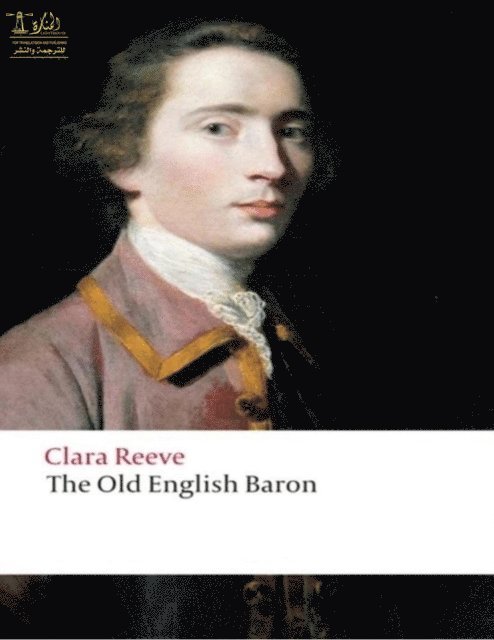
REEVE, CLARA (1729–1807), novelist, born at Ipswich in 1729, was eldest daughter of William Reeve, rector of Freston and of Kerton, Suffolk, and perpetual curate of St. Nicholas, Ipswich. The family had long been resident at Ipswich, where Clara's grandfather, Thomas Reeve, was rector of St. Mary Stoke. Her mother was a daughter of William Smithies, goldsmith and jeweller to George I. There were eight children of the marriage. One of the sons, Samuel Reeve, attained the rank of vice-admiral of the white. Another, Thomas Reeve, was rector of Brockley, Suffolk, and master of Bungay grammar school (cf. Gent. Mag. 1830, ii. 474; Christian Remembrancer, i. 19). Miss Reeve tells us that her father was an old-fashioned whig, and that she learned from him all she knew. He made her read at a very early age the parliamentary debates, Rapin's ‘History of England,’ Cato's ‘Letters,’ Greek and Roman history, and Plutarch. After his death, on 13 Sept. 1755 (Gent. Mag. s.a. p. 429), the widow, with Clara and two other daughters, went to live at Colchester, where Clara first attempted authorship with a translation from the Latin of Barclay's romance of ‘Argenis,’ published in 1772 under the title of ‘The Phœnix.’ In 1777 she produced her most famous work, ‘The Champion of Virtue, a Gothic Story,’ the copyright of which she sold to Mr. Dilly for 10l. A second edition appeared in 1778, and that and all subsequent editions bore the title ‘The Old English Baron.’ Miss Reeve was the intimate of Samuel Richardson the novelist's daughter, Mrs. Brigden, who corrected and revised the work. The second edition was dedicated to Mrs. Brigden.
Miss Reeve's other writings are of little importance. ‘The Progress of Romance,’ published in 1785, gives an account of the sort of fiction read at that time. Miss Seward criticised it somewhat severely (cf. Gent. Mag. 1786, i. 15, 16). ‘The Exiles, or Memoirs of Count de Cronstadt,’ which was published in 1788, in three volumes, and in 1789 in two, was largely borrowed from a novel by M. D'Arnaud; it has a satirical dedication to Peter-Pertinax Puff, esq., in which Miss Reeve mentions a dramatic piece sent to a manager who took no notice of it. A preface follows, where reference is made to a ghost story, ‘Castle Connor, an Irish Story,’ sent to London from Ipswich in May 1787, but lost in the transit.
Miss Reeve led a quiet and retired life, and died at Ipswich on 3 Dec. 1807, at the age of 78. She was buried in the churchyard of St. Stephen's in that town.
Miss Reeve's fame as a novelist rests entirely on ‘The Old English Baron.’ It was very popular at the time of its publication, and between 1778 and 1886 it has been thirteen times reprinted. It was, as the author herself avows, ‘the literary offspring of Walpole's “Castle of Otranto,”’ a romance that introduced the supernatural into a tale dealing with ordinary life. ‘The Old English Baron,’ while exemplifying the influence of Walpole's so-called Gothic revival, doubtless suggested in its turn to Mrs. Radcliffe the style of romance which is associated with her name.