Kelsy Kretschmer – författare
Visar alla böcker från författaren Kelsy Kretschmer. Handla med fri frakt och snabb leverans.
5 produkter
5 produkter
E-bok
Engelska, 2025825 kr
Läs direkt efter köp
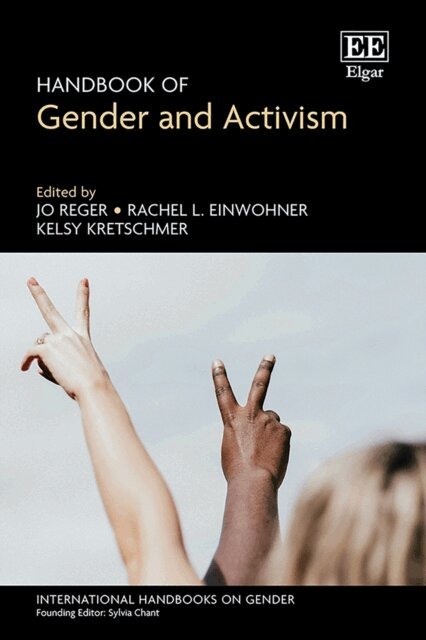
This innovative Handbook examines how gender shapes social activism and is shaped by activism. With a unique interdisciplinary focus, it explores the effects of the gender binary on experiences of activism, considering how different movements negotiate and, at times, challenge these traditional conceptions. The Handbook then moves beyond the binary with ground-breaking work from a range of scholars.Expert authors discuss the impact and limitations of the gender binary, using examples such as the MeToo movement to demonstrate how viewing men and women as separate, monolithic categories results in countless differences being overlooked. Chapters present a range of global and intersectional case studies such as the gender hierarchies in Swedish activism, Black women's involvement in abolition movements, and feminist campaigns in Saudi Arabia. The Handbook also moves beyond the binary, adopting a transfeminist approach in relation to the experiences of trans, intersex, and non-binary people, and crucially advocating for the conceptualization of a more expansive gender system and the ways in which gender aids activism and impedes it.This thought-provoking Handbook is a vital resource for students and scholars of gender politics, social movements, discrimination, and social inequality. It is also an enlightening read for academics interested in employing intersectional and transfeminist perspectives in their research.
Inbunden, Engelska, 2019
1 112 kr
Skickas inom 10-15 vardagar
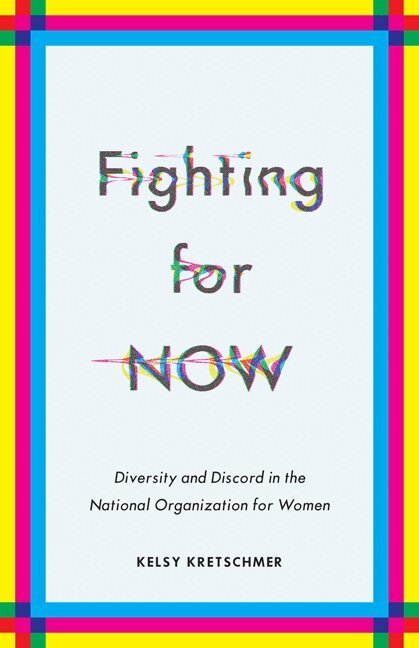
An unparalleled exploration of NOW's trajectory, from its founding to the present—and its futureA new wave of feminist energy has swept the globe since 2016—from women's marches and the #MeToo movement to transwomen's inclusion and exclusion in feminism and participation in institutional politics. Amid all this, an organization declared dead or dying for thirty years—the National Organization for Women—has seen a membership boom. NOW presents an intriguing puzzle for scholars and activists alike. Considered one of the most stable organizations in the feminist movement, it has experienced much conflict and schism. Scholars have long argued that factionalism is the death knell of organizations, yet NOW continues to thrive despite internal conflicts. Fighting for NOW seeks to better understand how bureaucratic structures like NOW's simultaneously provide stability and longevity, while creating space for productive and healthy conflict among members. Kelsy Kretschmer explores these ideas through an examination of conflict in NOW's local chapters, its task forces and committees, and its satellite groups. NOW's history provides evidence for three basic arguments: bureaucratic groups are not insulated from factionalism; they are important sites of creativity and innovation for their movements; and schisms are not inherently bad for movement organizations. Hence, Fighting for NOW is in stark contrast to conventional scholarship, which has conceptualized factionalism as organizational failure. It also provides one of the few book-length explorations of NOW's trajectory, from its founding to the modern context. Scholars will welcome the book's insights that draw on open systems and resource dependency theories, as well as its rethinking of how conflict shapes activist communities. Students will welcome its clear and compelling history of the feminist movement and of how feminist ideas have changed over the past five decades.
Häftad, Engelska, 2019
269 kr
Skickas inom 10-15 vardagar
An unparalleled exploration of NOW's trajectory, from its founding to the present—and its futureA new wave of feminist energy has swept the globe since 2016—from women's marches and the #MeToo movement to transwomen's inclusion and exclusion in feminism and participation in institutional politics. Amid all this, an organization declared dead or dying for thirty years—the National Organization for Women—has seen a membership boom. NOW presents an intriguing puzzle for scholars and activists alike. Considered one of the most stable organizations in the feminist movement, it has experienced much conflict and schism. Scholars have long argued that factionalism is the death knell of organizations, yet NOW continues to thrive despite internal conflicts. Fighting for NOW seeks to better understand how bureaucratic structures like NOW's simultaneously provide stability and longevity, while creating space for productive and healthy conflict among members. Kelsy Kretschmer explores these ideas through an examination of conflict in NOW's local chapters, its task forces and committees, and its satellite groups. NOW's history provides evidence for three basic arguments: bureaucratic groups are not insulated from factionalism; they are important sites of creativity and innovation for their movements; and schisms are not inherently bad for movement organizations. Hence, Fighting for NOW is in stark contrast to conventional scholarship, which has conceptualized factionalism as organizational failure. It also provides one of the few book-length explorations of NOW's trajectory, from its founding to the modern context. Scholars will welcome the book's insights that draw on open systems and resource dependency theories, as well as its rethinking of how conflict shapes activist communities. Students will welcome its clear and compelling history of the feminist movement and of how feminist ideas have changed over the past five decades.
Inbunden, Engelska, 2025
3 025 kr
Skickas inom 5-8 vardagar
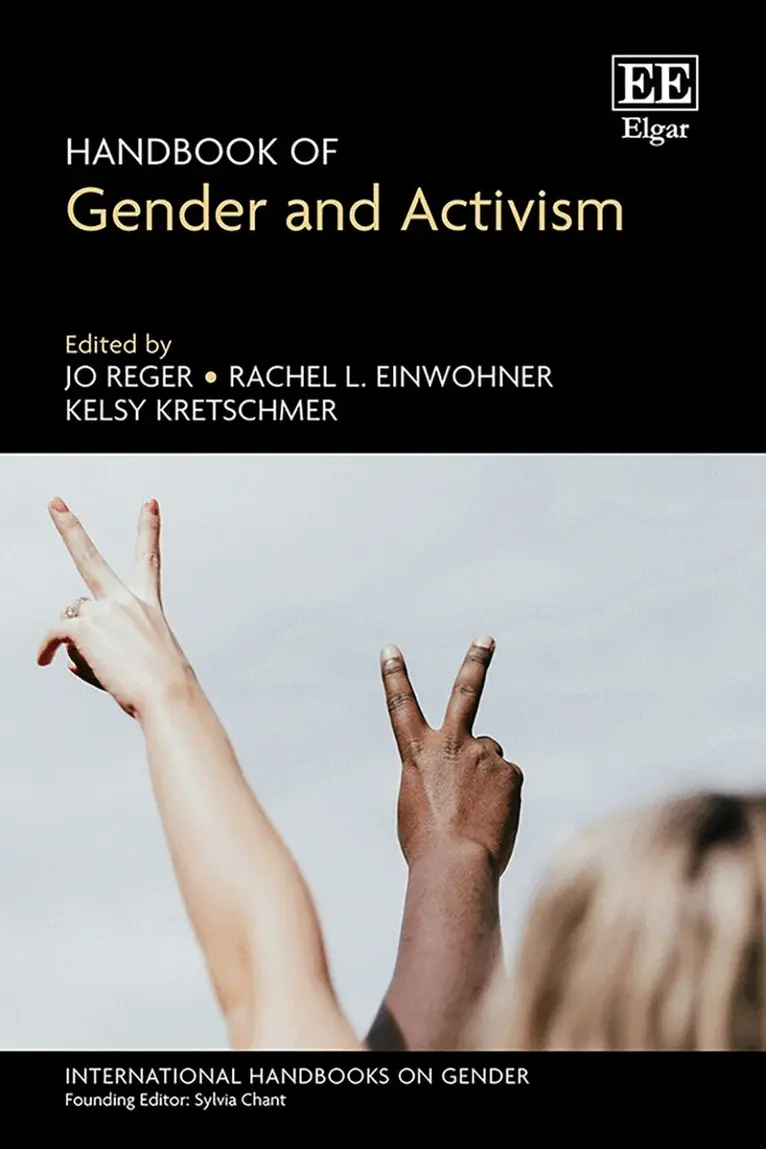
This innovative Handbook examines how gender shapes social activism and is shaped by activism. With a unique interdisciplinary focus, it explores the effects of the gender binary on experiences of activism, considering how different movements negotiate and, at times, challenge these traditional conceptions. The Handbook then moves beyond the binary with ground-breaking work from a range of scholars.Expert authors discuss the impact and limitations of the gender binary, using examples such as the MeToo movement to demonstrate how viewing men and women as separate, monolithic categories results in countless differences being overlooked. Chapters present a range of global and intersectional case studies such as the gender hierarchies in Swedish activism, Black women’s involvement in abolition movements, and feminist campaigns in Saudi Arabia. The Handbook also moves beyond the binary, adopting a transfeminist approach in relation to the experiences of trans, intersex, and non-binary people, and crucially advocating for the conceptualization of a more expansive gender system and the ways in which gender aids activism and impedes it.This thought-provoking Handbook is a vital resource for students and scholars of gender politics, social movements, discrimination, and social inequality. It is also an enlightening read for academics interested in employing intersectional and transfeminist perspectives in their research.
E-bok
PDF, Engelska, 2025825 kr
Läs direkt efter köp
This innovative Handbook examines how gender shapes social activism and is shaped by activism. With a unique interdisciplinary focus, it explores the effects of the gender binary on experiences of activism, considering how different movements negotiate and, at times, challenge these traditional conceptions. The Handbook then moves beyond the binary with ground-breaking work from a range of scholars.Expert authors discuss the impact and limitations of the gender binary, using examples such as the MeToo movement to demonstrate how viewing men and women as separate, monolithic categories results in countless differences being overlooked. Chapters present a range of global and intersectional case studies such as the gender hierarchies in Swedish activism, Black women's involvement in abolition movements, and feminist campaigns in Saudi Arabia. The Handbook also moves beyond the binary, adopting a transfeminist approach in relation to the experiences of trans, intersex, and non-binary people, and crucially advocating for the conceptualization of a more expansive gender system and the ways in which gender aids activism and impedes it.This thought-provoking Handbook is a vital resource for students and scholars of gender politics, social movements, discrimination, and social inequality. It is also an enlightening read for academics interested in employing intersectional and transfeminist perspectives in their research.