Ken Gemes - Böcker
Visar alla böcker från författaren Ken Gemes. Handla med fri frakt och snabb leverans.
4 produkter
4 produkter
538 kr
Skickas inom 5-8 vardagar
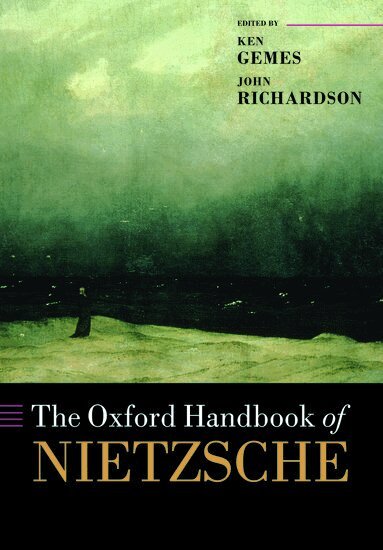
The diversity of Nietzsche's books, and the sheer range of his philosophical interests, have posed daunting challenges to his interpreters. This Oxford Handbook addresses this multiplicity by devoting each of its 32 essays to a focused topic, picked out by the book's systematic plan. The aim is to treat each topic at the best current level of philosophical scholarship on Nietzsche. The first group of papers treat selected biographical issues: his family relations, his relations to women, and his ill health and eventual insanity. In Part 2 the papers treat Nietzsche in historical context: his relations back to other philosophers--the Greeks, Kant, and Schopenhauer--and to the cultural movement of Romanticism, as well as his own later influence in an unlikely place, on analytic philosophy. The papers in Part 3 treat a variety of Nietzsche's works, from early to late and in styles ranging from the 'aphoristic' The Gay Science and Beyond Good and Evil through the poetic-mythic Thus Spoke Zarathustra to the florid autobiography Ecce Homo. This focus on individual works, their internal unity, and the way issues are handled within them, is an important complement to the final three groups of papers, which divide up Nietzsche's philosophical thought topically. The papers in Part 4 treat issues in Nietzsche's value theory, ranging from his metaethical views as to what values are, to his own values of freedom and the overman, to his insistence on 'order of rank', and his social-political views. The fifth group of papers treat Nietzsche's epistemology and metaphysics, including such well-known ideas as his perspectivism, his promotion of becoming over being, and his thought of eternal recurrence. Finally, Part 6 treats another famous idea--the will to power--as well as two linked ideas that he uses will to power to explain, the drives, and life. This Handbook will be a key resource for all scholars and advanced students who work on Nietzsche.
1 165 kr
Skickas inom 5-8 vardagar
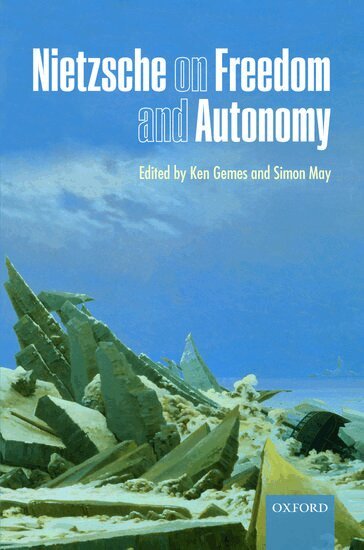
The principal aim of this volume is to elucidate what freedom, sovereignty, and autonomy mean for Nietzsche and what philosophical resources he gives us to re-think these crucial concepts. A related aim is to examine how Nietzsche connects these concepts to his thoughts about life-affirmation, self-love, promise-making, agency, the 'will to nothingness', and the 'eternal recurrence', as well as to his search for a 'genealogical' understanding of morality. These twelve essays by leading Nietzsche scholars ask such key questions as: Can we reconcile his rejection of free will with his positive invocations of the notion of free will? How does Nietzsche's celebration of freedom and free spirits sit with his claim that we all have an unchangeable fate? What is the relation between his concepts of freedom and self-overcoming?The depth in which these and related issues are explored gives this volume its value, not only to those interested in Nietzsche, but to all who are concerned with the free will debate, ethics, theory of action, and the history of philosophy.
2 106 kr
Skickas inom 5-8 vardagar
The diversity of Nietzsche's books, and the sheer range of his philosophical interests, have posed daunting challenges to his interpreters. This Oxford Handbook addresses this multiplicity by devoting each of its 32 essays to a focused topic, picked out by the book's systematic plan. The aim is to treat each topic at the best current level of philosophical scholarship on Nietzsche. The first group of papers treat selected biographical issues: his family relations, his relations to women, and his ill health and eventual insanity. In Part 2 the papers treat Nietzsche in historical context: his relations back to other philosophers--the Greeks, Kant, and Schopenhauer--and to the cultural movement of Romanticism, as well as his own later influence in an unlikely place, on analytic philosophy. The papers in Part 3 treat a variety of Nietzsche's works, from early to late and in styles ranging from the 'aphoristic' The Gay Science and Beyond Good and Evil through the poetic-mythic Thus Spoke Zarathustra to the florid autobiography Ecce Homo. This focus on individual works, their internal unity, and the way issues are handled within them, is an important complement to the final three groups of papers, which divide up Nietzsche's philosophical thought topically. The papers in Part 4 treat issues in Nietzsche's value theory, ranging from his metaethical views as to what values are, to his own values of freedom and the overman, to his insistence on 'order of rank', and his social-political views. The fifth group of papers treat Nietzsche's epistemology and metaphysics, including such well-known ideas as his perspectivism, his INSERT: Included in Starkmann 40% promotion, September-October 2014 being, and his thought of eternal recurrence. Finally, Part 6 treats another famous idea--the will to power--as well as two linked ideas that he uses will to power to explain, the drives, and life. This Handbook will be a key resource for all scholars and advanced students who work on Nietzsche.
546 kr
Skickas inom 5-8 vardagar
The principal aim of this volume is to elucidate what freedom, sovereignty, and autonomy mean for Nietzsche and what philosophical resources he gives us to re-think these crucial concepts. A related aim is to examine how Nietzsche connects these concepts to his thoughts about life-affirmation, self-love, promise-making, agency, the 'will to nothingness', and the 'eternal recurrence', as well as to his search for a 'genealogical' understanding of morality. These twelve essays by leading Nietzsche scholars ask such key questions as: Can we reconcile his rejection of free will with his positive invocations of the notion of free will? How does Nietzsche's celebration of freedom and free spirits sit with his claim that we all have an unchangeable fate? What is the relation between his concepts of freedom and self-overcoming? The depth in which these and related issues are explored gives this volume its value, not only to those interested in Nietzsche, but to all who are concerned with the free will debate, ethics, theory of action, and the history of philosophy.