Ken Ho - Böcker
Visar alla böcker från författaren Ken Ho. Handla med fri frakt och snabb leverans.
6 produkter
6 produkter
758 kr
Skickas inom 10-15 vardagar
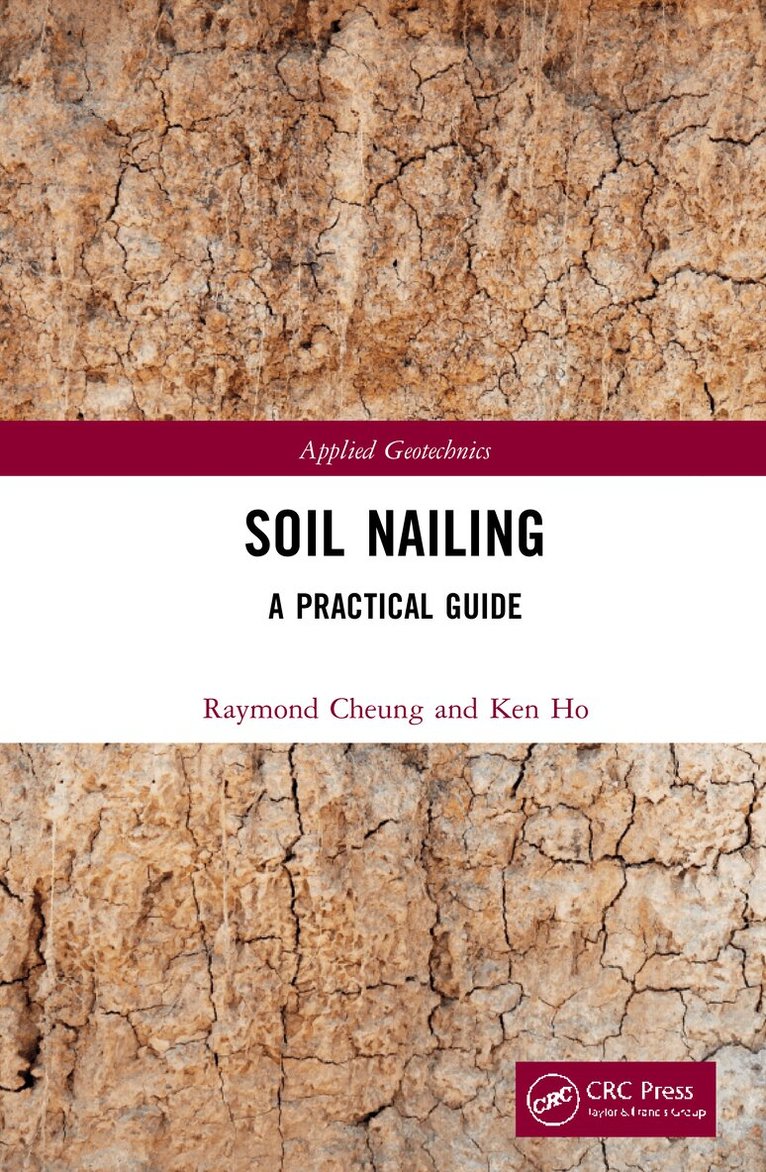
Soil nailing is an in situ soil reinforcement technique that can be used to enhance the stability of slopes, retaining walls, embankments, and excavations. It involves installation of closely spaced, relatively slender unstressed tension-carrying structural elements into the ground to stabilize the soil mass. These elements, which are called soil nails, comprise steel or other engineering materials such as fiber reinforced polymer. Soil nailing did not gain popularity until the 1970s when engineers started to realize that the technique could offer an effective, robust, and economical reinforcing system for a variety of ground conditions. More importantly, the track record has been excellent in that no major collapses have been reported in properly designed and well-constructed soil nailed structures so far. Considerable experience and knowledge of the technique have been gained in the past few decades through systematic technical development work comprising laboratory tests, numerical modeling, physical modeling, site trials and field monitoring covering design, and construction practices.Soil Nailing: A Practical Guide consolidates the experience and advances made in the development and use of the soil nailing technique and encourages a wider adoption of the technique by practitioners. The book is intended for use by postgraduate students, researchers, and practicing civil and geotechnical engineers, who wish to have a more in-depth and fundamental understanding of the theory and practice behind the technique. It presents the basic principles of the technique as well as state-of-the-art knowledge and recommended standard of good practice in respect of design, construction, monitoring, and maintenance of soil nailed structures.
1 113 kr
Skickas inom 10-15 vardagar
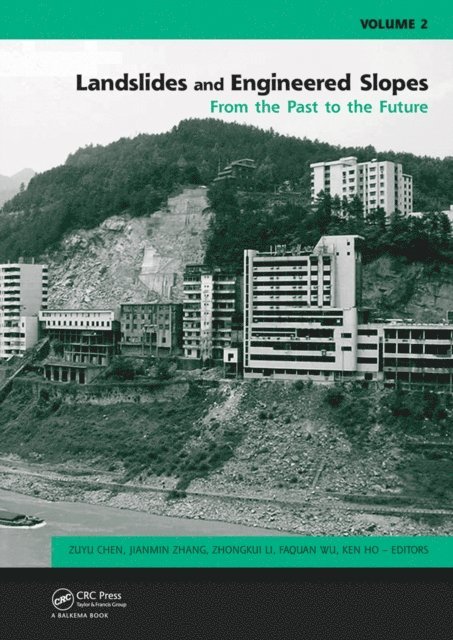
Many countries are increasingly threatened by major landslide disasters and fatalities due to extreme weather events which have major implications for public safety and the sustainability of infrastructure and the built environment. A further increase in such a trend could come from climate change.This book helps to fill in the gap due to the fact that landslide hazards are commonly not covered under the policy debate on climate change. The book highlights the importance of raising awareness to the challenges of landslide hazards due to climate impact. It provides a holistic frame for understanding the key issues and new tools that could be used to assess and manage the landslide risks.The book gathers contributions from 21 countries and regions in the form of national reports or summaries with respect to four key aspects: a) the methods used for evaluating changing weather and changing landslide patterns; b) the changing weather patterns; c) the changing landslide patterns and hazard scenarios; d) the applications to risk management and the formulation of adaptation measures.Recommendations are made for enhanced preparedness and resilience. Improved crisis management and areas for future work are suggested.
2 035 kr
Skickas inom 10-15 vardagar
Soil nailing is an in situ soil reinforcement technique that can be used to enhance the stability of slopes, retaining walls, embankments, and excavations. It involves installation of closely spaced, relatively slender unstressed tension-carrying structural elements into the ground to stabilize the soil mass. These elements, which are called soil nails, comprise steel or other engineering materials such as fiber reinforced polymer. Soil nailing did not gain popularity until the 1970s when engineers started to realize that the technique could offer an effective, robust, and economical reinforcing system for a variety of ground conditions. More importantly, the track record has been excellent in that no major collapses have been reported in properly designed and well-constructed soil nailed structures so far. Considerable experience and knowledge of the technique have been gained in the past few decades through systematic technical development work comprising laboratory tests, numerical modeling, physical modeling, site trials and field monitoring covering design, and construction practices.Soil Nailing: A Practical Guide consolidates the experience and advances made in the development and use of the soil nailing technique and encourages a wider adoption of the technique by practitioners. The book is intended for use by postgraduate students, researchers, and practicing civil and geotechnical engineers, who wish to have a more in-depth and fundamental understanding of the theory and practice behind the technique. It presents the basic principles of the technique as well as state-of-the-art knowledge and recommended standard of good practice in respect of design, construction, monitoring, and maintenance of soil nailed structures.
2 711 kr
Skickas inom 7-10 vardagar
Many countries are increasingly threatened by major landslide disasters and fatalities due to extreme weather events which have major implications for public safety and the sustainability of infrastructure and the built environment. A further increase in such a trend could come from climate change.This book helps to fill in the gap due to the fact that landslide hazards are commonly not covered under the policy debate on climate change. The book highlights the importance of raising awareness to the challenges of landslide hazards due to climate impact. It provides a holistic frame for understanding the key issues and new tools that could be used to assess and manage the landslide risks.The book gathers contributions from 21 countries and regions in the form of national reports or summaries with respect to four key aspects: a) the methods used for evaluating changing weather and changing landslide patterns; b) the changing weather patterns; c) the changing landslide patterns and hazard scenarios; d) the applications to risk management and the formulation of adaptation measures.Recommendations are made for enhanced preparedness and resilience. Improved crisis management and areas for future work are suggested.
Growth Hormone Related Diseases and Therapy
A Molecular and Physiological Perspective for the Clinician
Inbunden, Engelska, 2011
2 181 kr
Skickas inom 10-15 vardagar
The molecular era ushered in the cloning of the growth hormone (GH) gene and the production of unlimited amounts of GH through recombinant technology. The continuing momentum of research from basic science to clinical evaluation has brought unprecedented advances to the understanding of GH biology for the clinical endocrinologist. Growth Hormone Related Diseases and Therapy: A Molecular and Physiological Perspective for the Clinician distills all the new information of relevance to the endocrinologist over the last 20 years by offering five sections: physiology, molecular genetics, GH deficiency, acromegaly and pharmacotherapy. The first section on physiology focuses on GH action. A review on the structure and function of the GH receptor is followed by a perspective on the regulatory role of ghrelin on GH secretion. The second section on genetics covers pituitary function and adenomas, including new and fascinating information on familial pituitary adenomas, their genotype and phenotype. The adult GH deficiency section spans the epidemiology and diagnosis of GH deficiency with a strong reminder for the clinician that the transition period represents a critical time of somatic maturation, which continues for years after cessation of liner growth. The section on acromegaly focuses on management, giving practical guides to the value of GH and IGF-1 measurements, the place of somatostatin analogues and of radiotherapy while reminding the reader as to why evaluating quality of life is an important part of management. Finally, the section on GH pharmacology takes the reader through innovative developments of long-acting GH formulations with some products on the threshold of clinical use. This section provides a balanced evidence based review ofthe effects of GH supplementation in aging and in sports where recent data indicates an enhancing effect on a selective aspect of performance. Growth Hormone Related Diseases and Therapy: A Molecular and Physiological Perspective for the Clinician integrates a wealth of information and will prove an invaluable reference for pediatric endocrinologists, adult endocrinologists, endocrine scientists and internists interested in the human biology of GH.
Growth Hormone Related Diseases and Therapy
A Molecular and Physiological Perspective for the Clinician
Häftad, Engelska, 2013
2 399 kr
Skickas inom 10-15 vardagar
The molecular era ushered in the cloning of the growth hormone (GH) gene and the production of unlimited amounts of GH through recombinant technology. The continuing momentum of research from basic science to clinical evaluation has brought unprecedented advances to the understanding of GH biology for the clinical endocrinologist. Growth Hormone Related Diseases and Therapy: A Molecular and Physiological Perspective for the Clinician distills all the new information of relevance to the endocrinologist over the last 20 years by offering five sections: physiology, molecular genetics, GH deficiency, acromegaly and pharmacotherapy. The first section on physiology focuses on GH action. A review on the structure and function of the GH receptor is followed by a perspective on the regulatory role of ghrelin on GH secretion. The second section on genetics covers pituitary function and adenomas, including new and fascinating information on familial pituitary adenomas, their genotype and phenotype. The adult GH deficiency section spans the epidemiology and diagnosis of GH deficiency with a strong reminder for the clinician that the transition period represents a critical time of somatic maturation, which continues for years after cessation of liner growth. The section on acromegaly focuses on management, giving practical guides to the value of GH and IGF-1 measurements, the place of somatostatin analogues and of radiotherapy while reminding the reader as to why evaluating quality of life is an important part of management. Finally, the section on GH pharmacology takes the reader through innovative developments of long-acting GH formulations with some products on the threshold of clinical use. This section provides a balanced evidence based review ofthe effects of GH supplementation in aging and in sports where recent data indicates an enhancing effect on a selective aspect of performance. Growth Hormone Related Diseases and Therapy: A Molecular and Physiological Perspective for the Clinician integrates a wealth of information and will prove an invaluable reference for pediatric endocrinologists, adult endocrinologists, endocrine scientists and internists interested in the human biology of GH.