Kendall – författare
Visar alla böcker från författaren Kendall. Handla med fri frakt och snabb leverans.
6 produkter
6 produkter
180 kr
Skickas
The Second World War is now recognized as a watershed for British poetry. The changes that arose were masked for some time by the enormous power and shock of the conflict itself, and by the restrictions on poetry publishing consequent on paper rationing and the general business of wartime. This anthology seeks to showcase not only the harrowingly beautiful poetry born from the conflict, but also the radical changes to style and form that came from the epoch and altered the face of British poetry. Featuring generous selections of famous poets, including Dylan Thomas, T. S. Eliot, and W. H. Auden, alongside works by civilians and soldiers, the collection offers a symphony of different voices, all connected in their shared experience of the Second World War. Tim Kendall's introduction charts the history of the war poets' reception, explaining their relationship with their First World War predecessors and some of the reasons why they have never managed to reach such a wide audience. The work of each poet is prefaced with a biographical account which allows poems to be read in their historical context, and every poem is annotated with date of composition, publication history, and a gloss of words and allusions.

314 kr
Skickas inom 5-8 vardagar
258 kr
Skickas inom 5-8 vardagar
421 kr
Skickas inom 5-8 vardagar
Del 66 - Translated Texts for Historians
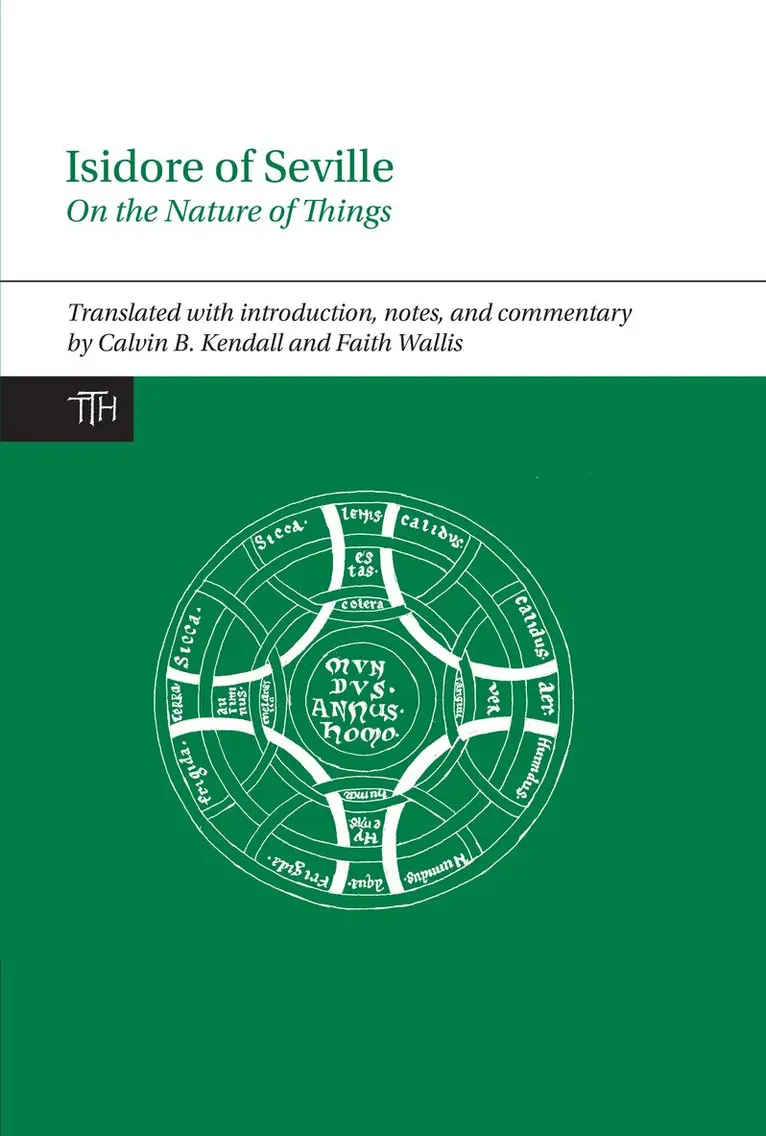
Isidore of Seville, On the Nature of Things
Inbunden, Engelska, 2016
1 677 kr
Skickas inom 5-8 vardagar
For scholars in the European Middle Ages, Isidore, bishop of Seville (560? — 636) was one of the most influential authorities for understanding the natural world. Isidore’s On the Nature of Things is the first work on natural science by a Christian author that is not a commentary on the creation story in Genesis. Instead, Isidore adopted a classical model to describe the structure of the physical cosmos, and discuss the principles of astronomy, physics, geography, meteorology and time-reckoning. Into this framework he incorporated an eclectic array of ancient and patristic erudition. The fact that On the Nature of Things presents an essentially Greco-Roman picture of the universe, but amplified with Christian reflections and allegories, played a crucial role in the assimilation of ancient science into the emerging culture of the Middle Ages. It exerted a deep and long-lasting influence on scholars like Bede, one of whose earliest works was an adaptation of On the Nature of Things. On the Nature of Things provides a new window into vital intellectual currents, as yet largely unexplored, flowing from Visigothic Spain into Celtic Ireland, Anglo-Saxon England, and Merovingian France. This is the first translation of this work into English. The introduction places the work in the context of Isidore's milieu and concerns, and traces the remarkable diffusion of his book. A chapter-by-chapter commentary explains how Isidore selected and transformed his source material, and added his own distinctive features, notably the diagrams that gave this work its medieval name The Book of Wheels (Liber rotarum).
Del 66 - Translated Texts for Historians
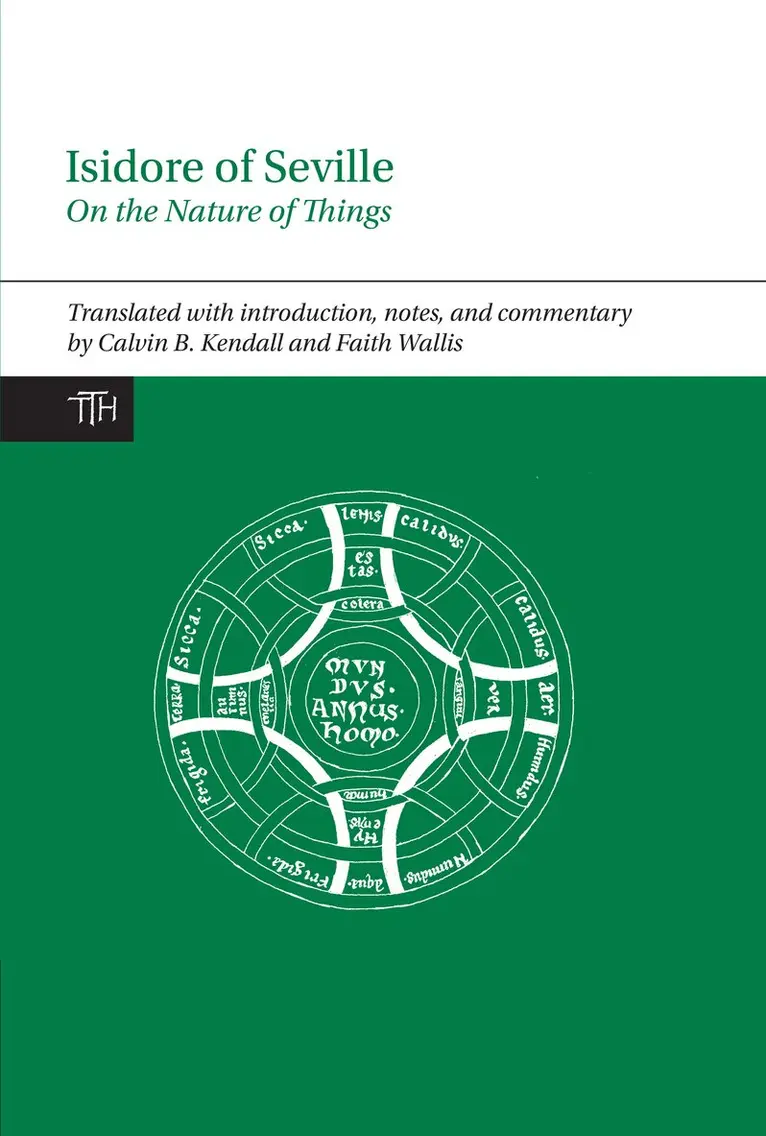
Isidore of Seville, On the Nature of Things
Häftad, Engelska, 2016
518 kr
Skickas inom 5-8 vardagar
For scholars in the European Middle Ages, Isidore, bishop of Seville (560? — 636) was one of the most influential authorities for understanding the natural world. Isidore’s On the Nature of Things is the first work on natural science by a Christian author that is not a commentary on the creation story in Genesis. Instead, Isidore adopted a classical model to describe the structure of the physical cosmos, and discuss the principles of astronomy, physics, geography, meteorology and time-reckoning. Into this framework he incorporated an eclectic array of ancient and patristic erudition. The fact that On the Nature of Things presents an essentially Greco-Roman picture of the universe, but amplified with Christian reflections and allegories, played a crucial role in the assimilation of ancient science into the emerging culture of the Middle Ages. It exerted a deep and long-lasting influence on scholars like Bede, one of whose earliest works was an adaptation of On the Nature of Things. On the Nature of Things provides a new window into vital intellectual currents, as yet largely unexplored, flowing from Visigothic Spain into Celtic Ireland, Anglo-Saxon England, and Merovingian France. This is the first translation of this work into English. The introduction places the work in the context of Isidore's milieu and concerns, and traces the remarkable diffusion of his book. A chapter-by-chapter commentary explains how Isidore selected and transformed his source material, and added his own distinctive features, notably the diagrams that gave this work its medieval name The Book of Wheels (Liber rotarum).