Kendra Paskvan – författare
Visar alla böcker från författaren Kendra Paskvan. Handla med fri frakt och snabb leverans.
3 produkter
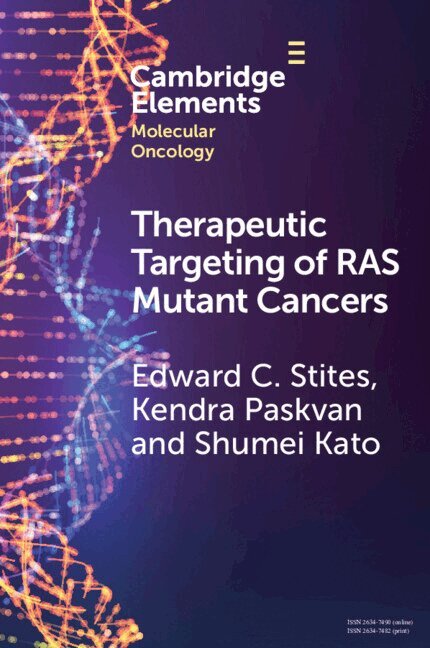
Therapeutic Targeting of RAS Mutant Cancers
Av Edward C. Stites, Kendra Paskvan m. fl.
Häftad, 2022
311 kr
Lägg i varukorg
The KRAS oncogene is believed to be the most common single nucleotide variant oncogene in human cancer. Historically, efforts to target KRAS and the other RAS GTPases have struggled. More recently, efforts have focused on identifying and exploiting features unique to specific oncogenic mutations. …
Therapeutic Targeting of RAS Mutant Cancers
Av Shumei Kato, Kendra Paskvan m. fl.
E-bok, 2022
303 kr
Lägg i varukorg
The KRAS oncogene is believed to be the most common single nucleotide variant oncogene in human cancer. Historically, efforts to target KRAS and the other RAS GTPases have struggled. More recently, efforts have focused on identifying and exploiting features unique to specific oncogenic mutations. …
Therapeutic Targeting of RAS Mutant Cancers
Av Shumei Kato, Kendra Paskvan m. fl.
E-bok, 2022
303 kr
Lägg i varukorg
The KRAS oncogene is believed to be the most common single nucleotide variant oncogene in human cancer. Historically, efforts to target KRAS and the other RAS GTPases have struggled. More recently, efforts have focused on identifying and exploiting features unique to specific oncogenic mutations. …