Kenji Uchino – författare
5 459 kr
Läs direkt efter köp
4 272 kr
Läs direkt efter köp
2 437 kr
Skickas inom 10-15 vardagar
2 997 kr
Skickas inom 10-15 vardagar
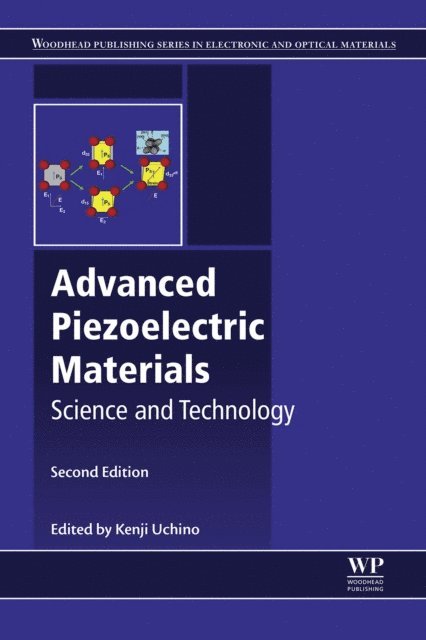
Advanced Piezoelectric Materials: Science and Technology, Second Edition, provides revised, expanded, and updated content suitable for those researching piezoelectric materials or using them to develop new devices in areas such as microelectronics, optical, sound, structural, and biomedical engineering.
Three new chapters cover multilayer technologies with base-metal internal electrodes, templated grain growth preparation techniques for manufacturing piezoelectric single crystals, and piezoelectric MEMS technologies. Chapters from the first edition have been revised in order to provide up-to-date, comprehensive coverage of developments in the field.
Part One covers the structure and properties of a range of piezoelectric materials. Part Two details advanced manufacturing processes for particular materials and device types, including three new chapters. Finally, Part Three covers materials development for three key applications of piezoelectric materials.
Dr. Kenji Uchino is a pioneer in piezoelectric actuators, Professor of Electrical Engineering at Penn State University, and Director of the International Center for Actuators and Transducers. He has authored 550 papers, 54 books and 26 patents in the ceramic actuator area.
Features an overview of manufacturing methods for a wide range of piezoelectric materials Provides revised, expanded, and updated coverage compared to the first edition, including three new chapters Suitable for those researching piezoelectric materials or using them to develop new devices in areas such as microelectronics, optical, sound, structural, and biomedical engineering2 435 kr
Skickas inom 10-15 vardagar
1 475 kr
Skickas inom 10-15 vardagar
727 kr
Skickas inom 10-15 vardagar
909 kr
Läs direkt efter köp
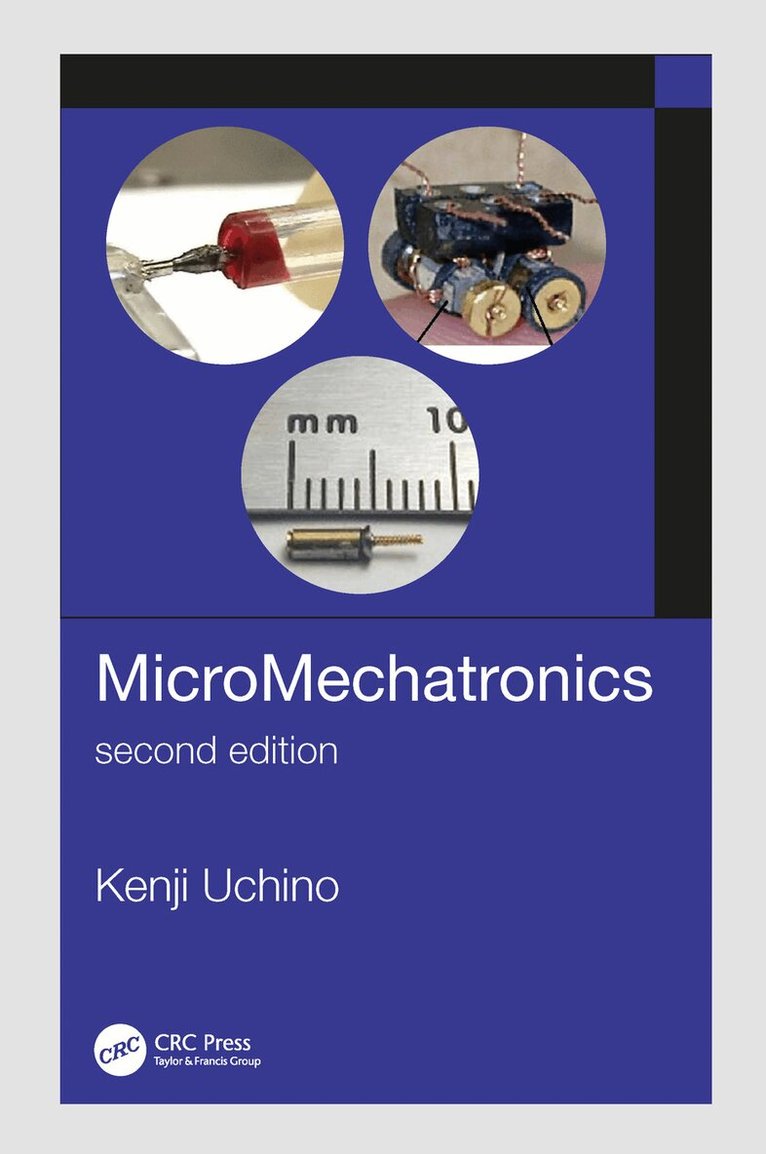
After Uchino’s introduction of a new terminology, ‘Micromechatronics’ in 1979 for describing the application area of ‘piezoelectric actuators’, the rapid advances in semiconductor chip technology have led to a new terminology MEMS(micro-electro-mechanical-system) or even NEMS (nano-electro-mechanicalsystem) to describe mainly thin film sensor/actuator devices, a narrower area of micromechatronics coverage. New technologies, product developments and commercialization are providing the necessity of this major revision. In particular, the progresses in high power transducers, loss mechanisms in smart materials, energy harvesting and computer simulations are significant.
New technologies, product developments and commercialization are providingthe updating requirement for the book contents, in parallel to the deletion of oldcontents. Various educational/instructional example problems have been accumulated, which were integrated in the new edition in order to facilitate the self-learning for the students, and the quiz/problem creation for theinstructors. Heavily revised topics from the previous edition include: high power transducers, loss mechanisms in smartmaterials, energy harvesting and computer simulations New technologies, product developments and commercialization helped shape the updated contents of this book where all chapters have been updated and revised. This textbook is intended for graduate students and industrial engineers studying orworking in the fields of electronic materials, control system engineering, opticalcommunications, precision machinery, and robotics. The text is designed primarilyfor a graduate course with the equivalent of thirty 75-minute lectures; however, it isalso suitable for self-study by individuals wishing to extend their knowledge in thefield.942 kr
Läs direkt efter köp
After Uchino’s introduction of a new terminology, ‘Micromechatronics’ in 1979 for describing the application area of ‘piezoelectric actuators’, the rapid advances in semiconductor chip technology have led to a new terminology MEMS(micro-electro-mechanical-system) or even NEMS (nano-electro-mechanicalsystem) to describe mainly thin film sensor/actuator devices, a narrower area of micromechatronics coverage. New technologies, product developments and commercialization are providing the necessity of this major revision. In particular, the progresses in high power transducers, loss mechanisms in smart materials, energy harvesting and computer simulations are significant.
New technologies, product developments and commercialization are providingthe updating requirement for the book contents, in parallel to the deletion of oldcontents. Various educational/instructional example problems have been accumulated, which were integrated in the new edition in order to facilitate the self-learning for the students, and the quiz/problem creation for theinstructors. Heavily revised topics from the previous edition include: high power transducers, loss mechanisms in smartmaterials, energy harvesting and computer simulations New technologies, product developments and commercialization helped shape the updated contents of this book where all chapters have been updated and revised. This textbook is intended for graduate students and industrial engineers studying orworking in the fields of electronic materials, control system engineering, opticalcommunications, precision machinery, and robotics. The text is designed primarilyfor a graduate course with the equivalent of thirty 75-minute lectures; however, it isalso suitable for self-study by individuals wishing to extend their knowledge in thefield.Piezoelectric Materials: Advances in Science, Technology and Applications
546 kr
Skickas inom 10-15 vardagar
3 238 kr
Skickas inom 10-15 vardagar
2 163 kr
Skickas inom 10-15 vardagar
2 374 kr
Läs direkt efter köp
795 kr
Läs direkt efter köp
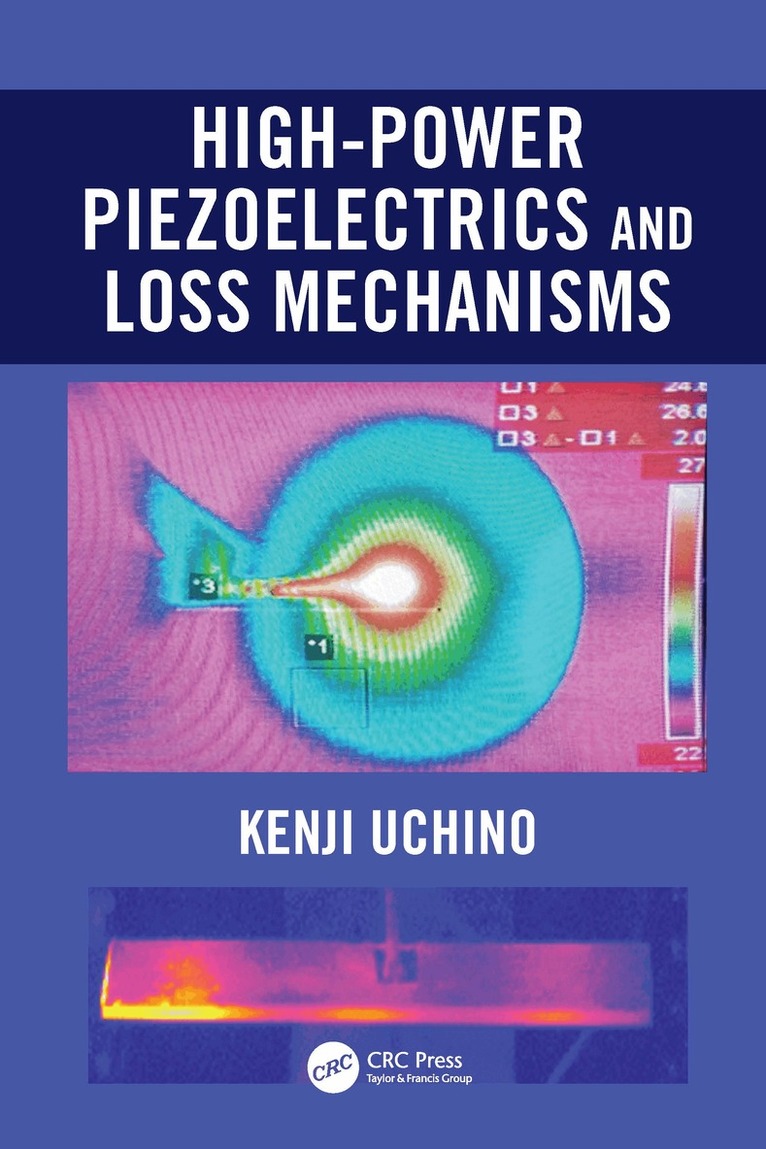
As one of the pioneers of "Piezoelectric Actuators", I have contributed to the commercialization of various products for over 45 years, including million-selling devices, micro-ultrasonic motors for smart-phone camera modules by Samsung Electromechanics, piezoelectric transformers for backlight inverters by Apple laptops, multilayer PZT actuators for diesel injection valves by Denso Corporation, and piezoelectric energy harvesting modules for Programable Air-Burst Munition by the US Army. During the development period for "piezoelectric actuators and transformers," I found that the bottleneck for device miniaturization was heat generation under a high-power drive condition. Thus, in parallel to the piezo-actuator developments, I have been developing various high-power density piezo-ceramic materials with the loss mechanism clarification. Hence, I considered that it was time to organize a textbook based on the previous studies, including my materials development philosophy to stimulate younger generations to reach to the energy density of up to 100 W/cm3 in the future. Increasing efficiency and saving energy and space (compactness) are one of the important approaches in this 21st-century "sustainable society."
High-Power Piezoelectrics and Loss Mechanisims introduces the theoretical background of piezoelectrics, electromechanical phenomenology, loss mechanisms, practical materials, device designs, drive and characterization techniques, and typical applications, and looks forward to the future perspectives in this field. This book is NOT an overall review of this area, but it focuses on important and basic ideas under my development philosophy to understand how to design and develop high-power piezoelectric materials and devices.
This textbook is designed for self-learning by the reader aided by the availability of:
• Chapter Essentials – Summary for quick memory recovery
• Check Points – Answers are provided in the Appendix
• Example Problems – To enhance the reader’s understanding with full, detailed solutions
• Chapter Problems – For the final exam or further consideration
795 kr
Läs direkt efter köp
As one of the pioneers of "Piezoelectric Actuators", I have contributed to the commercialization of various products for over 45 years, including million-selling devices, micro-ultrasonic motors for smart-phone camera modules by Samsung Electromechanics, piezoelectric transformers for backlight inverters by Apple laptops, multilayer PZT actuators for diesel injection valves by Denso Corporation, and piezoelectric energy harvesting modules for Programable Air-Burst Munition by the US Army. During the development period for "piezoelectric actuators and transformers," I found that the bottleneck for device miniaturization was heat generation under a high-power drive condition. Thus, in parallel to the piezo-actuator developments, I have been developing various high-power density piezo-ceramic materials with the loss mechanism clarification. Hence, I considered that it was time to organize a textbook based on the previous studies, including my materials development philosophy to stimulate younger generations to reach to the energy density of up to 100 W/cm3 in the future. Increasing efficiency and saving energy and space (compactness) are one of the important approaches in this 21st-century "sustainable society."
High-Power Piezoelectrics and Loss Mechanisims introduces the theoretical background of piezoelectrics, electromechanical phenomenology, loss mechanisms, practical materials, device designs, drive and characterization techniques, and typical applications, and looks forward to the future perspectives in this field. This book is NOT an overall review of this area, but it focuses on important and basic ideas under my development philosophy to understand how to design and develop high-power piezoelectric materials and devices.
This textbook is designed for self-learning by the reader aided by the availability of:
• Chapter Essentials – Summary for quick memory recovery
• Check Points – Answers are provided in the Appendix
• Example Problems – To enhance the reader’s understanding with full, detailed solutions
• Chapter Problems – For the final exam or further consideration
841 kr
Skickas inom 10-15 vardagar
1 143 kr
Läs direkt efter köp
384 kr
Skickas inom 7-10 vardagar
2 834 kr
Skickas inom 10-15 vardagar
3 326 kr
Läs direkt efter köp
In Light Driven Micromachines, the fundamental principles and unique characteristics of light driven material structures, simple mechanisms and integrated machines are explored. Very small light driven systems provide a number of interesting features and unique design opportunities because streams of photons deliver energy into the system and provide the control signal used to regulate the response of the micron sized device. Through innovative material design and clever component fabrication, these optically powered tiny machines can be created to perform mechanical work when exposed to varying light intensity, wavelength, phase, and/or polarization.
The book begins with the scientific background necessary to understand the nature of light and how light can initiate physical movement by inducing material deformation or altering the surrounding environment to impose micro-forces on the actuating mechanisms. The impact of physical size on the performance of light driven mechanisms and machines is discussed, and the nature of light–material interactions is reviewed. These interactions enable very small objects and mechanical components to be trapped and manipulated by a focused light beam, or produce local temperature gradients that force certain materials to undergo shape transformation. Advanced phase transition gels, polymers, carbon-based films and piezoelectric ceramics that exhibit direct light-to-mechanical energy conversion are examined from the perspective of designing optically driven actuators and mechanical systems. The ability of light to create photothermal effects that drive microfluidic processes and initiate the phase transformation of temperature sensitive shape memory materials are also explored in the book.
This compendium seeks to inspire the next generation of scientists and engineers by presenting the fundamental principles of this emerging interdisciplinary technology and exploring how the properties of light can be exploited for microfluidic, microrobotic, biomedical and space applications.
3 446 kr
Läs direkt efter köp
In Light Driven Micromachines, the fundamental principles and unique characteristics of light driven material structures, simple mechanisms and integrated machines are explored. Very small light driven systems provide a number of interesting features and unique design opportunities because streams of photons deliver energy into the system and provide the control signal used to regulate the response of the micron sized device. Through innovative material design and clever component fabrication, these optically powered tiny machines can be created to perform mechanical work when exposed to varying light intensity, wavelength, phase, and/or polarization.
The book begins with the scientific background necessary to understand the nature of light and how light can initiate physical movement by inducing material deformation or altering the surrounding environment to impose micro-forces on the actuating mechanisms. The impact of physical size on the performance of light driven mechanisms and machines is discussed, and the nature of light–material interactions is reviewed. These interactions enable very small objects and mechanical components to be trapped and manipulated by a focused light beam, or produce local temperature gradients that force certain materials to undergo shape transformation. Advanced phase transition gels, polymers, carbon-based films and piezoelectric ceramics that exhibit direct light-to-mechanical energy conversion are examined from the perspective of designing optically driven actuators and mechanical systems. The ability of light to create photothermal effects that drive microfluidic processes and initiate the phase transformation of temperature sensitive shape memory materials are also explored in the book.
This compendium seeks to inspire the next generation of scientists and engineers by presenting the fundamental principles of this emerging interdisciplinary technology and exploring how the properties of light can be exploited for microfluidic, microrobotic, biomedical and space applications.
2 354 kr
Läs direkt efter köp
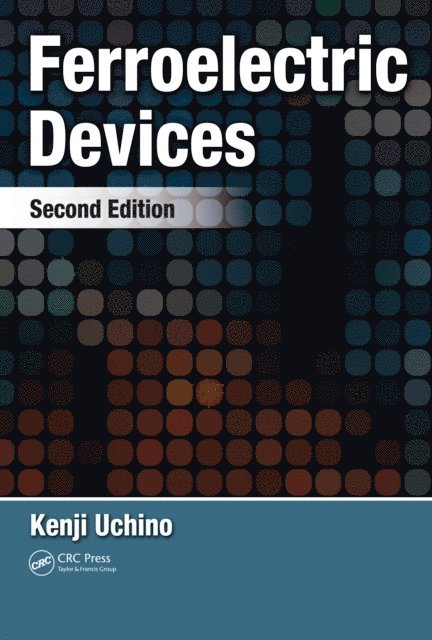
Updating its bestselling predecessor, Ferroelectric Devices, Second Edition assesses the last decade of developments—and setbacks—in the commercialization of ferroelectricity. Field pioneer and esteemed author Uchino provides insight into why this relatively nascent and interdisciplinary process has failed so far without a systematic accumulation of fundamental knowledge regarding materials and device development.
Filling the informational void, this collection of information reviews state-of-the-art research and development trends reflecting nano and optical technologies, environmental regulation, and alternative energy sources. Like the first edition, which became a standard in the field, this volume provides a general introduction to ferroelectrics with theoretical background. It then addresses practical design and device manufacturing, including recently developed processes and applications. Updating old data with a forecast of future developments, the text analyzes improvements to original ferroelectric devices to aid the design process of new ones.
The second edition includes new sections on:
Pb-free piezoelectricsSize effect on ferroelectricityElectrocaloric devicesMicro mass sensorPiezoelectric energy harvestingLight valves and scannersMulti-ferroic devices, including magneto-electric sensorsUchino provides a general introduction to the theoretical background of ferroelectric devices, practical materials, device designs, drive/control techniques, and typical applications. He presents frequently asked questions from students, lab demonstrations for practical understanding, and "check point" quizzes and model solutions to monitor understanding.
After a thorough exploration of ferroelectric devices and their past, this book looks to the industry’s future, assessing market size and remaining reliability/lifetime issues. The author also unveils his strategy for developing "best-selling" ferroelectric devices.
1 463 kr
Läs direkt efter köp
Students preparing to work with mechatronics, particularly with highly precise and smart actuators, face the challenge of designing and analyzing devices without formal and practical guidance in computer techniques. Finally there is a textbook that is as practical as it is authoritative: Kenji Uchino''s FEM and Micromechatronics with ATILA Software.Ideal for Today''s Computer-Based CurriculaEvery aspect of this book reflects its focus on being easy to use, easy to teach from, and above all, easy to implement. The first half of the text outlines the theory needed to develop and design smart actuators and transducers, while the second half walks students step-by-step through the software implementation using seven extensive examples. Even the book''s lay-flat binding makes it easy for students to follow the text while working simultaneously at a computer. The downloadable resources supply a free educational version of ATILA-Light.Unified Coverage for Integrated TechnologiesCovering the myriad challenges posed by smart transducers, the author introduces the fundamentals of piezoelectric and magnetostrictive devices, practical materials, device designs, drive and control techniques, and typical applications. Numerous problems and examples give students ample opportunity to put the concepts into practice.Outlining a complete treatment in 30 convenient 75 minute lessons, FEM and Micromechatronics with ATILA Software is a unique classroom text that students will continue to use throughout their entire careers.
1 177 kr
Läs direkt efter köp
2 071 kr
Skickas inom 10-15 vardagar
2 354 kr
Läs direkt efter köp
Updating its bestselling predecessor, Ferroelectric Devices, Second Edition assesses the last decade of developments—and setbacks—in the commercialization of ferroelectricity. Field pioneer and esteemed author Uchino provides insight into why this relatively nascent and interdisciplinary process has failed so far without a systematic accumulation of fundamental knowledge regarding materials and device development.
Filling the informational void, this collection of information reviews state-of-the-art research and development trends reflecting nano and optical technologies, environmental regulation, and alternative energy sources. Like the first edition, which became a standard in the field, this volume provides a general introduction to ferroelectrics with theoretical background. It then addresses practical design and device manufacturing, including recently developed processes and applications. Updating old data with a forecast of future developments, the text analyzes improvements to original ferroelectric devices to aid the design process of new ones.
The second edition includes new sections on:
Pb-free piezoelectricsSize effect on ferroelectricityElectrocaloric devicesMicro mass sensorPiezoelectric energy harvestingLight valves and scannersMulti-ferroic devices, including magneto-electric sensorsUchino provides a general introduction to the theoretical background of ferroelectric devices, practical materials, device designs, drive/control techniques, and typical applications. He presents frequently asked questions from students, lab demonstrations for practical understanding, and "check point" quizzes and model solutions to monitor understanding.
After a thorough exploration of ferroelectric devices and their past, this book looks to the industry’s future, assessing market size and remaining reliability/lifetime issues. The author also unveils his strategy for developing "best-selling" ferroelectric devices.
3 238 kr
Skickas inom 10-15 vardagar
2 905 kr
Skickas inom 10-15 vardagar
3 085 kr
Läs direkt efter köp
1 751 kr
Skickas inom 5-8 vardagar