Kenneth A. Froot – författare
Visar alla böcker från författaren Kenneth A. Froot. Handla med fri frakt och snabb leverans.
6 produkter
6 produkter
E-bok
PDF, Engelska, 20082 723 kr
Läs direkt efter köp
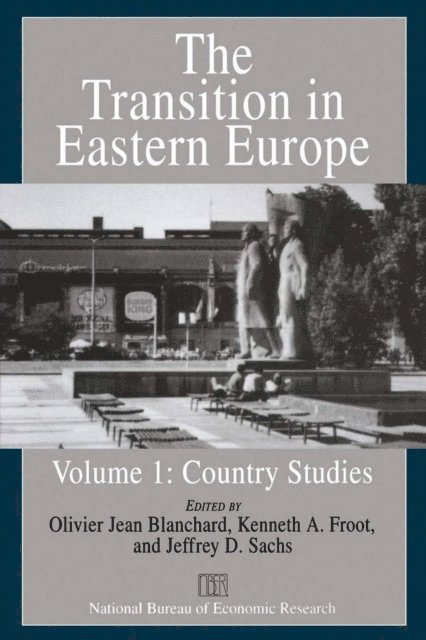
When communism fell in 1989, the question for most Eastern European countries was not whether to go to a market economy, but how to get there. Several years later, the difficult process of privatization and restructuring continues to concern the countries of the region. The Transition in Eastern Europe, Volumes 1 and 2 is an analysis of the experiences of various countries making the transition to market economies and examines the most important challenges still in store. Volume 1, Country Studies, gives an in-depth, country-by-country analysis of various reform experiences, including historical backgrounds and discussions of policies and results to date. The countries analyzed are Poland, Czechoslovakia, Hungary, eastern Germany, Slovenia, and Russia. Written by leading economists, some of whom helped shape local and national reforms, this volume identifies common progress, common difficulties, and tentative solutions to the problems of economic transition. Volume 2, Restructuring, focuses on specific issues of transition, including how to design labor market institutions, privatization, new fiscal structures, and bankruptcy laws; how to reorganize foreign trade; and how to promote foreign direct investment. The articles, written by experts in the field, will be of direct help to those involved in the transition process. These volumes provide a standard reference on economic transition in the region for policymakers in Eastern Europe and in western countries, for international agencies concerned with the transition process, and for anyone interested in learning about the dramatic changes that have recently occurred in Eastern Europe.
E-bok
PDF, Engelska, 20072 723 kr
Läs direkt efter köp
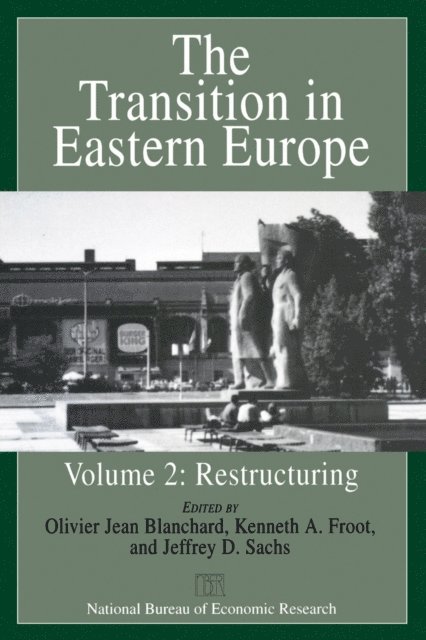
When communism fell in 1989, the question for most Eastern European countries was not whether to go to a market economy, but how to get there. Several years later, the difficult process of privatization and restructuring continues to concern the countries of the region. The Transition in Eastern Europe, Volumes 1 and 2 is an analysis of the experiences of various countries making the transition to market economies and examines the most important challenges still in store. Volume 1, Country Studies, gives an in-depth, country-by-country analysis of various reform experiences, including historical backgrounds and discussions of policies and results to date. The countries analyzed are Poland, Czechoslovakia, Hungary, eastern Germany, Slovenia, and Russia. Written by leading economists, some of whom helped shape local and national reforms, this volume identifies common progress, common difficulties, and tentative solutions to the problems of economic transition. Volume 2, Restructuring, focuses on specific issues of transition, including how to design labor market institutions, privatization, new fiscal structures, and bankruptcy laws; how to reorganize foreign trade; and how to promote foreign direct investment. The articles, written by experts in the field, will be of direct help to those involved in the transition process. These volumes provide a standard reference on economic transition in the region for policymakers in Eastern Europe and in western countries, for international agencies concerned with the transition process, and for anyone interested in learning about the dramatic changes that have recently occurred in Eastern Europe.
E-bok
PDF, Engelska, 20081 590 kr
Läs direkt efter köp
Over the past decade, foreign direct investment (FDI) around the world has nearly tripled, and with this surge have come dramatic shifts in FDI flows. In Foreign Direct Investment, distinguished economists look at changes in FDI, including historical trends, specific country experiences, developments in the semiconductor industry, and variations in international mergers and acquisitions. Chapters cover such topics as theoretical accounts of FDI patterns, the growth of multinational enterprises, and the FDI experiences of Japan, the United States, and selected developing countries. This volume will interest economists, government officials, and business people concerned with FDI today.
E-bok
PDF, Engelska, 20072 212 kr
Läs direkt efter köp
Is it possible that the insurance and reinsurance industries cannot handle a major catastrophe? Ten years ago, the notion that the overall cost of a single catastrophic event might exceed $10 billion was unthinkable. With ever increasing property-casualty risks and unabated growth in hazard-prone areas, insurers and reinsurers now envision the possibility of disaster losses of $50 to $100 billion in the United States. Against this backdrop, the capitalization of the insurance and reinsurance industries has become a crucial concern. While it remains unlikely that a single event might entirely bankrupt these industries, a big catastrophe could place firms under severe stress, jeopardizing both policy holders and investors and causing profound ripple effects throughout the U.S. economy. The Financing of Catastrophe Risk assembles an impressive roster of experts from academia and industry to explore the disturbing yet realistic assumption that a large catastrophic event is inevitable. The essays offer tangible means of both reassessing and raising the level of preparedness throughout the insurance and reinsurance industries.
Inbunden, Engelska, 1994
705 kr
Tillfälligt slut
Volumes One and Two of "The Transition in Eastern Europe" provide an analysis of the experiences of various Eastern European countries that are making the transition to market economies and examines the most important challenges still in store. Volume One, "Country Studies", gives an in-depth, country-by-country analysis of various reform experiences, including historical backgrounds and discussions of policies and results to date. The countries analyzed are: Poland; Czechoslovakia; Hungary; Eastern Germany; Slovenia; and Russia. Written by leading economists, some of whom helped shape local and national reforms, this volume identifies common progress, common difficulties and tentative solutions to the problems of economic transition. Volume Two, "Restructuring", focuses on specific issues of transition, including how to design labour-market institutions, privatization, new fiscal structures and bankruptcy laws; how to reorganize foreign trade; and how to promote foreign direct investment. The articles, written by experts in the field, will be of direct help to those involved in the transition process.These volumes provide a standard reference on economic transition in the region for policy-makers in Eastern Europe and in western countries, for international agencies concerned with the transition process, and for anyone interested in learning about the dramatic changes that have recently occurred in Eastern Europe.
Inbunden, Engelska, 1994
826 kr
Tillfälligt slut
Volumes One and Two of "The Transition in Eastern Europe" provide an analysis of the experiences of various Eastern European countries that are making the transition to market economies and examines the most important challenges still in store. Volume One, "Country Studies", gives an in-depth, country-by-country analysis of various reform experiences, including historical backgrounds and discussions of policies and results to date. The countries analyzed are: Poland; Czechoslovakia; Hungary; Eastern Germany; Slovenia; and Russia. Written by leading economists, some of whom helped shape local and national reforms, this volume identifies common progress, common difficulties and tentative solutions to the problems of economic transition. Volume Two, "Restructuring", focuses on specific issues of transition, including how to design labour-market institutions, privatization, new fiscal structures and bankruptcy laws; how to reorganize foreign trade; and how to promote foreign direct investment. The articles, written by experts in the field, will be of direct help to those involved in the transition process.These volumes provide a standard reference on economic transition in the region for policy-makers in Eastern Europe and in western countries, for international agencies concerned with the transition process, and for anyone interested in learning about the dramatic changes that have recently occurred in Eastern Europe.