Kenneth Liberman – författare
Visar alla böcker från författaren Kenneth Liberman. Handla med fri frakt och snabb leverans.
5 produkter
5 produkter
Häftad, Engelska, 2007
751 kr
Skickas inom 10-15 vardagar
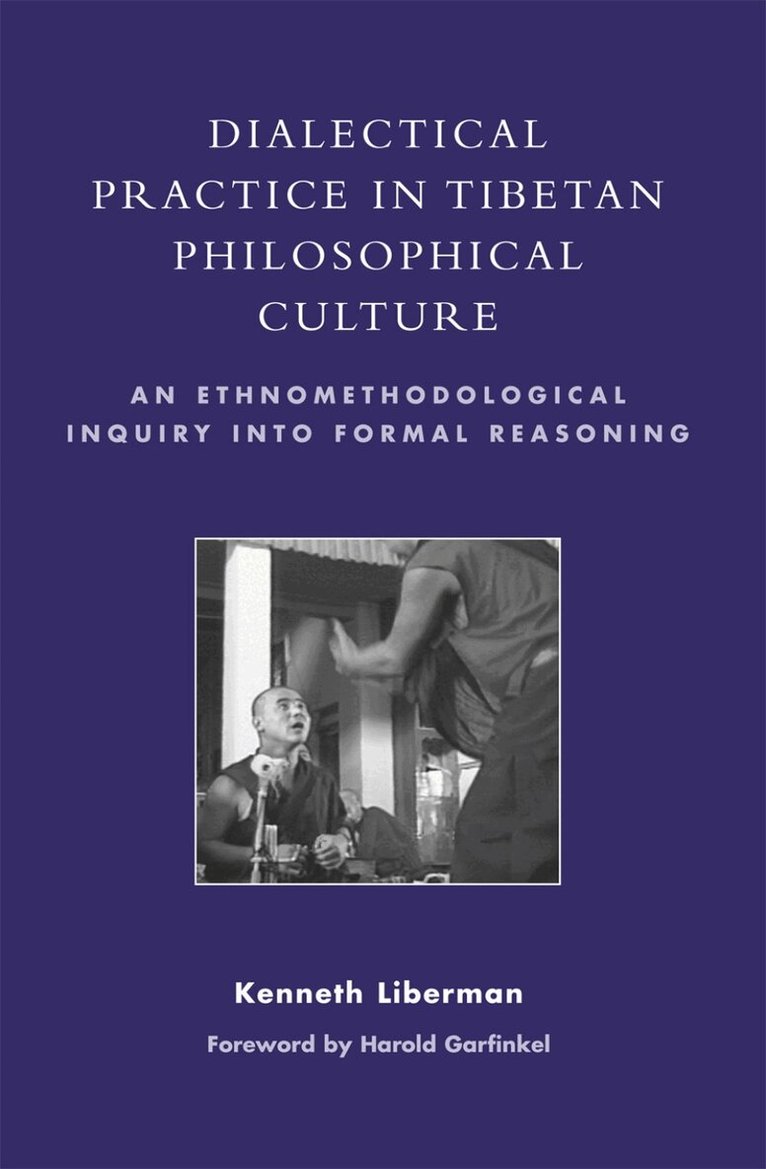
Tibetan Buddhist scholar-monks have long engaged in face-to-face public philosophical debates. This original study challenges Orientalist text-based scholarship, which has overlooked these lived practices of Tibetan dialectics. Kenneth Liberman brings these dynamic disputations to life for the modern reader through a richly detailed, turn-by-turn analysis of the monks' formal philosophical reasoning. He argues that Tibetan Buddhists deliberately organize their debates into formal structures that both empower and constrain thinking, skillfully using logic as an interactional tool to organize their reflections. During his three years in residence at Tibetan monastic universities, Liberman observed and videotaped the monks' debates. He then transcribed, translated, and analyzed them using multimedia software and ethnomethodological techniques, which enabled him to scrutinize the local methods that Tibetan debaters use to keep their philosophical inquiries alive. His study shows the monks rely on such indigenous dialectical methods as extending an opponent's position to its absurd consequences, 'pulling the rug out' from under an opponent, and other lively strategies. This careful investigation of the formal philosophical work of Tibetan scholars is a pathbreaking analysis of an important classical tradition.
Häftad, Engelska, 2014
458 kr
Skickas inom 5-8 vardagar
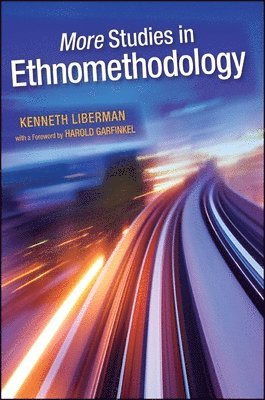
Phenomenological analyses of the orderliness of naturally occurring collaboration.Winner of the 2015 Distinguished Book Award presented by the Ethnomethodology and Conversation Analysis Section of the American Sociological AssociationWinner of the 2015 Distinguished Book Award presented by the Ethnomethodology and Conversation Analysis Section of the American Sociological Association Pioneered by Harold Garfinkel in the 1950s and '60s, ethnomethodology is a sociological approach rooted in phenomenology that is concerned with investigating the unspoken rules according to which people understand and create order in unstructured situations. Based on more than thirty years of teaching ethnomethodology, Kenneth Liberman-himself a student of Garfinkel's-provides an up-to-date introduction through a series of classroom-based studies. Each chapter focuses on a routine experience in which people collaborate to make sense of and coordinate an unscripted activity: organizing the coherence of the rules of a game, describing the objective taste of a cup of gourmet coffee, making sense of intercultural conversation, reading a vague map, and finding order amidst chaotic traffic flow. Detailed descriptions of the kinds of ironies that naturally arise in these and other ordinary affairs breathe new life into phenomenological theorizing and sociological understanding.
Häftad, Engelska, 2022
407 kr
Skickas inom 3-6 vardagar
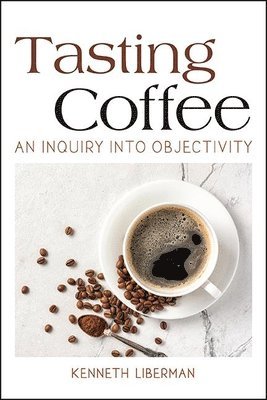
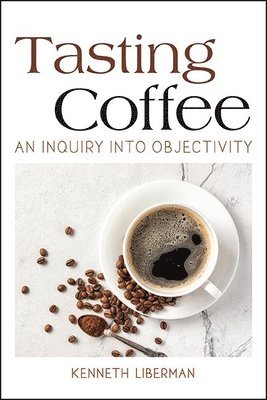
Draws upon the situated work of professional coffee tasters in over a dozen countries to shed light on the methods we use to convert subjective experience into objective knowledge.Winner of the 2023 Distinguished Book Award presented by the Ethnomethodology and Conversation Analysis section of the American Sociological Association At once ethnographic and phenomenological, Tasting Coffee investigates the global chain of coffee production "from seed to cup," stopping at every stage along the way to describe the tasting practices of each stakeholder purveying coffee. The ethnomethodological care of these descriptions derives from an attunement to just how these stakeholders discover and describe the flavors of coffee and how they convert subjective experience into objective knowledge. The methods and protocols of sensory science are also examined and assessed in their lived details, making this study also a contribution to the sociology of science. Based upon a decade of research in fourteen countries, author Kenneth Liberman provides a nonessentialist ontology of coffee, its history, and its production. The world of coffee becomes a microcosm in which many realities of postmodern humanity are exposed and clarified-with the thoughts of Edmund Husserl, Alfred Schutz, Martin Heidegger, Hans-Georg Gadamer, Emmanuel Levinas, Maurice Merleau-Ponty, Jacques Derrida, Ludwig Wittgenstein, Aron Gurwitsch, and Harold Garfinkel-even as these naturally occurring case studies provide fresh specifications for these thinkers' ideas.
Inbunden, Engelska, 2022
1 216 kr
Skickas inom 5-8 vardagar
Draws upon the situated work of professional coffee tasters in over a dozen countries to shed light on the methods we use to convert subjective experience into objective knowledge.Winner of the 2023 Distinguished Book Award presented by the Ethnomethodology and Conversation Analysis section of the American Sociological Association At once ethnographic and phenomenological, Tasting Coffee investigates the global chain of coffee production "from seed to cup," stopping at every stage along the way to describe the tasting practices of each stakeholder purveying coffee. The ethnomethodological care of these descriptions derives from an attunement to just how these stakeholders discover and describe the flavors of coffee and how they convert subjective experience into objective knowledge. The methods and protocols of sensory science are also examined and assessed in their lived details, making this study also a contribution to the sociology of science. Based upon a decade of research in fourteen countries, author Kenneth Liberman provides a nonessentialist ontology of coffee, its history, and its production. The world of coffee becomes a microcosm in which many realities of postmodern humanity are exposed and clarified-with the thoughts of Edmund Husserl, Alfred Schutz, Martin Heidegger, Hans-Georg Gadamer, Emmanuel Levinas, Maurice Merleau-Ponty, Jacques Derrida, Ludwig Wittgenstein, Aron Gurwitsch, and Harold Garfinkel-even as these naturally occurring case studies provide fresh specifications for these thinkers' ideas.
Inbunden, Engelska, 2013
1 042 kr
Tillfälligt slut
Phenomenological analyses of the orderliness of naturally occurring collaboration.Winner of the 2015 Distinguished Book Award presented by the Ethnomethodology and Conversation Analysis Section of the American Sociological AssociationWinner of the 2015 Distinguished Book Award presented by the Ethnomethodology and Conversation Analysis Section of the American Sociological Association Pioneered by Harold Garfinkel in the 1950s and '60s, ethnomethodology is a sociological approach rooted in phenomenology that is concerned with investigating the unspoken rules according to which people understand and create order in unstructured situations. Based on more than thirty years of teaching ethnomethodology, Kenneth Liberman-himself a student of Garfinkel's-provides an up-to-date introduction through a series of classroom-based studies. Each chapter focuses on a routine experience in which people collaborate to make sense of and coordinate an unscripted activity: organizing the coherence of the rules of a game, describing the objective taste of a cup of gourmet coffee, making sense of intercultural conversation, reading a vague map, and finding order amidst chaotic traffic flow. Detailed descriptions of the kinds of ironies that naturally arise in these and other ordinary affairs breathe new life into phenomenological theorizing and sociological understanding.