Kenneth M. Holland – författare
Visar alla böcker från författaren Kenneth M. Holland. Handla med fri frakt och snabb leverans.
6 produkter
6 produkter
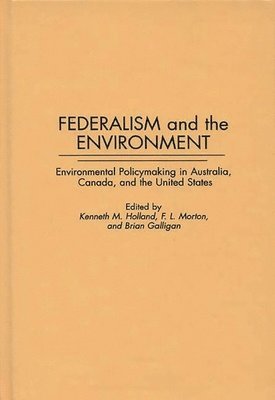
Federalism and the Environment
Environmental Policymaking in Australia, Canada, and the United States
Inbunden, Engelska, 1996
966 kr
Skickas inom 10-15 vardagar
This edited volume is a comprehensive examination of the legal framework in which environmental policy is fashioned in the major English-speaking federations—the United States, Canada, and Australia. The need for national solutions to environmental problems emerged long after the largest share of governmental power was allotted to states or provinces. This volume attempts to solve the paradox of how a country can have effective laws protecting the environment, vigorously enforced, when legislative and administrative powers are divided between two tiers of government.The contributors analyze environmental lawmaking along three dimensions. Part I describes the formal constitutional allocation of powers between states or provinces and the federal government, concluding that on paper environmental protection is essentially a local responsibility, although the reality is far different. In Part II the contributors explore the extent to which governments resort to informal negotiations among themselves to resolve environmental disputes. Part III is a thorough canvassing of the judiciary's role in making environmental policy and resolving disputes between levels and branches of government. In Australia and Canada, the courts play a relatively less important role in formulating policy than in the United States. In conclusion, the work shows that the level of environmental protection is relatively high in these three federations. Environmental politics, the work suggests, may be less divisive in federations than in unitary systems with comparable levels of development.
Inbunden, Engelska, 1988
997 kr
Skickas inom 10-15 vardagar
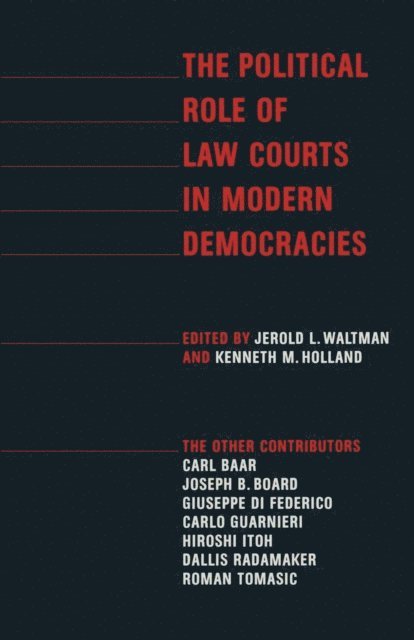
No society can function without judicial institutions. At a minimum, conflict must be regulated and the criminal law enforced. Ironically, though, modern political science has tended to ignore the role of courts in advanced industrial societies, so much so that even basic information has often been unavailable. This book covers three important bases. First, it provides, for the first time, up-to-date material about the court systems - their structures, their personnel, their jurisdictions - of the major democratic nations. Second, it places the courts in their political context, eschewing legalism and stressing their linkages with other institutions and their role in the policy process. Third, there is an attempt to assess the direction of contemporary change, especially how it relates to broader themes of other types of political change.
E-bok
PDF, Engelska, 1991728 kr
Läs direkt efter köp
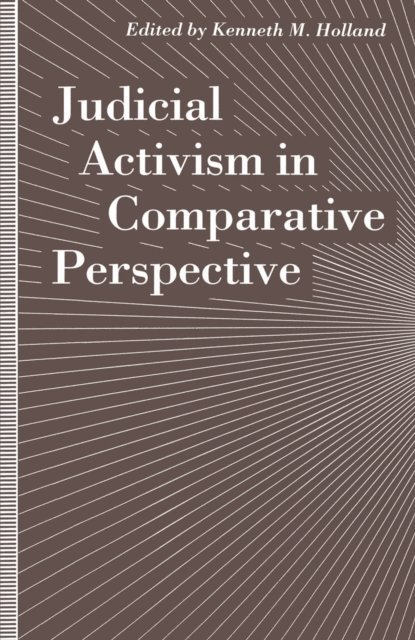
The theme of this book is judicial activism in industrialized democracies, with a chapter on the changing political roles of the courts in the Soviet Union. Eleven contributors describe the extent to which the highest courts in their country of expertise have embraced the making of public policy.
E-bok
PDF, Engelska, 19881 303 kr
Läs direkt efter köp
No society can function without judicial institutions. At a minimum, conflict must be regulated and the criminal law enforced. Ironically, though, modern political science has tended to ignore the role of courts in advanced industrial societies, so much so that even basic information has often been unavailable. This book covers three important bases. First, it provides, for the first time, up-to-date material about the court systems - their structures, their personnel, their jurisdictions - of the major democratic nations. Second, it places the courts in their political context, eschewing legalism and stressing their linkages with other institutions and their role in the policy process. Third, there is an attempt to assess the direction of contemporary change, especially how it relates to broader themes of other types of political change.
Inbunden, Engelska, 2024
1 730 kr
Skickas inom 10-15 vardagar
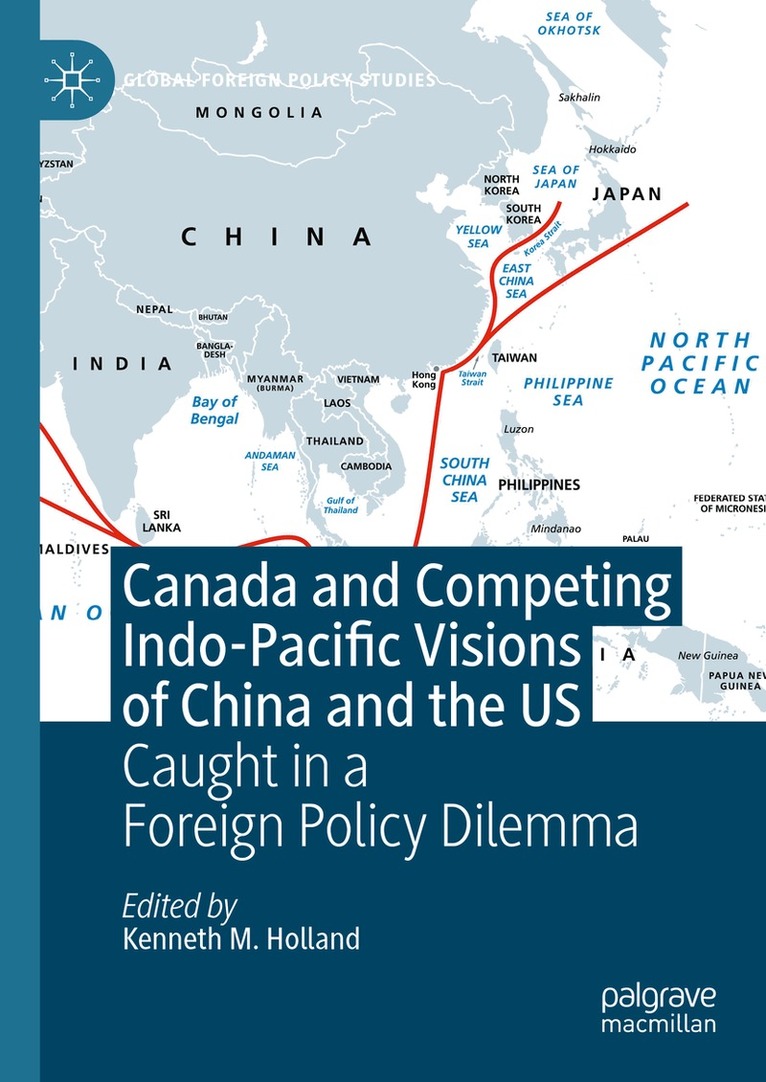
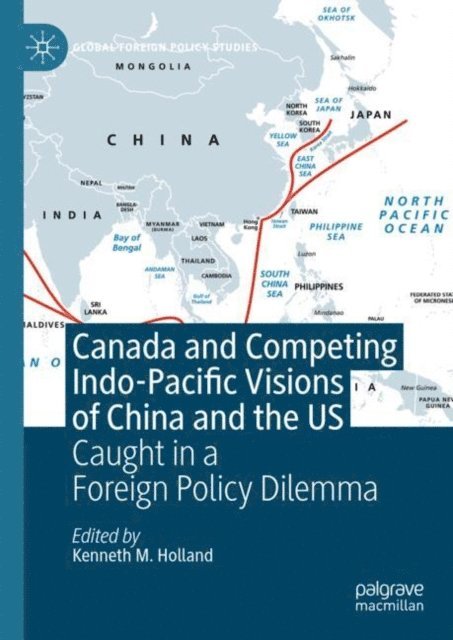
This book describes and analyzes the choices that Canada, as a Middle Power, has regarding the strategic rivalry between the United States and China. The administrations of Republican Donald Trump and his successor Democrat Joe Biden have taken a hardline stance toward Beijing, which in turn has adopted an increasingly belligerent tone toward Washington. The posture of the United States toward China has put traditional American allies in a difficult position. They must choose whether to join the effort to counter China’s ambitions, support those ambitions or take some intermediate stance. As one of America’s closest and longest-standing allies, Canada must make decisions that will affect its position in the world for the rest of the twenty-first century. The book argues that Canada’s national interests are best served by alignment with the confrontational posture of the United States while at the same time joining the efforts of U.S. allies Japan, India, and South Korea to moderate the thrust of Washington’s Indo-Pacific Strategy in a direction more consistent with multilateralism and the preservation of the rules-based international order. The book has important implications for other U.S. allies, including the member states of the European Union, Organization of American States and Association of Southeast Asian Nations, each of which finds itself caught in the middle between the world’s two greatest powers.
E-bok
Engelska, 20242 207 kr
Läs direkt efter köp
This book describes and analyzes the choices that Canada, as a Middle Power, has regarding the strategic rivalry between the United States and China. The administrations of Republican Donald Trump and his successor Democrat Joe Biden have taken a hardline stance toward Beijing, which in turn has adopted an increasingly belligerent tone toward Washington. The posture of the United States toward China has put traditional American allies in a difficult position. They must choose whether to join the effort to counter China’s ambitions, support those ambitions or take some intermediate stance. As one of America’s closest and longest-standing allies, Canada must make decisions that will affect its position in the world for the rest of the twenty-first century. The book argues that Canada’s national interests are best served by alignment with the confrontational posture of the United States while at the same time joining the efforts of U.S. allies Japan, India, and South Korea to moderate the thrust of Washington’s Indo-Pacific Strategy in a direction more consistent with multilateralism and the preservation of the rules-based international order. The book has important implications for other U.S. allies, including the member states of the European Union, Organization of American States and Association of Southeast Asian Nations, each of which finds itself caught in the middle between the world’s two greatest powers.