Kenneth M. Sayre - Böcker
Visar alla böcker från författaren Kenneth M. Sayre. Handla med fri frakt och snabb leverans.
11 produkter
11 produkter
393 kr
Skickas inom 10-15 vardagar
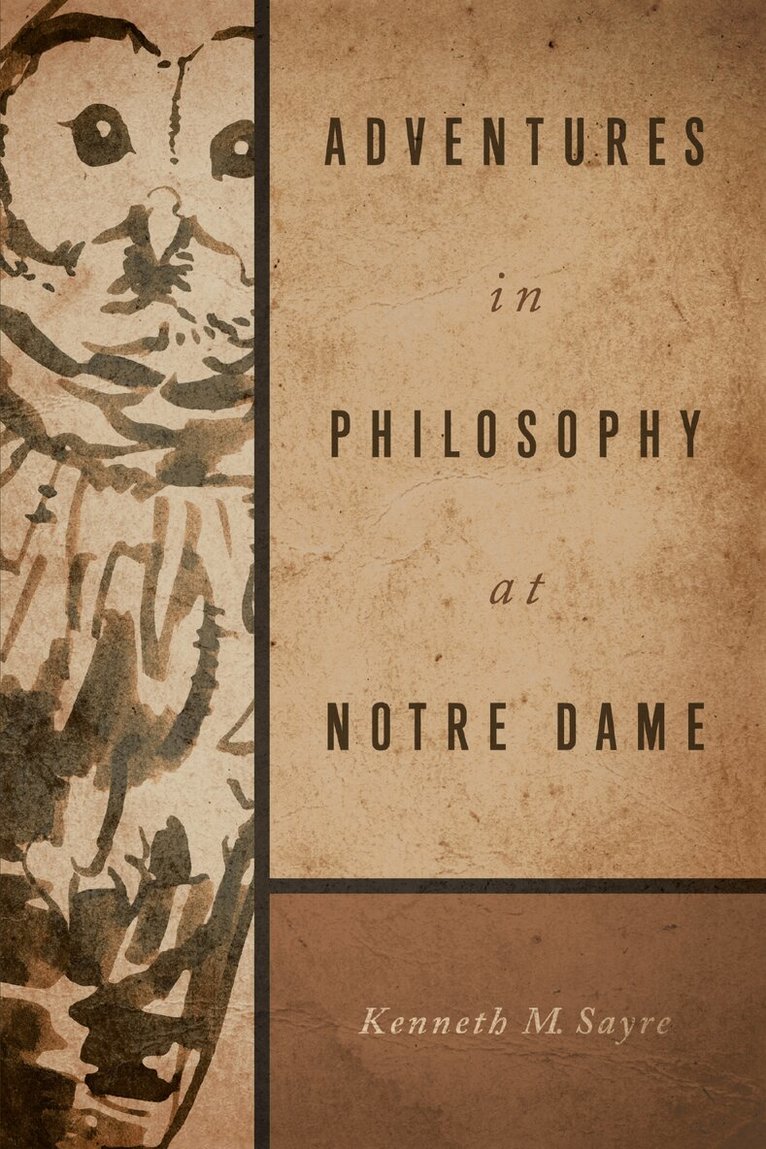
Adventures in Philosophy at Notre Dame recounts the fascinating history of the University of Notre Dame's Department of Philosophy, chronicling the challenges, difficulties, and tensions that accompanied its transition from an obscure outpost of scholasticism in the 1940s into one of the more distinguished philosophy departments in the world today. Its author, Kenneth Sayre, who has been a faculty member for over five decades, focuses on the people of the department, describing what they were like, how they got along with each other, and how their personal predilections and ambitions affected the affairs of the department overall. The book follows the department's transition from its early Thomism to the philosophical pluralism of the 1970s, then traces its drift from pluralism to what Sayre terms "professionalism," resulting in what some perceive as a severance from its Catholic roots by the turn of the century. Each chapter includes an extensive biography of an especially prominent department member, along with biographical sketches of other philosophers arriving during the period it covers. Central to the story overall are the charismatic Irishmen Ernan McMullin and Ralph McInerny, whose interaction dominated affairs in the department in the 1960s and 1970s, and who continued to play major roles in the following decades. Philosophers throughout the English-speaking world will find Adventures in Philosophy at Notre Dame essential reading. The book will also appeal to readers interested in the history of the University of Notre Dame and of American higher education generally.
1 338 kr
Skickas inom 10-15 vardagar
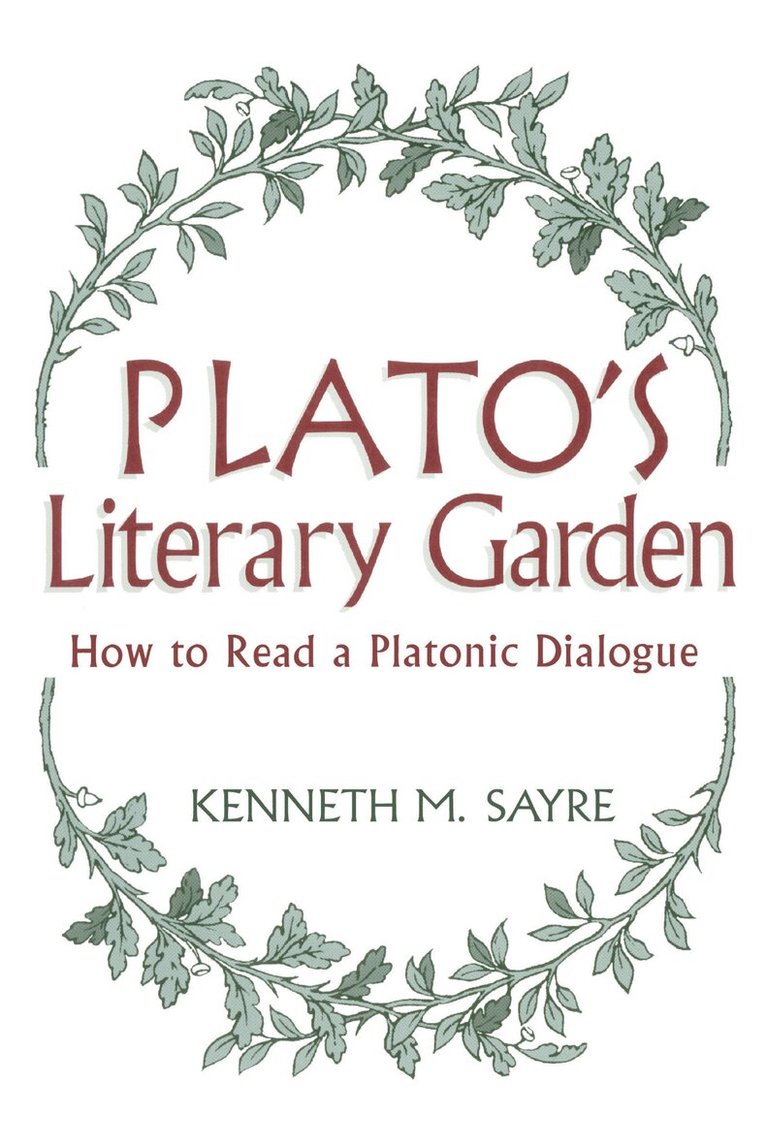
Plato's dialogues are universally acknowledged as standing among the masterworks of the Western philosophic tradition. What most readers do not know, however, is that Plato also authored a public letter in which he unequivocally denies ever having written a work of philosophy. If Plato did not view his written dialogues as works of philosophy, how did he conceive them, and how should readers view them? In Plato's Literary Garden, Kenneth M. Sayre brings over thirty years of Platonic scholarship to bear on these questions, arguing that Plato did not intend the dialogues to serve as repositories of philosophic doctrine, but instead composed them as teaching instruments.
360 kr
Skickas inom 10-15 vardagar
Plato's dialogues are universally acknowledged as standing among the masterworks of the Western philosophic tradition. What most readers do not know, however, is that Plato also authored a public letter in which he unequivocally denies ever having written a work of philosophy. If Plato did not view his written dialogues as works of philosophy, how did he conceive them, and how should readers view them? In Plato's Literary Garden, Kenneth M. Sayre brings over thirty years of Platonic scholarship to bear on these questions, arguing that Plato did not intend the dialogues to serve as repositories of philosophic doctrine, but instead composed them as teaching instruments.
420 kr
Skickas inom 10-15 vardagar
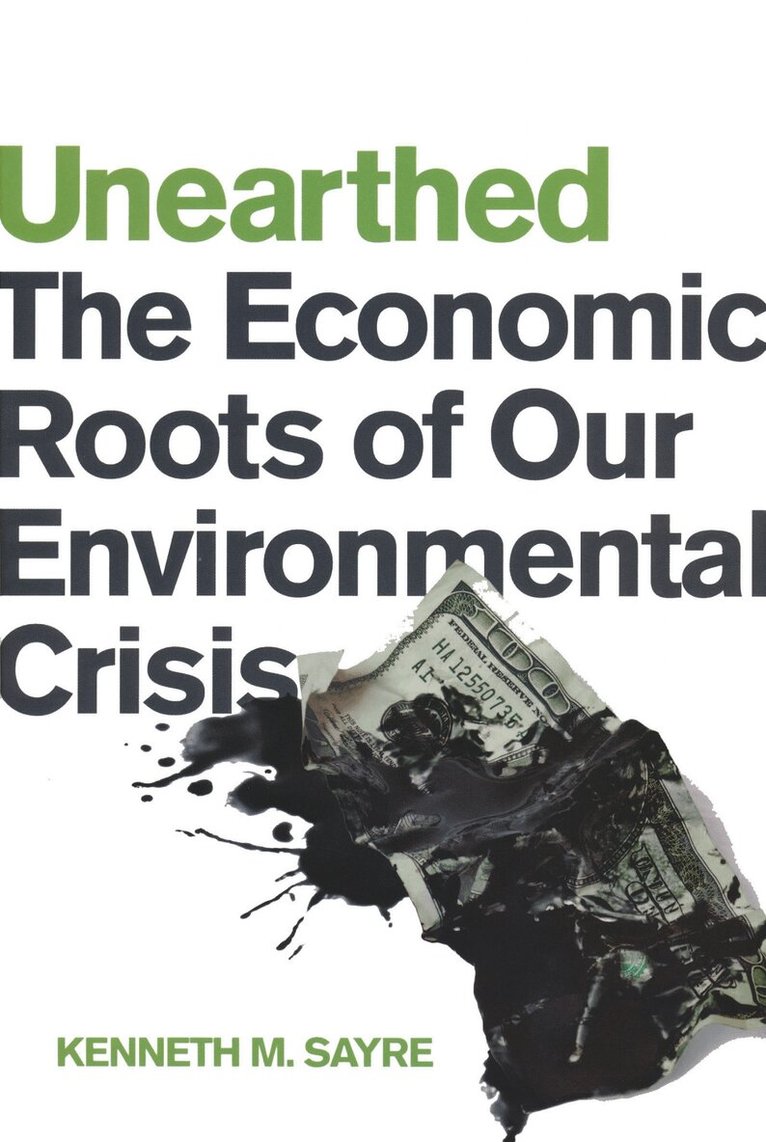
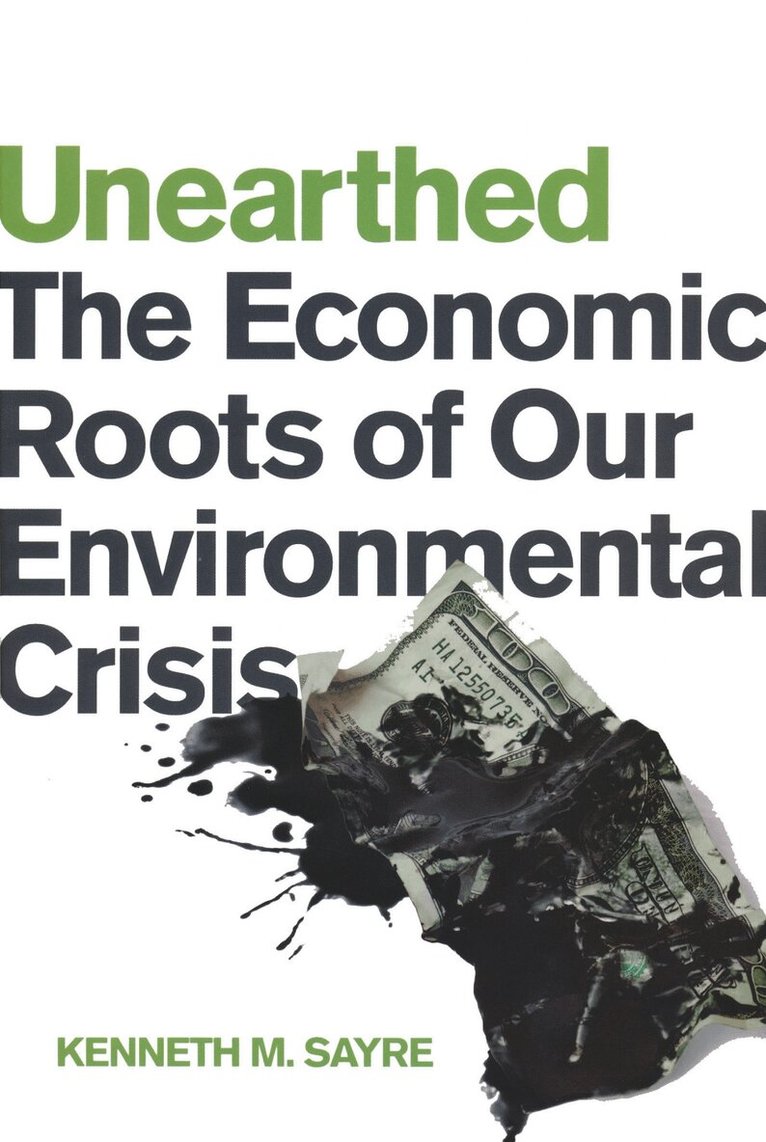
In Unearthed: The Economic Roots of Our Environmental Crisis, Kenneth M. Sayre argues that the only way to resolve our current environmental crisis is to reduce our energy consumption to a level where the entropy (degraded energy and organization) produced by that consumption no longer exceeds the biosphere's ability to dispose of it. Tangible illustrations of this entropy buildup include global warming, ozone depletion, loss of species diversity, and unmanageable amounts of nonbiodegradable waste. Degradation of the biosphere is tied directly to human energy use, which has been increasing exponentially since the Industrial Revolution. Energy use, in turn, is directly correlated with economic production. Sayre shows how these three factors are invariably bound together. The unavoidable conclusion is that the only way to resolve our environmental crisis is to reverse the present pattern of growth in the world economy. Economic growth is motivated by social values. Key among them are the desire for wealth and consumer values including gratification, convenience, and acquisition of goods. Sayre maintains that economic growth can be reversed only by eliminating these social values in favor of others more conducive to environmental health. Eliminating these values will involve major changes in lifestyle within industrial societies generally. Only with such changes in lifestyle, he argues, does human society as we know it have a chance of survival. Clearly written and thoroughly documented, this book provides a comprehensive overview of our complex environmental predicament.
1 703 kr
Skickas inom 10-15 vardagar
Adventures in Philosophy at Notre Dame recounts the fascinating history of the University of Notre Dame's Department of Philosophy, chronicling the challenges, difficulties, and tensions that accompanied its transition from an obscure outpost of scholasticism in the 1940s into one of the more distinguished philosophy departments in the world today. Its author, Kenneth Sayre, who has been a faculty member for over five decades, focuses on the people of the department, describing what they were like, how they got along with each other, and how their personal predilections and ambitions affected the affairs of the department overall. The book follows the department's transition from its early Thomism to the philosophical pluralism of the 1970s, then traces its drift from pluralism to what Sayre terms "professionalism," resulting in what some perceive as a severance from its Catholic roots by the turn of the century. Each chapter includes an extensive biography of an especially prominent department member, along with biographical sketches of other philosophers arriving during the period it covers. Central to the story overall are the charismatic Irishmen Ernan McMullin and Ralph McInerny, whose interaction dominated affairs in the department in the 1960s and 1970s, and who continued to play major roles in the following decades. Philosophers throughout the English-speaking world will find Adventures in Philosophy at Notre Dame essential reading. The book will also appeal to readers interested in the history of the University of Notre Dame and of American higher education generally.
1 604 kr
Skickas inom 10-15 vardagar
In Unearthed: The Economic Roots of Our Environmental Crisis, Kenneth M. Sayre argues that the only way to resolve our current environmental crisis is to reduce our energy consumption to a level where the entropy (degraded energy and organization) produced by that consumption no longer exceeds the biosphere's ability to dispose of it. Tangible illustrations of this entropy buildup include global warming, ozone depletion, loss of species diversity, and unmanageable amounts of nonbiodegradable waste. Degradation of the biosphere is tied directly to human energy use, which has been increasing exponentially since the Industrial Revolution. Energy use, in turn, is directly correlated with economic production. Sayre shows how these three factors are invariably bound together. The unavoidable conclusion is that the only way to resolve our environmental crisis is to reverse the present pattern of growth in the world economy. Economic growth is motivated by social values. Key among them are the desire for wealth and consumer values including gratification, convenience, and acquisition of goods. Sayre maintains that economic growth can be reversed only by eliminating these social values in favor of others more conducive to environmental health. Eliminating these values will involve major changes in lifestyle within industrial societies generally. Only with such changes in lifestyle, he argues, does human society as we know it have a chance of survival. Clearly written and thoroughly documented, this book provides a comprehensive overview of our complex environmental predicament.
547 kr
Skickas inom 7-10 vardagar
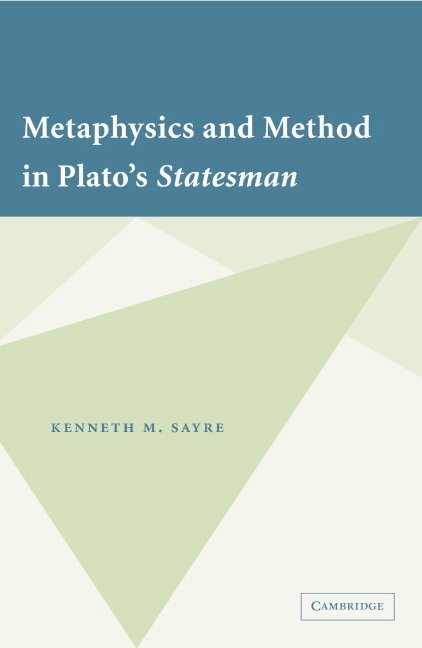
At the beginning of his Metaphysics, Aristotle attributed several strange-sounding theses to Plato. Generations of Plato scholars have assumed that these could not be found in the dialogues. In heated arguments, they have debated the significance of these claims, some arguing that they constituted an 'unwritten teaching' and others maintaining that Aristotle was mistaken in attributing them to Plato. In a prior book-length study on Plato's late ontology, Kenneth M. Sayre demonstrated that, despite differences in terminology, these claims correspond to themes developed by Plato in the Parmenides and the Philebus. In this book, he shows how this correspondence can be extended to key, but previously obscure, passages in the Statesman. He also examines the interpretative consequences for other sections of that dialogue, particularly those concerned with the practice of dialectical inquiry.
758 kr
Skickas inom 7-10 vardagar
At the beginning of his Metaphysics, Aristotle attributed several strange-sounding theses to Plato. Generations of Plato scholars have assumed that these could not be found in the dialogues. In heated arguments, they have debated the significance of these claims, some arguing that they constituted an 'unwritten teaching' and others maintaining that Aristotle was mistaken in attributing them to Plato. In a prior book-length study on Plato's late ontology, Kenneth M. Sayre demonstrated that, despite differences in terminology, these claims correspond to themes developed by Plato in the Parmenides and the Philebus. In this book, he shows how this correspondence can be extended to key, but previously obscure, passages in the Statesman. He also examines the interpretative consequences for other sections of that dialogue, particularly those concerned with the practice of dialectical inquiry.
675 kr
Skickas inom 10-15 vardagar
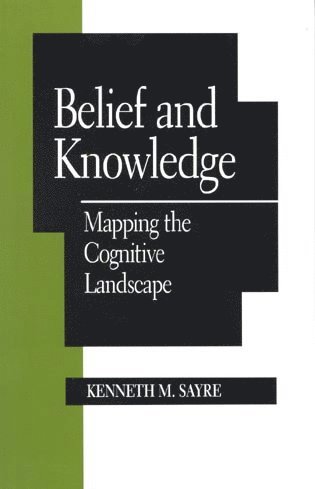
Contesting much contemporary epistemology and cognitive science, noted philosopher Kenneth M. Sayre argues that, while some cognitive attitudes such as believing take propositions as objects, there are many others (knowing, hoping, fearing, etc.) whose objects are instead states of affairs. Therefore, knowledge cannot be belief with other factors such as justification added, nor can hope and fear be relations a subject bears to neuronal brain states functioning as propositional representations. To support these claims Sayre undertakes a detailed exploration of belief and knowledge and traces the relations of cognitive attitudes to a network of related concepts like certainty, truth, representation, and intentionality. His findings not only challenge current orthodoxy but open new paths of research in epistemology and cognitive science.
412 kr
Skickas inom 5-8 vardagar
280 kr
Skickas inom 5-8 vardagar