Kenneth McPherson – författare
Visar alla böcker från författaren Kenneth McPherson. Handla med fri frakt och snabb leverans.
3 produkter
3 produkter
544 kr
Tillfälligt slut
Kenneth McPherson shows that for millennia the Indian Ocean had a profound influence on the lives of the people who lived on its shores. Fishermen, sailors and merchants traveled its waters linking the world's earliest civilizations from Africa to East Asia in a complex web of relationships. The ocean was also a highway for the exchange of religions, cultures and technologies, giving the Indian Ocean region an identity as a largely self-contained "world." This important study traces the history of the Indian Ocean from ages past to the present day.
2 202 kr
Skickas inom 10-15 vardagar
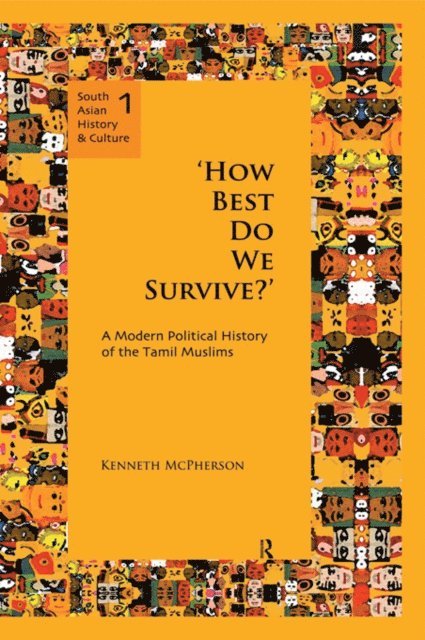
This book traces the social and political history of the Muslims of south India from the later nineteenth century to Independence in 1947, and the contours that followed. It describes a community in search of political survival amidst an ever-changing climate, and the fluctuating fortunes it had in dealing with the rise of Indian nationalism, the local political nuances of that rise, and its own changing position as part of the wider Muslim community in India.The book argues that Partition and the foundation of Pakistan in 1947 were neither the goal nor the necessarily inescapable result of the growth of communal politics and sentiment, and analyses the post-1947 constructions of events leading to Partition. Neither the fact of Muslim communalism per se before 1947 nor the existence of separate Muslim electorates provide an explanation for Pakistan. The book advances the theory that micro-level studies of the operation of the former, and the defence of the latter, in British India can lead to a better understanding of the origins of communalism. The book makes an important contribution to understanding and dealing with the complexities of communalism — be it Hindu, Muslim or Christian — and its often tragic consequences.
758 kr
Skickas inom 10-15 vardagar
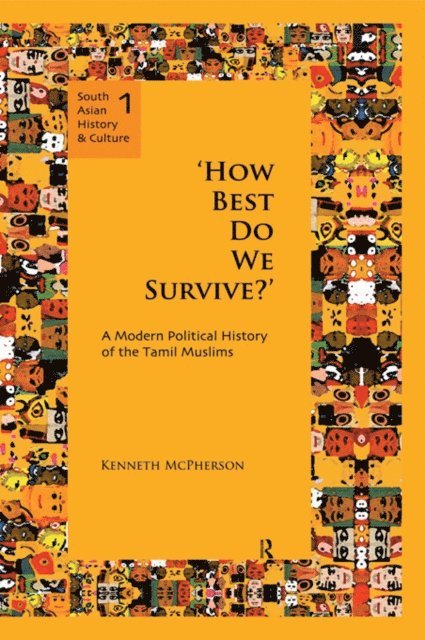
This book traces the social and political history of the Muslims of south India from the later nineteenth century to Independence in 1947, and the contours that followed. It describes a community in search of political survival amidst an ever-changing climate, and the fluctuating fortunes it had in dealing with the rise of Indian nationalism, the local political nuances of that rise, and its own changing position as part of the wider Muslim community in India.The book argues that Partition and the foundation of Pakistan in 1947 were neither the goal nor the necessarily inescapable result of the growth of communal politics and sentiment, and analyses the post-1947 constructions of events leading to Partition. Neither the fact of Muslim communalism per se before 1947 nor the existence of separate Muslim electorates provide an explanation for Pakistan. The book advances the theory that micro-level studies of the operation of the former, and the defence of the latter, in British India can lead to a better understanding of the origins of communalism. The book makes an important contribution to understanding and dealing with the complexities of communalism — be it Hindu, Muslim or Christian — and its often tragic consequences.