Kenneth R. Baker – författare
1 430 kr
Skickas inom 5-8 vardagar
1 664 kr
Läs direkt efter köp
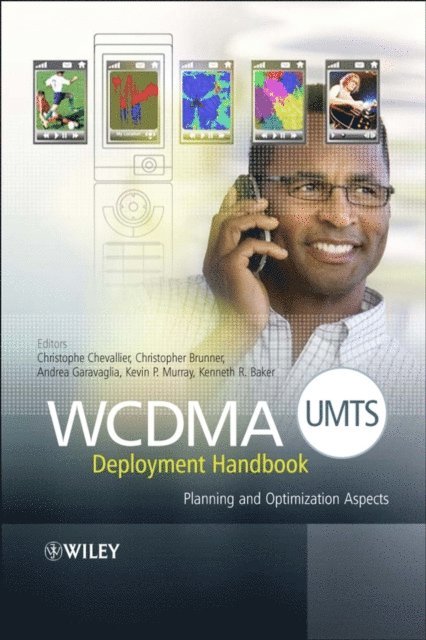
After introducing the network architecture of such a system, the WCDMA (UMTS) Deployment Handbook defines the coverage and capacity concepts associated with the dimensioning and design phases. Progressing to a discussion of the main system parameters associated with network optimization and detailing optimization techniques for the main services supported by UMTS, and includes the specifics of indoor deployment and HSDPA networks evolution.
Covers all stages from planning to optimization with sufficient details as required on a day-to-day basis, and thorough reference information for the reader who wants to understand the concepts in more detail Relevant for daily tasks: The approach taken in this book is similar to the work flow of network planner and optimization engineers, allowing such personnel to easily find the relevant information Written by the company which made CDMA a household name: QUALCOMM was the first company to use CDMA technology for cellular application and is a technical leader in this domain Based on industry feedback: All the contributors to this book have been working in direct interaction with WCDMA operators, throughout the world, since the early days of WCDMA commercial deployment Looking to the future: This book addresses the next level of challenge that WCDMA operators will face - deployment of indoor systems and HSDPAProviding a complete introduction and reference guide to everything associated with the life cycle of a WCDMA/UMTS cellular network, from initial dimensioning through to the successful deployment of indoor solutions, or migration to HSDPA, this book is a must-have for network planners and optimization engineers as well as Telecommunication Engineering students.
1 354 kr
Skickas inom 5-8 vardagar
1 480 kr
Läs direkt efter köp
An accessible introduction to optimization analysis using spreadsheets
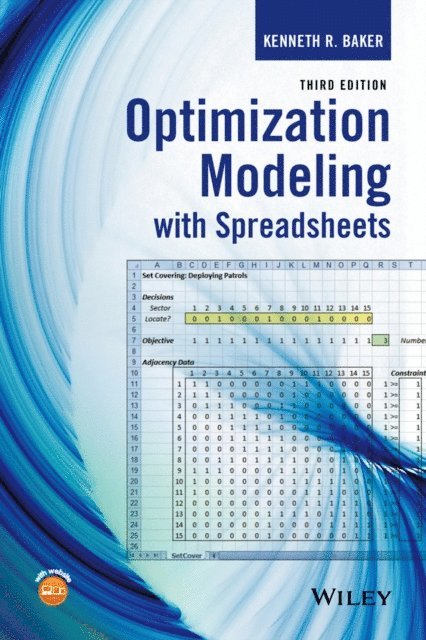
Updated and revised, Optimization Modeling with Spreadsheets, Third Edition emphasizes model building skills in optimization analysis. By emphasizing both spreadsheet modeling and optimization tools in the freely available Microsoft® Office Excel® Solver, the book illustrates how to find solutions to real-world optimization problems without needing additional specialized software.
The Third Edition includes many practical applications of optimization models as well as a systematic framework that illuminates the common structures found in many successful models. With focused coverage on linear programming, nonlinear programming, integer programming, and heuristic programming, Optimization Modeling with Spreadsheets, Third Edition features:
An emphasis on model building using Excel Solver as well as appendices with additional instructions on more advanced packages such as Analytic Solver Platform and OpenSolver Additional space devoted to formulation principles and model building as opposed to algorithms New end-of-chapter homework exercises specifically for novice model builders Presentation of the Sensitivity Toolkit for sensitivity analysis with Excel Solver Classification of problem types to help readers see the broader possibilities for application Specific chapters devoted to network models and data envelopment analysis A companion website with interactive spreadsheets and supplementary homework exercises for additional practiceOptimization Modeling with Spreadsheets, Third Edition is an excellent textbook for upper-undergraduate and graduate-level courses that include deterministic models, optimization, spreadsheet modeling, quantitative methods, engineering management, engineering modeling, operations research, and management science. The book is an ideal reference for readers wishing to advance their knowledge of Excel and modeling and is also a useful guide for MBA students and modeling practitioners in business and non-profit sectors interested in spreadsheet optimization.
1 480 kr
Läs direkt efter köp
An accessible introduction to optimization analysis using spreadsheets
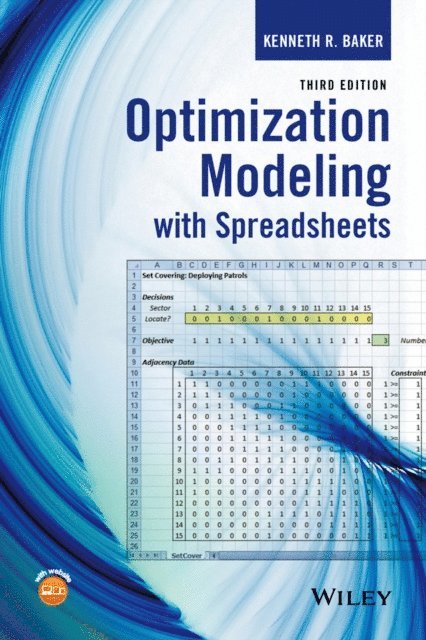
Updated and revised, Optimization Modeling with Spreadsheets, Third Edition emphasizes model building skills in optimization analysis. By emphasizing both spreadsheet modeling and optimization tools in the freely available Microsoft® Office Excel® Solver, the book illustrates how to find solutions to real-world optimization problems without needing additional specialized software.
The Third Edition includes many practical applications of optimization models as well as a systematic framework that illuminates the common structures found in many successful models. With focused coverage on linear programming, nonlinear programming, integer programming, and heuristic programming, Optimization Modeling with Spreadsheets, Third Edition features:
An emphasis on model building using Excel Solver as well as appendices with additional instructions on more advanced packages such as Analytic Solver Platform and OpenSolver Additional space devoted to formulation principles and model building as opposed to algorithms New end-of-chapter homework exercises specifically for novice model builders Presentation of the Sensitivity Toolkit for sensitivity analysis with Excel Solver Classification of problem types to help readers see the broader possibilities for application Specific chapters devoted to network models and data envelopment analysis A companion website with interactive spreadsheets and supplementary homework exercises for additional practiceOptimization Modeling with Spreadsheets, Third Edition is an excellent textbook for upper-undergraduate and graduate-level courses that include deterministic models, optimization, spreadsheet modeling, quantitative methods, engineering management, engineering modeling, operations research, and management science. The book is an ideal reference for readers wishing to advance their knowledge of Excel and modeling and is also a useful guide for MBA students and modeling practitioners in business and non-profit sectors interested in spreadsheet optimization.
1 451 kr
Skickas inom 5-8 vardagar
1 635 kr
Läs direkt efter köp
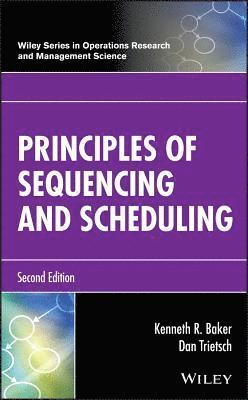
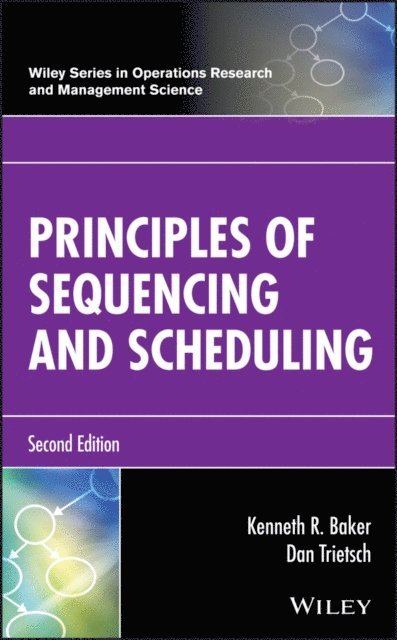
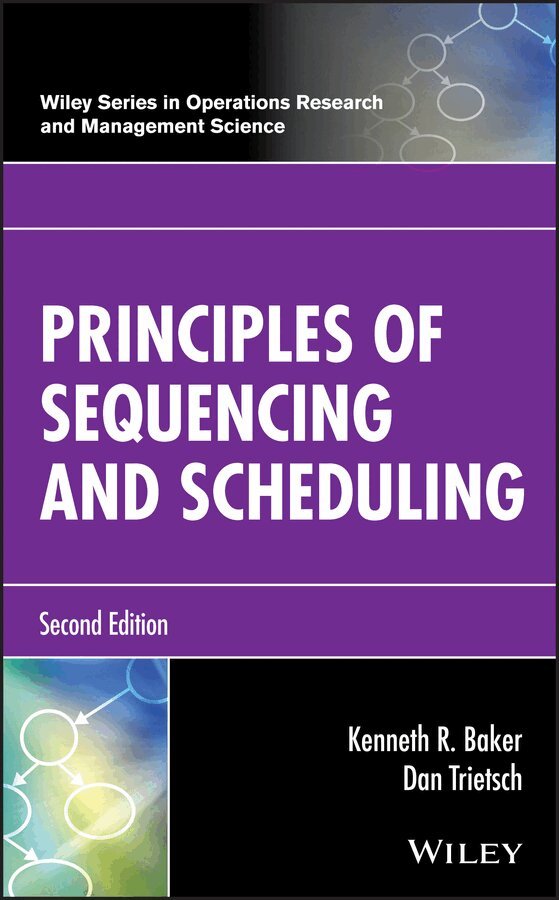
An updated edition of the text that explores the core topics in scheduling theory
The second edition of Principles of Sequencing and Scheduling has been revised and updated to provide comprehensive coverage of sequencing and scheduling topics as well as emerging developments in the field. The text offers balanced coverage of deterministic models and stochastic models and includes new developments in safe scheduling and project scheduling, including coverage of project analytics. These new topics help bridge the gap between classical scheduling and actual practice. The authors—noted experts in the field—present a coherent and detailed introduction to the basic models, problems, and methods of scheduling theory.
This book offers an introduction and overview of sequencing and scheduling and covers such topics as single-machine and multi-machine models, deterministic and stochastic problem formulations, optimization and heuristic solution approaches, and generic and specialized software methods. This new edition adds coverage on topics of recent interest in shop scheduling and project scheduling. This important resource:
Offers comprehensive coverage of deterministic models as well as recent approaches and developments for stochastic models Emphasizes the application of generic optimization software to basic sequencing problems and the use of spreadsheet-based optimization methods Includes updated coverage on safe scheduling, lognormal modeling, and job selection Provides basic coverage of robust scheduling as contrasted with safe scheduling Adds a new chapter on project analytics, which supports the PERT21 framework for project scheduling in a stochastic environment. Extends the coverage of PERT 21 to include hierarchical scheduling Provides end-of-chapter references and access to advanced Research Notes, to aid readers in the further exploration of advanced topicsWritten for upper-undergraduate and graduate level courses covering such topics as scheduling theory and applications, project scheduling, and operations scheduling, the second edition of Principles of Sequencing and Scheduling is a resource that covers scheduling techniques and contains the most current research and emerging topics.
1 635 kr
Läs direkt efter köp
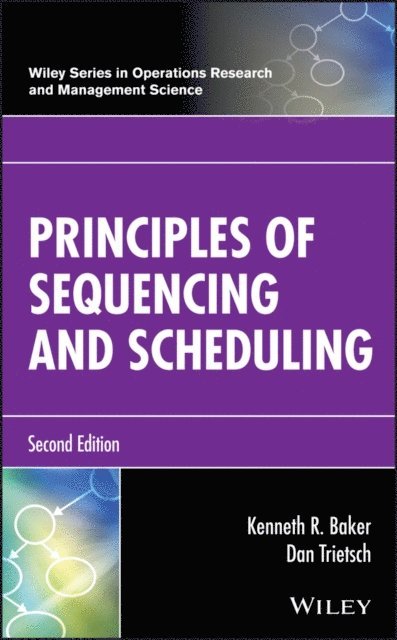
An updated edition of the text that explores the core topics in scheduling theory
The second edition of Principles of Sequencing and Scheduling has been revised and updated to provide comprehensive coverage of sequencing and scheduling topics as well as emerging developments in the field. The text offers balanced coverage of deterministic models and stochastic models and includes new developments in safe scheduling and project scheduling, including coverage of project analytics. These new topics help bridge the gap between classical scheduling and actual practice. The authors—noted experts in the field—present a coherent and detailed introduction to the basic models, problems, and methods of scheduling theory.
This book offers an introduction and overview of sequencing and scheduling and covers such topics as single-machine and multi-machine models, deterministic and stochastic problem formulations, optimization and heuristic solution approaches, and generic and specialized software methods. This new edition adds coverage on topics of recent interest in shop scheduling and project scheduling. This important resource:
Offers comprehensive coverage of deterministic models as well as recent approaches and developments for stochastic models Emphasizes the application of generic optimization software to basic sequencing problems and the use of spreadsheet-based optimization methods Includes updated coverage on safe scheduling, lognormal modeling, and job selection Provides basic coverage of robust scheduling as contrasted with safe scheduling Adds a new chapter on project analytics, which supports the PERT21 framework for project scheduling in a stochastic environment. Extends the coverage of PERT 21 to include hierarchical scheduling Provides end-of-chapter references and access to advanced Research Notes, to aid readers in the further exploration of advanced topicsWritten for upper-undergraduate and graduate level courses covering such topics as scheduling theory and applications, project scheduling, and operations scheduling, the second edition of Principles of Sequencing and Scheduling is a resource that covers scheduling techniques and contains the most current research and emerging topics.
1 740 kr
Skickas inom 11-20 vardagar
723 kr
Skickas inom 5-8 vardagar