Kenneth Westphal - Böcker
Visar alla böcker från författaren Kenneth Westphal. Handla med fri frakt och snabb leverans.
5 produkter
5 produkter
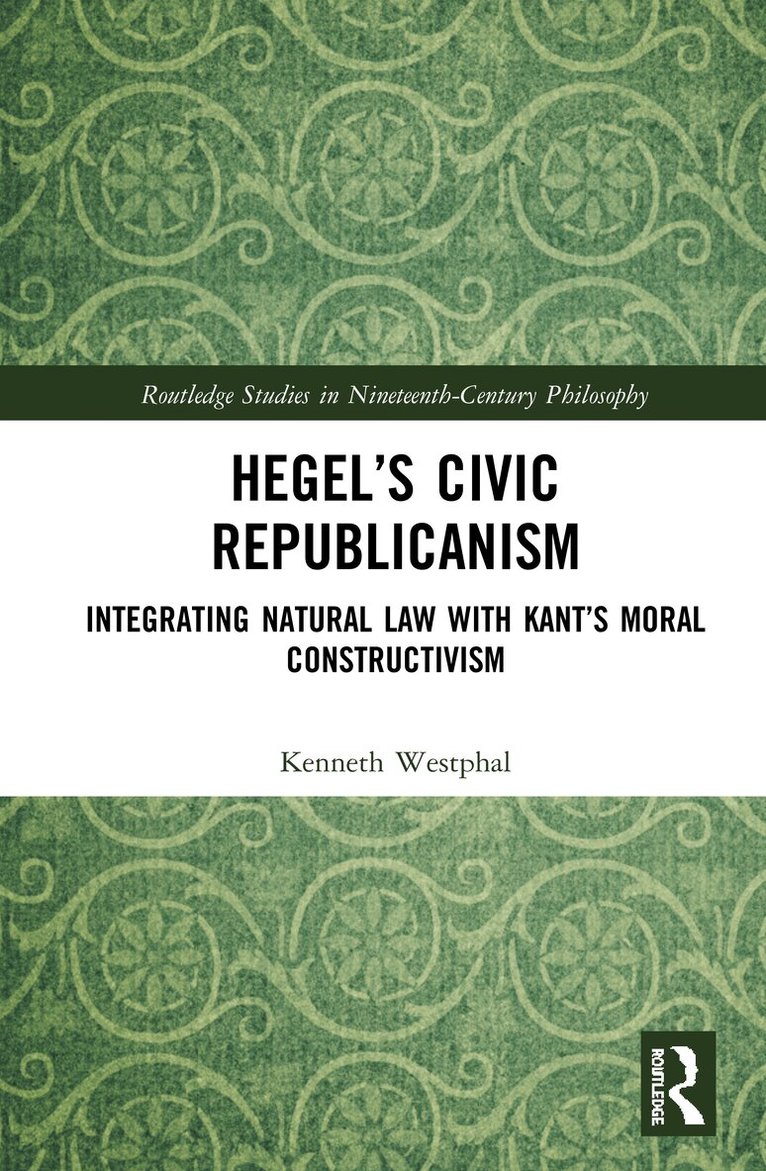
Hegel’s Civic Republicanism
Integrating Natural Law with Kant’s Moral Constructivism
Inbunden, Engelska, 2019
1 773 kr
Skickas inom 10-15 vardagar
In this book, Westphal offers an original interpretation of Hegel’s moral philosophy. Building on his previous study of the role of natural law in Hume’s and Kant’s accounts of justice, Westphal argues that Hegel developed and justified a robust form of civic republicanism. Westphal identifies, for the first time, the proper genre to which Hegel’s Philosophical Outlines of Justice belongs and to which it so prodigiously contributes, which he calls Natural Law Constructivism, an approach developed by Hume, Rousseau, Kant, and Hegel. He brings to bear Hegel’s adoption and augmentation of Kant’s Critique of rational judgment and justification in all non-formal domains to his moral philosophy in his Outlines. Westphal argues that Hegel’s justification for the standards of political legitimacy successfully integrates Rousseau’s Independence Requirement into the role of public reason within a constitutional republic. In these regards, Hegel’s moral and political principles are progressive not only in principle, but also in practice. Hegel’s Civic Republicanism will be of interest to scholars of moral philosophy, social and political philosophy, philosophy of law, Hegel, eighteenth- and nineteenth-century philosophy.
1 019 kr
Skickas inom 10-15 vardagar
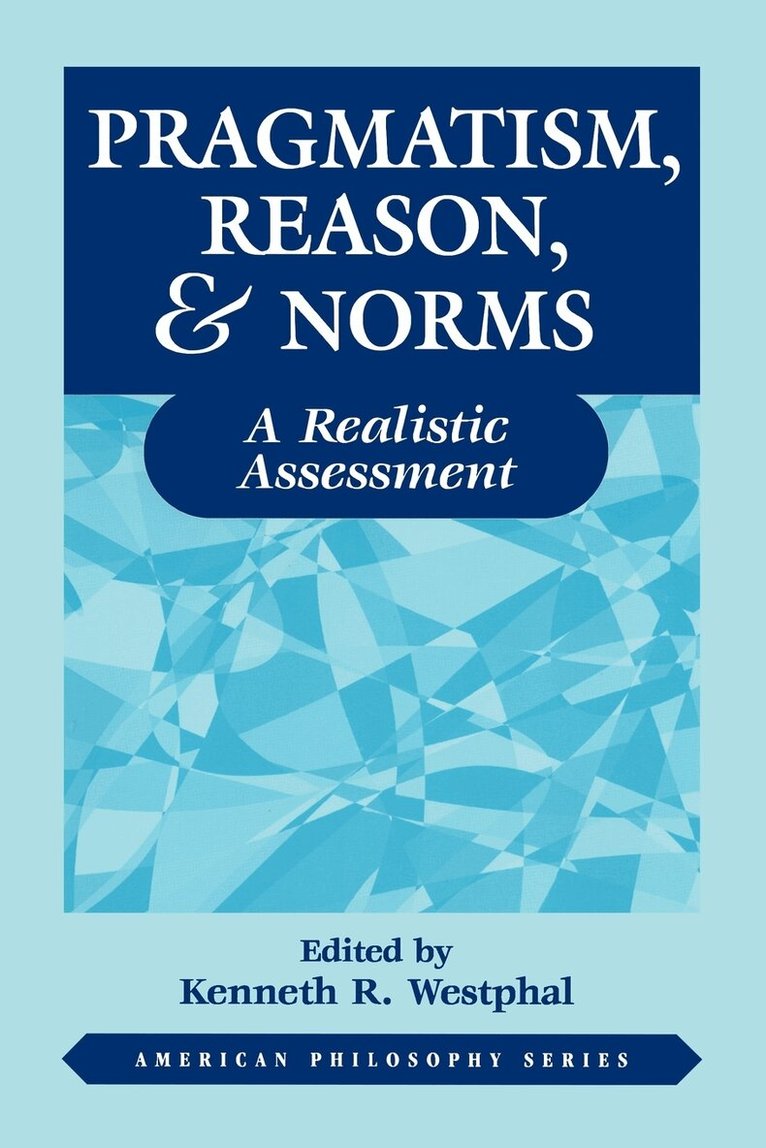
This collection of essays examines the issue of norms and social practices both in epistemology and in moral and social philosophy. The contributors examine the issue across an unprecedented range of issues, including epistemology (realism, perception, testimony), logic, education, foundations of morality, philosophy of law, the pragmatic account of norms and their justification, and the pragmatic character of reason itself.
453 kr
Skickas inom 7-10 vardagar
This collection of essays examines the issue of norms and social practices both in epistemology and in moral and social philosophy. The contributors examine the issue across an unprecedented range of issues, including epistemology (realism, perception, testimony), logic, education, foundations of morality, philosophy of law, the pragmatic account of norms and their justification, and the pragmatic character of reason itself.
Hegel’s Civic Republicanism
Integrating Natural Law with Kant’s Moral Constructivism
Häftad, Engelska, 2022
629 kr
Skickas inom 10-15 vardagar
In this book, Westphal offers an original interpretation of Hegel’s moral philosophy. Building on his previous study of the role of natural law in Hume’s and Kant’s accounts of justice, Westphal argues that Hegel developed and justified a robust form of civic republicanism. Westphal identifies, for the first time, the proper genre to which Hegel’s Philosophical Outlines of Justice belongs and to which it so prodigiously contributes, which he calls Natural Law Constructivism, an approach developed by Hume, Rousseau, Kant, and Hegel. He brings to bear Hegel’s adoption and augmentation of Kant’s Critique of rational judgment and justification in all non-formal domains to his moral philosophy in his Outlines. Westphal argues that Hegel’s justification for the standards of political legitimacy successfully integrates Rousseau’s Independence Requirement into the role of public reason within a constitutional republic. In these regards, Hegel’s moral and political principles are progressive not only in principle, but also in practice. Hegel’s Civic Republicanism will be of interest to scholars of moral philosophy, social and political philosophy, philosophy of law, Hegel, eighteenth- and nineteenth-century philosophy.
Del 20 - Critical Studies in German Idealism
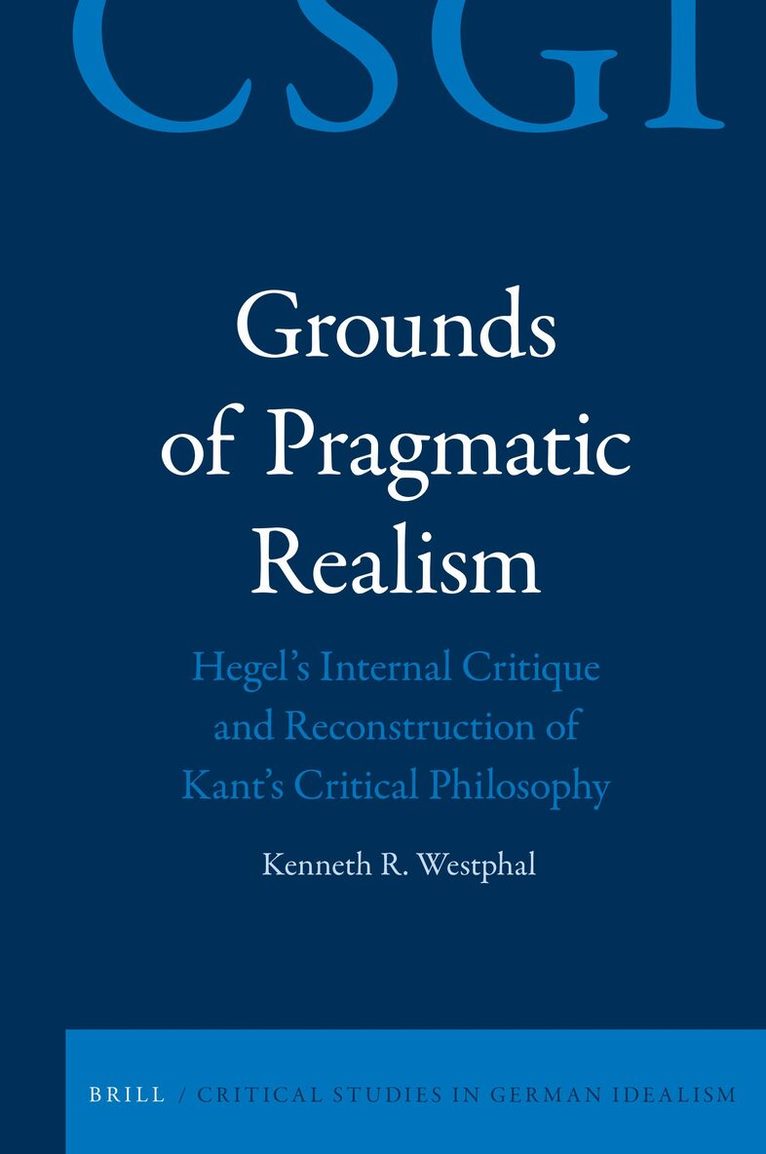
Grounds of Pragmatic Realism
Hegel's Internal Critique and Reconstruction of Kant's Critical Philosophy
Inbunden, Engelska, 2017
1 725 kr
Skickas inom 5-8 vardagar
Grounds of Pragmatic Realism argues that Hegel’s philosophy from the 1807 Phenomenology of Spirit through his last Berlin lectures on philosophical psychology demonstates how Kant’s critique of rational judgment across his Critical corpus can be disentangled from Kant’s failed Transcendental Idealism and developed into a cogent, pragmatic realism, within which the social and historical aspects of rational inquiry and justification are shown to justify realism about the objects of empirical knowledge. Hegel’s demonstration reveals how deeply contemporary epistemology remains beholden to pre-Critical options, none of which are adequate to the natural sciences, nor to commonsense. Hegel recognised and justified (independently) Kant’s semantics of singular cognitive reference to particulars within space and time. Hegel’s analysis of mutual recognition develops Kant’s insights into the self-critical and inter-subjective aspects of rational judgment and justification, to show that none of us can be properly rational judges, nor can we properly justify our judgments rationally, without constructive self-criticism and without acknowledging and benefitting from constructive critical assessment by others.