Kent H. Redford - Böcker
Visar alla böcker från författaren Kent H. Redford. Handla med fri frakt och snabb leverans.
7 produkter
7 produkter
613 kr
Skickas inom 7-10 vardagar
Despite intense interest in this biologically diverse and ecologically important region, the mammals of South America are still not well known. This volume provides a survey and synthesis of knowledge of the more than 650 species of land and marine mammals found in Ecuador, Peru, Bolivia, and Brazil. Chapters present not only taxonomic information but also ecological and behavioural characteristics, conservation status, and distribution maps for most species. Numerous illustrations are provided to assist in field and laboratory identification, including colour and black-and-white plates by Fiona Reid. New to this volume are chapters contributed by experts on the mammalian fossil record of this region and on its biodiversity and biogeography.
2 101 kr
Tillfälligt slut
"Mammals of the Neotropics" satisfies the need for a comprehensive, up-to-date survey of existing knowledge of South America's terrestrial and marine mammals. No comparable account of South American mammals has ever been published in any language, and this timely work will help encourage the research vital to conservation efforts. This second of a projected three volumes covers southern South America. The authors discuss the historical biogeography and contemporary habitats of the region and then provide individual accounts for nearly 360 indigenous species, including information on size, appearance, ecology, behavior, and life history. Range maps, line drawings, and color plates supplement the text. To place the species accounts in a broader context, the authors consider the diversity of animals within each taxonomic group, examine the Neotropical species from a worldwide geographical perspective, and review taxonomic questions and controversies. Two final chapters deal with the community ecology of mammals and the effects humans have had on the mammalian fauna of the southern cone. Kent H. Redford is coeditor, with John G.
298 kr
Skickas inom 7-10 vardagar
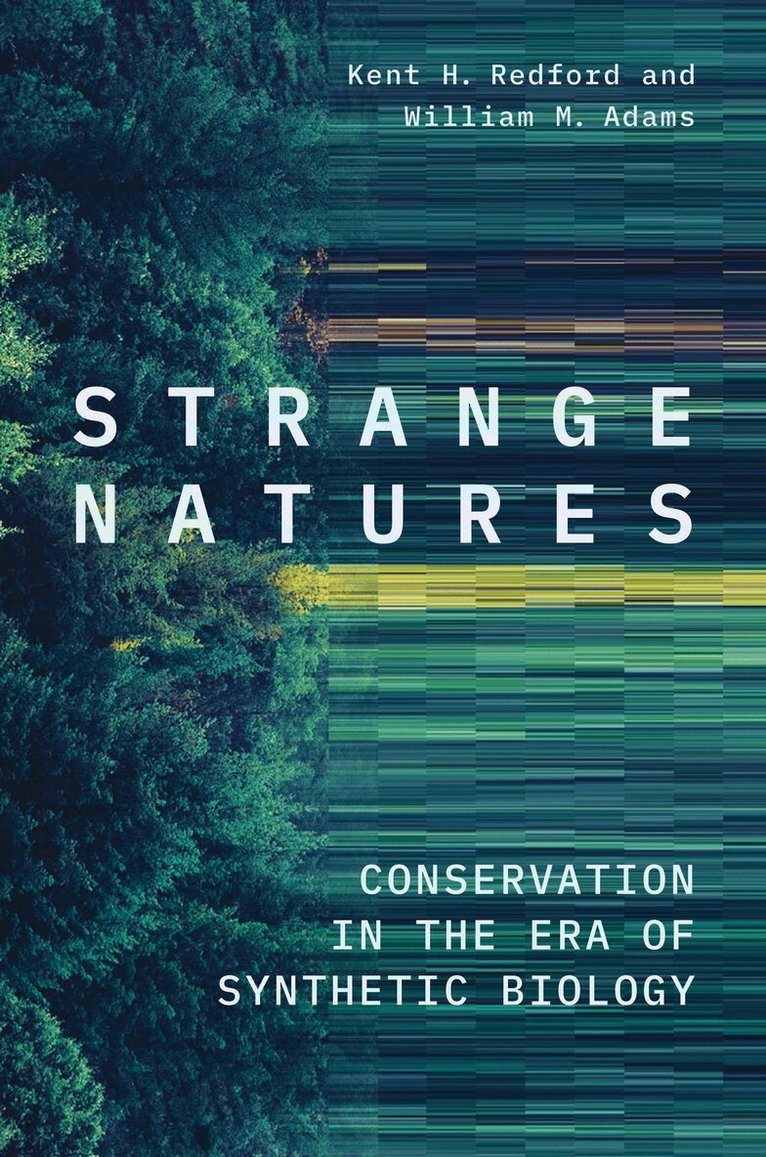
A groundbreaking examination of the implications of synthetic biology for biodiversity conservation “It is impressive how the book manages to be so rich in perspectives on such a complex and controversial phenomenon, yet so cautiously and open-mindedly written that it invites contemplation and reflection rather than hasty conclusions.”—Adam Wickberg, Global Environmental Politics Nature almost everywhere survives on human terms. The distinction between what is natural and what is human-made, which has informed conservation for centuries, has become blurred. When scientists can reshape genes more or less at will, what does it mean to conserve nature? The tools of synthetic biology are changing the way we answer that question. Gene editing technology is already transforming the agriculture and biotechnology industries. What happens if synthetic biology is also used in conservation to control invasive species, fight wildlife disease, or even bring extinct species back from the dead? Conservation scientist Kent Redford and geographer Bill Adams turn to synthetic biology, ecological restoration, political ecology, and de-extinction studies and propose a thoroughly innovative vision for protecting nature.
1 916 kr
Skickas inom 7-10 vardagar
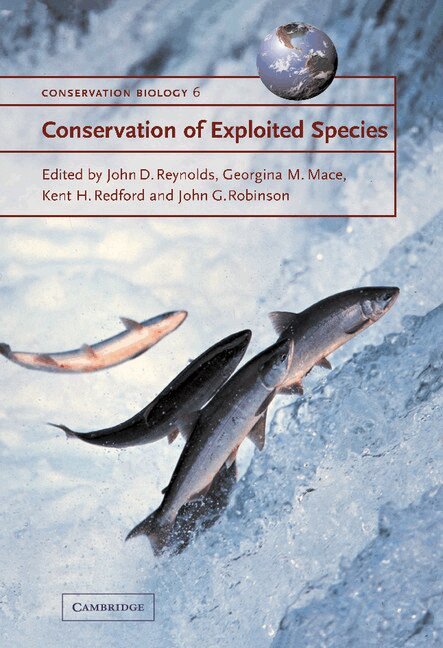
The use of wildlife for food and other human needs poses one of the greatest threats to the conservation of biodiversity. Wildlife exploitation is also critically important to many people from a variety of cultures for subsistence and commerce. This book brings together international experts to examine interactions between the biology of wildlife and the divergent goals of people involved in hunting, fishing, gathering and culling wildlife. Reviews of theory show how sustainable exploitation is tied to the study of population dynamics, with direct links to reproductive rates, life histories, behaviour and ecology. As such theory is rarely put into practice to achieve sustainable use and effective conservation, Conservation of Exploited Species explores the many reasons for this failure and considers remedies to tackle them, including scientific issues such as how to incorporate uncertainty into estimations, as well as social and political problems that stem from conflicting goals in exploitation.
876 kr
Skickas inom 7-10 vardagar
The use of wildlife for food and other human needs poses one of the greatest threats to the conservation of biodiversity. Wildlife exploitation is also critically important to many people from a variety of cultures for subsistence and commerce. This book brings together international experts to examine interactions between the biology of wildlife and the divergent goals of people involved in hunting, fishing, gathering and culling wildlife. Reviews of theory show how sustainable exploitation is tied to the study of population dynamics, with direct links to reproductive rates, life histories, behaviour and ecology. As such theory is rarely put into practice to achieve sustainable use and effective conservation, Conservation of Exploited Species explores the many reasons for this failure and considers remedies to tackle them, including scientific issues such as how to incorporate uncertainty into estimations, as well as social and political problems that stem from conflicting goals in exploitation.
1 462 kr
Tillfälligt slut
Large Carnivores and the Conservation of Biodiversity brings together more than thirty leading scientists and conservation practitioners to consider a key question in environmental conservation: Is the conservation of large carnivores in ecosystems that evolved with their presence equivalent to the conservation of biological diversity within those systems? Building their discussions from empirical, long-term data sets, contributors including James A. Estes, David S. Maehr, Tim McClanahan, Andres J. Novaro, John Terborgh, and Rosie Woodroffe explore a variety of issues surrounding the link between predation and biodiversity: What is the evidence for or against the link? Is it stronger in marine systems? What are the implications for conservation strategies? Large Carnivores and the Conservation of Biodiversity is the first detailed, broad-scale examination of the empirical evidence regarding the role of large carnivores in biodiversity conservation in both marine and terrestrial ecosystems. It contributes to a much more precise and global understanding of when, where, and whether protecting and restoring top predators will directly contribute to the conservation of biodiversity.Everyone concerned with ecology, biodiversity, or large carnivores will find this volume a unique and thoughtprovoking analysis and synthesis.
666 kr
Skickas inom 3-6 vardagar
Large Carnivores and the Conservation of Biodiversity brings together more than thirty leading scientists and conservation practitioners to consider a key question in environmental conservation: Is the conservation of large carnivores in ecosystems that evolved with their presence equivalent to the conservation of biological diversity within those systems? Building their discussions from empirical, long-term data sets, contributors including James A. Estes, David S. Maehr, Tim McClanahan, Andres J. Novaro, John Terborgh, and Rosie Woodroffe explore a variety of issues surrounding the link between predation and biodiversity: What is the evidence for or against the link? Is it stronger in marine systems? What are the implications for conservation strategies? Large Carnivores and the Conservation of Biodiversity is the first detailed, broad-scale examination of the empirical evidence regarding the role of large carnivores in biodiversity conservation in both marine and terrestrial ecosystems. It contributes to a much more precise and global understanding of when, where, and whether protecting and restoring top predators will directly contribute to the conservation of biodiversity.Everyone concerned with ecology, biodiversity, or large carnivores will find this volume a unique and thoughtprovoking analysis and synthesis.