Ketevan Batsatsashvili – författare
Visar alla böcker från författaren Ketevan Batsatsashvili. Handla med fri frakt och snabb leverans.
7 produkter
7 produkter
Inbunden, Engelska, 2020
3 238 kr
Skickas inom 10-15 vardagar
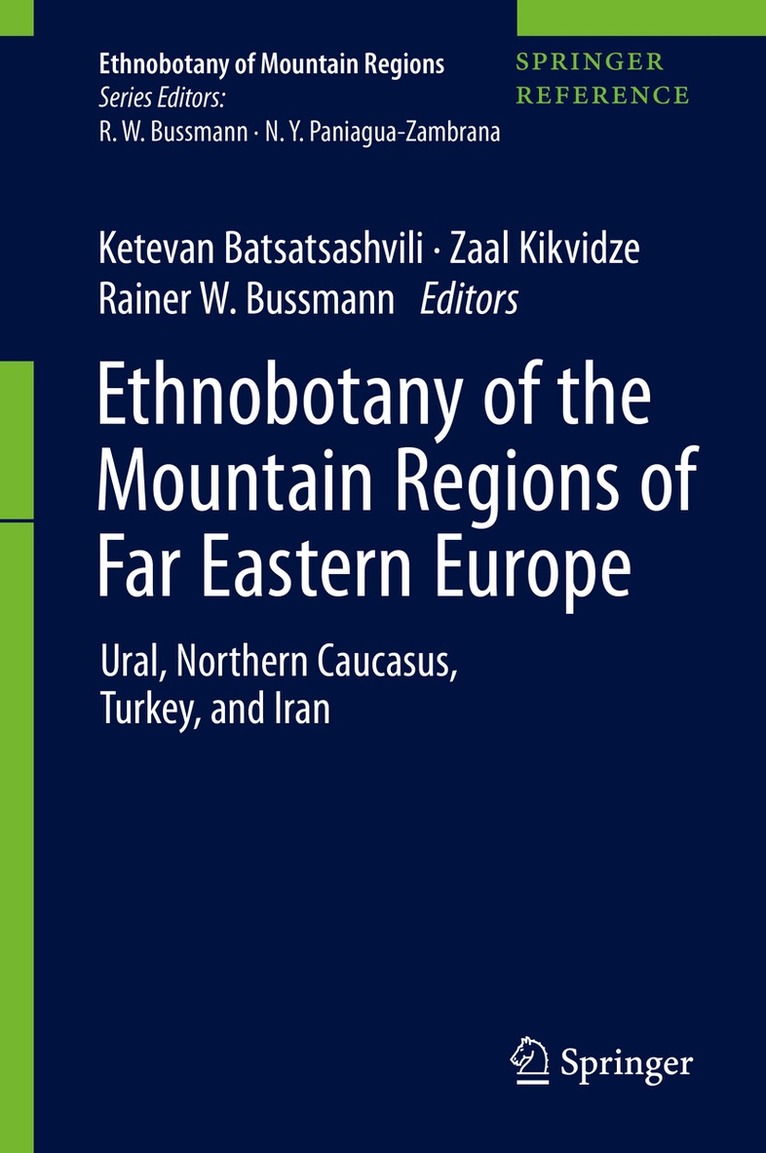
Research in recent years has increasingly shifted away from purely academic research, and into applied aspects of the discipline, including climate change research, conservation, and sustainable development. It has by now widely been recognized that “traditional” knowledge is always in flux and adapting to a quickly changing environment. Trends of globalization, especially the globalization of plant markets, have greatly influenced how plant resources are managed nowadays. While ethnobotanical studies are now available from many regions of the world, no comprehensive encyclopedic series focusing on the worlds mountain regions is available in the market. Scholars in plant sciences worldwide will be interested in this dynamic content. The field (and thus the market) of ethnobotany and ethnopharmacology has grown considerably in recent years. Student interest is on the rise, attendance at professional conferences has grown steadily, and the number of professionalscalling themselves ethnobotanists has increased significantly. Various societies of such professionals include the Society for Economic Botany, the International Society of Ethnopharmacology, the Society of Ethnobiology, the International Society for Ethnobiology, and many regional and national societies in the field that currently have thousands of members. Growth has been most robust in BRIC countries.The objective of this new MRW on Ethnobotany of Mountain Regions is to take advantage of the increasing international interest and scholarship in the field of mountain research. We anticipate including the best and latest research on a full range of descriptive, methodological, theoretical, and applied research on the most important plants for each region. Each contribution will be scientifically rigorous and contribute to the overall field of study.
E-bok
Engelska, 20203 955 kr
Läs direkt efter köp
Research in recent years has increasingly shifted away from purely academic research, and into applied aspects of the discipline, including climate change research, conservation, and sustainable development. It has by now widely been recognized that “traditional” knowledge is always in flux and adapting to a quickly changing environment. Trends of globalization, especially the globalization of plant markets, have greatly influenced how plant resources are managed nowadays. While ethnobotanical studies are now available from many regions of the world, no comprehensive encyclopedic series focusing on the worlds mountain regions is available in the market. Scholars in plant sciences worldwide will be interested in this dynamic content. The field (and thus the market) of ethnobotany and ethnopharmacology has grown considerably in recent years. Student interest is on the rise, attendance at professional conferences has grown steadily, and the number of professionalscalling themselves ethnobotanists has increased significantly. Various societies of such professionals include the Society for Economic Botany, the International Society of Ethnopharmacology, the Society of Ethnobiology, the International Society for Ethnobiology, and many regional and national societies in the field that currently have thousands of members. Growth has been most robust in BRIC countries.The objective of this new MRW on Ethnobotany of Mountain Regions is to take advantage of the increasing international interest and scholarship in the field of mountain research. We anticipate including the best and latest research on a full range of descriptive, methodological, theoretical, and applied research on the most important plants for each region. Each contribution will be scientifically rigorous and contribute to the overall field of study.
Inbunden, Engelska, 2020
3 238 kr
Skickas inom 10-15 vardagar
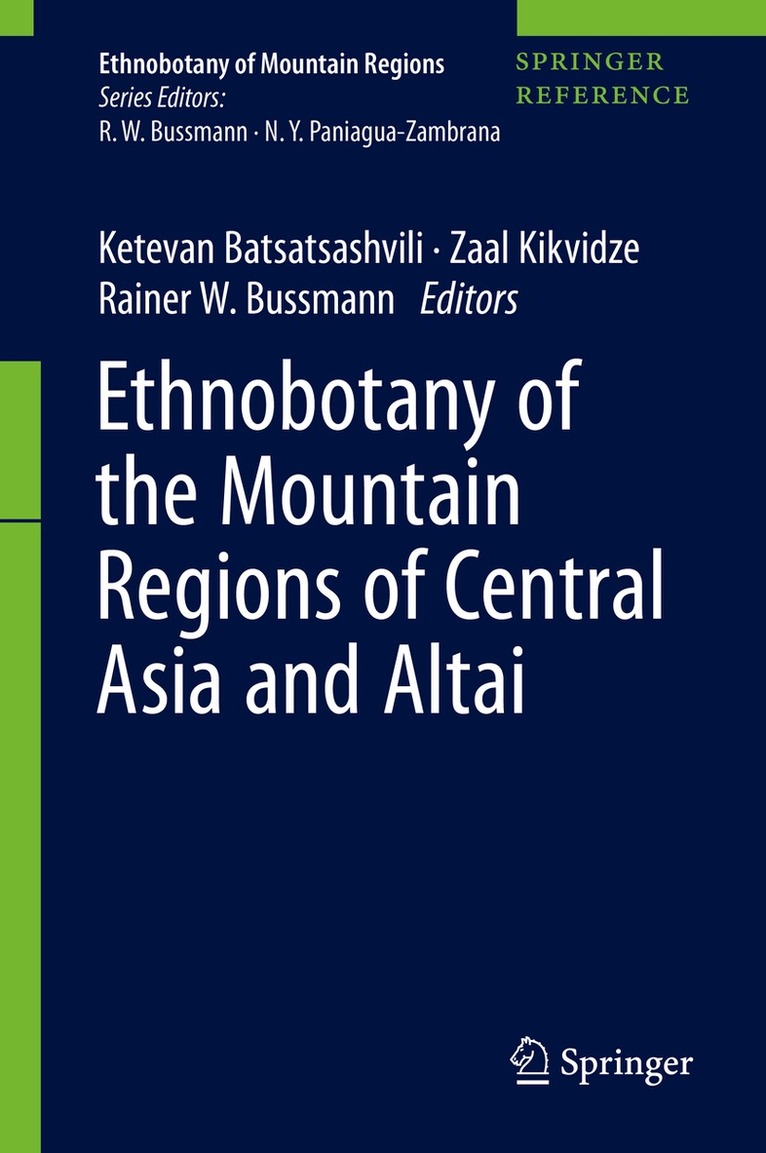
Research in recent years has increasingly shifted away from purely academic research, and into applied aspects of the discipline, including climate change research, conservation, and sustainable development. It has by now widely been recognized that “traditional” knowledge is always in flux and adapting to a quickly changing environment. Trends of globalization, especially the globalization of plant markets, have greatly influenced how plant resources are managed nowadays. While ethnobotanical studies are now available from many regions of the world, no comprehensive encyclopedic series focusing on the worlds mountain regions is available in the market. Scholars in plant sciences worldwide will be interested in this dynamic content. The field (and thus the market) of ethnobotany and ethnopharmacology has grown considerably in recent years. Student interest is on the rise, attendance at professional conferences has grown steadily, and the number of professionalscalling themselves ethnobotanists has increased significantly. Various societies of such professionals include the Society for Economic Botany, the International Society of Ethnopharmacology, the Society of Ethnobiology, the International Society for Ethnobiology, and many regional and national societies in the field that currently have thousands of members. Growth has been most robust in BRIC countries.This new MRW on Ethnobotany of Mountain Regions covers the best and latest research and scholarship in the field of mountain research. It offers a full range of descriptive, methodological, theoretical, and applied research on the most important plants for each region. Each contribution was examined with scientific rigor and contributes to the overall field of study.
E-bok
Engelska, 20203 955 kr
Läs direkt efter köp
Research in recent years has increasingly shifted away from purely academic research, and into applied aspects of the discipline, including climate change research, conservation, and sustainable development. It has by now widely been recognized that “traditional” knowledge is always in flux and adapting to a quickly changing environment. Trends of globalization, especially the globalization of plant markets, have greatly influenced how plant resources are managed nowadays. While ethnobotanical studies are now available from many regions of the world, no comprehensive encyclopedic series focusing on the worlds mountain regions is available in the market. Scholars in plant sciences worldwide will be interested in this dynamic content. The field (and thus the market) of ethnobotany and ethnopharmacology has grown considerably in recent years. Student interest is on the rise, attendance at professional conferences has grown steadily, and the number of professionalscalling themselves ethnobotanists has increased significantly. Various societies of such professionals include the Society for Economic Botany, the International Society of Ethnopharmacology, the Society of Ethnobiology, the International Society for Ethnobiology, and many regional and national societies in the field that currently have thousands of members. Growth has been most robust in BRIC countries.This new MRW on Ethnobotany of Mountain Regions covers the best and latest research and scholarship in the field of mountain research. It offers a full range of descriptive, methodological, theoretical, and applied research on the most important plants for each region. Each contribution was examined with scientific rigor and contributes to the overall field of study.
Inbunden, Engelska, 2017
1 623 kr
Skickas inom 10-15 vardagar
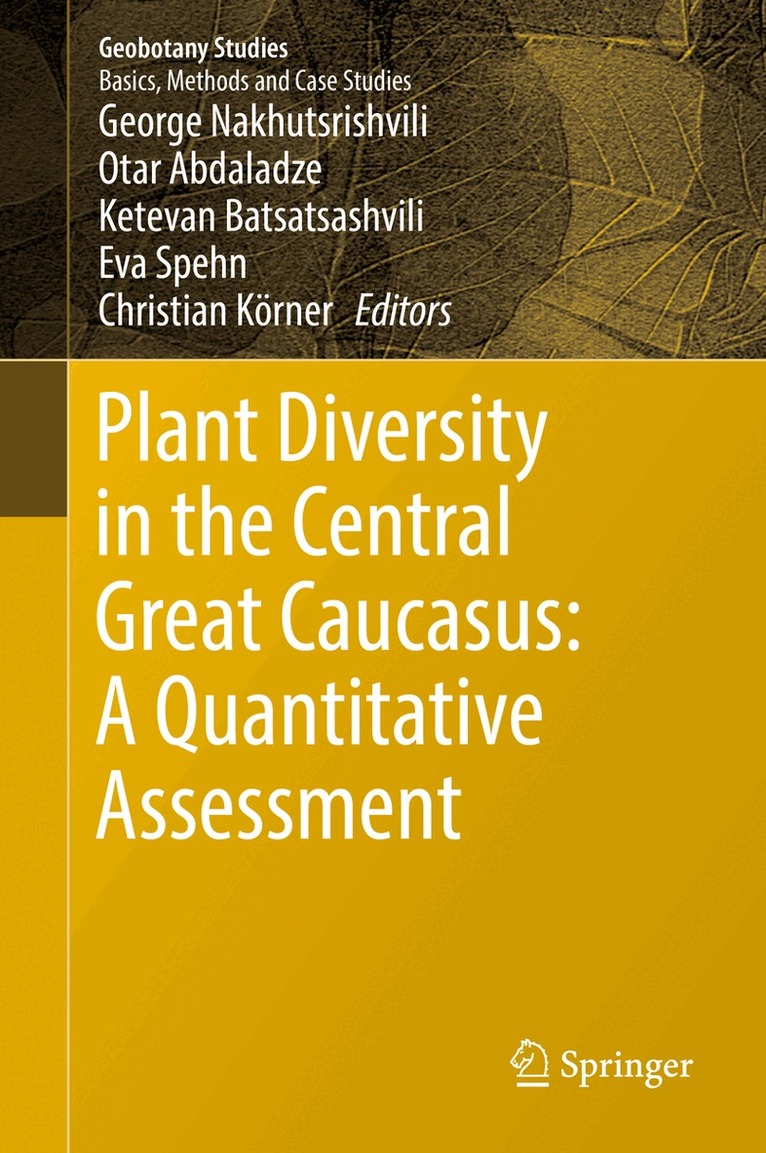
This book presents the first assessment of the high-elevation flora of the Central Caucasus with a community ecology emphasis. Following a geostatistical-climatological description of the region (in comparison to the European Alps), it describes the montane, alpine and nival plant assemblages on the basis of an ecological approach that combines moisture, soils and local habitat peculiarities. Highlights include the famous giant herb communities in treeless parts of the upper montane belt, the various facets of alpine turf, and the unique assemblages and settings in the nival region. Further chapters address potential niche conservation between the Caucasus and the Alps, as well as a compilation of plant species habitat preferences (indicator values) that applies to a concept developed for the Alps. Richly illustrated and featuring extensive quantitative data on species abundance, the book offers a unique guide to the plant species diversity of this prominent mountain range, and a valuable resource for comparative ecology and biodiversity assessments of warm temperate mountain systems.
E-bok
Engelska, 20171 575 kr
Läs direkt efter köp
This book presents the first assessment of the high-elevation flora of the Central Caucasus with a community ecology emphasis. Following a geostatistical-climatological description of the region (in comparison to the European Alps), it describes the montane, alpine and nival plant assemblages on the basis of an ecological approach that combines moisture, soils and local habitat peculiarities. Highlights include the famous giant herb communities in treeless parts of the upper montane belt, the various facets of alpine turf, and the unique assemblages and settings in the nival region. Further chapters address potential niche conservation between the Caucasus and the Alps, as well as a compilation of plant species habitat preferences (indicator values) that applies to a concept developed for the Alps. Richly illustrated and featuring extensive quantitative data on species abundance, the book offers a unique guide to the plant species diversity of this prominent mountain range, and a valuable resource for comparative ecology and biodiversity assessments of warm temperate mountain systems.
Häftad, Engelska, 2018
1 192 kr
Skickas inom 10-15 vardagar
This book presents the first assessment of the high-elevation flora of the Central Caucasus with a community ecology emphasis. Following a geostatistical-climatological description of the region (in comparison to the European Alps), it describes the montane, alpine and nival plant assemblages on the basis of an ecological approach that combines moisture, soils and local habitat peculiarities. Highlights include the famous giant herb communities in treeless parts of the upper montane belt, the various facets of alpine turf, and the unique assemblages and settings in the nival region. Further chapters address potential niche conservation between the Caucasus and the Alps, as well as a compilation of plant species habitat preferences (indicator values) that applies to a concept developed for the Alps. Richly illustrated and featuring extensive quantitative data on species abundance, the book offers a unique guide to the plant species diversity of this prominent mountain range, and a valuable resource for comparative ecology and biodiversity assessments of warm temperate mountain systems.