Zaal Kikvidze - Böcker
Visar alla böcker från författaren Zaal Kikvidze. Handla med fri frakt och snabb leverans.
7 produkter
7 produkter
820 kr
Skickas inom 10-15 vardagar
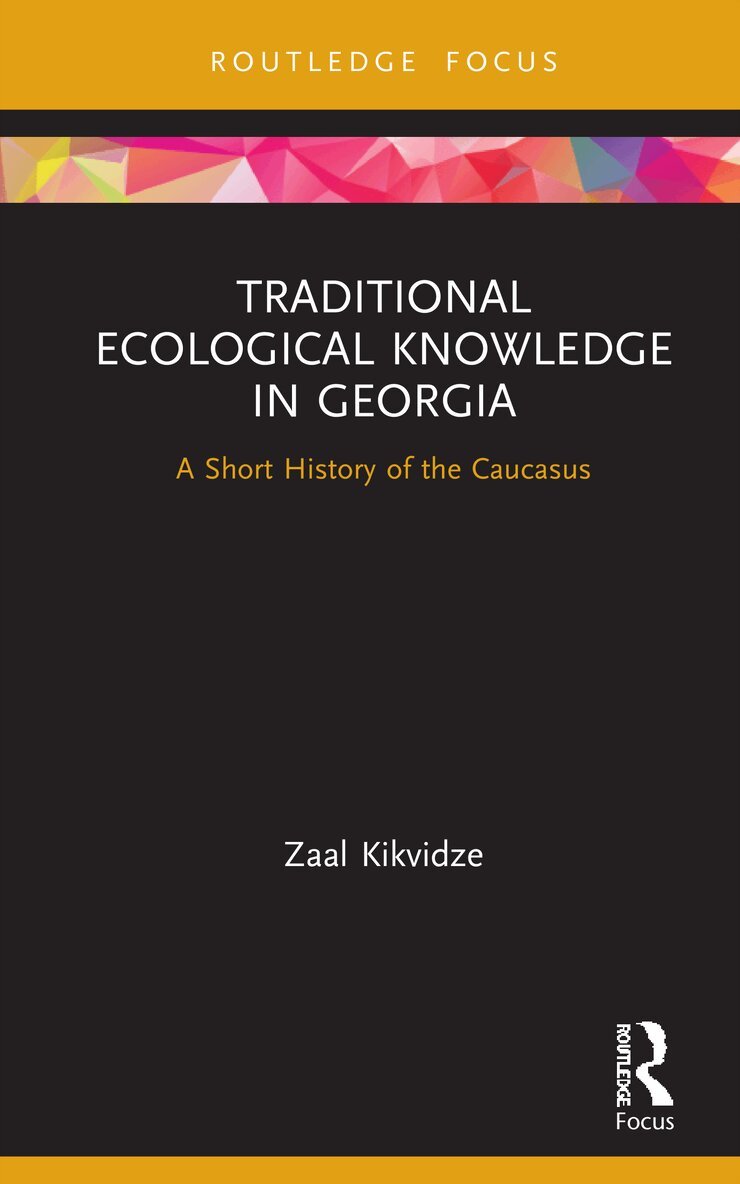
This multidisciplinary book develops a synthesis of traditional ecological knowledge in the Caucasus region in Georgia – a hotspot of natural and cultural diversity. Traditional ecological knowledge connects the knowledge of natural phenomena with the culture of a given human society, and Georgia is an excellent case study for observing this knowledge. The Caucasus region in particular is notable for its natural and ethnocultural diversity and this book weaves together the disciplines of history, environment and ethnography to develop a synthesis of traditional ecological knowledge. Tracing the history of Georgia through two main phases, the hunter and gatherer bands and the agrarian phase, the author examines important events such as the breeding of naked hexaploid wheat, the domestication of the grapevine and the development of viticulture. By utilising this historic perspective it allows us to clearly see how traditional ecological knowledge has increased in sophistication during the long prehistory of Georgia, and most importantly how this type of knowledge underpins the social and economic progress of traditional societies, not only in Georgia, but throughout the world. This book will be of great relevance to interdisciplinary-minded scholars and students who have an interest in the relationships between nature and human society, including anthropologists, historians, biologists, ecologists, botanists, sociologists and ethnographers.
359 kr
Skickas inom 10-15 vardagar
This multidisciplinary book develops a synthesis of traditional ecological knowledge in the Caucasus region in Georgia – a hotspot of natural and cultural diversity. Traditional ecological knowledge connects the knowledge of natural phenomena with the culture of a given human society, and Georgia is an excellent case study for observing this knowledge. The Caucasus region in particular is notable for its natural and ethnocultural diversity and this book weaves together the disciplines of history, environment and ethnography to develop a synthesis of traditional ecological knowledge. Tracing the history of Georgia through two main phases, the hunter and gatherer bands and the agrarian phase, the author examines important events such as the breeding of naked hexaploid wheat, the domestication of the grapevine and the development of viticulture. By utilising this historic perspective it allows us to clearly see how traditional ecological knowledge has increased in sophistication during the long prehistory of Georgia, and most importantly how this type of knowledge underpins the social and economic progress of traditional societies, not only in Georgia, but throughout the world. This book will be of great relevance to interdisciplinary-minded scholars and students who have an interest in the relationships between nature and human society, including anthropologists, historians, biologists, ecologists, botanists, sociologists and ethnographers.
Ethnobotany of the Mountain Regions of Far Eastern Europe
Ural, Northern Caucasus, Turkey, and Iran
Inbunden, Engelska, 2020
3 147 kr
Skickas inom 10-15 vardagar
Various societies of such professionals include the Society for Economic Botany, the International Society of Ethnopharmacology, the Society of Ethnobiology, the International Society for Ethnobiology, and many regional and national societies in the field that currently have thousands of members.
3 147 kr
Skickas inom 10-15 vardagar
Various societies of such professionals include the Society for Economic Botany, the International Society of Ethnopharmacology, the Society of Ethnobiology, the International Society for Ethnobiology, and many regional and national societies in the field that currently have thousands of members.
4 653 kr
Skickas inom 10-15 vardagar
Research in recent years has increasingly shifted away from purely academic research, and into applied aspects of the discipline, including climate change research, conservation, and sustainable development. It has by now widely been recognized that “traditional” knowledge is always in flux and adapting to a quickly changing environment. Trends of globalization, especially the globalization of plant markets, have greatly influenced how plant resources are managed nowadays. While ethnobotanical studies are now available from many regions of the world, no comprehensive encyclopedic series focusing on the worlds mountain regions is available in the market. Scholars in plant sciences worldwide will be interested in this dynamic content. The field (and thus the market) of ethnobotany and ethnopharmacology has grown considerably in recent years. Student interest is on the rise, attendance at professional conferences has grown steadily, and the number of professionals calling themselves ethnobotanists has increased significantly. Various societies of such professionals include the Society for Economic Botany, the International Society of Ethnopharmacology, the Society of Ethnobiology, the International Society for Ethnobiology, and many regional and national societies in the field that currently have thousands of members. Growth has been most robust in BRIC countries.The objective of this new MRW on Ethnobotany of Mountain Regions is to take advantage of the increasing international interest and scholarship in the field of mountain research. We anticipate including the best and latest research on a full range of descriptive, methodological, theoretical, and applied research on the most important plants for each region. Each contribution will be scientifically rigorous and contribute to the overall field of study.
4 042 kr
Skickas inom 10-15 vardagar
The key areas of focus include plant diversity in the Carpathians, cross cultural variation in traditional uses of plant species by these communities, high-value medicinal and food plant species, and threats and conservation status of plant species and traditional knowledge.
6 731 kr
Skickas inom 10-15 vardagar
Ethnobotany of the Caucasus focuses on the ethnobotany of wild and cultivated plants in this macroregion. This Major Reference Work begins with an introduction to the region, followed by discussions of each sub-region, and plant chapters for over 1000 plant species.