Narel Y. Paniagua-Zambrana – författare
Visar alla böcker från författaren Narel Y. Paniagua-Zambrana. Handla med fri frakt och snabb leverans.
6 produkter
6 produkter
8 315 kr
Skickas inom 10-15 vardagar
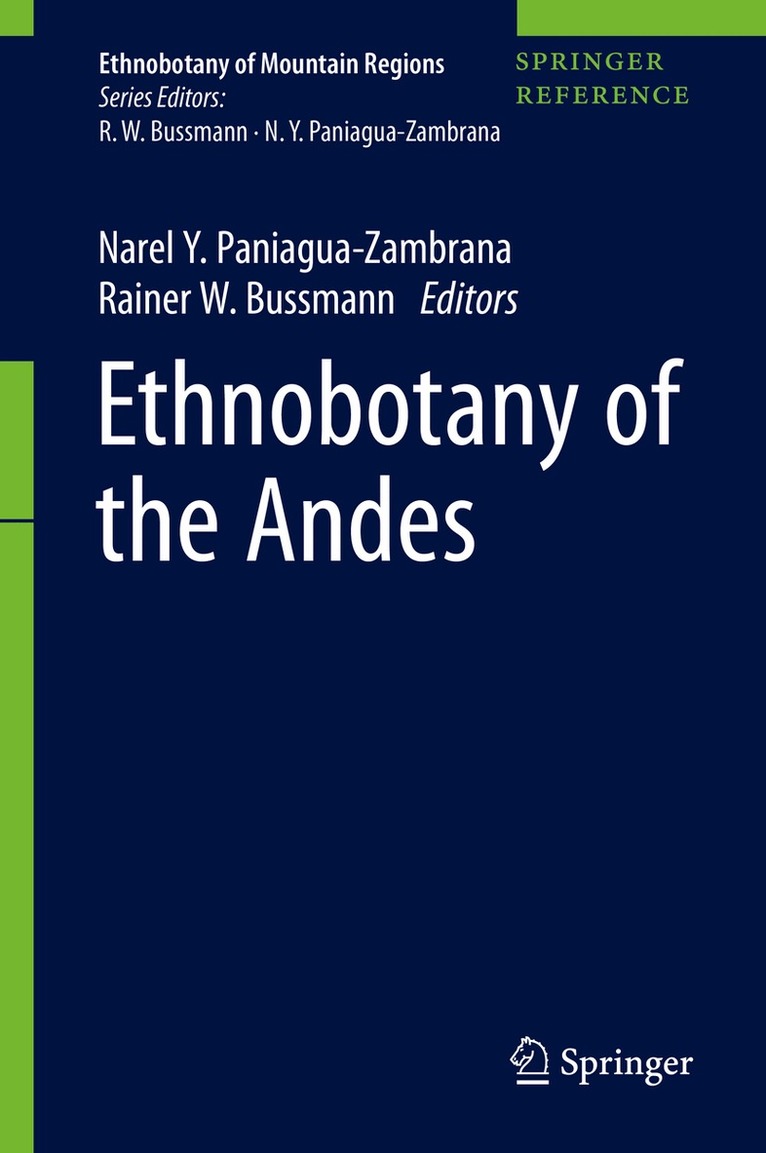
Research in recent years has increasingly shifted away from purely academic research, and into applied aspects of the discipline, including climate change research, conservation, and sustainable development. It has by now widely been recognized that “traditional” knowledge is always in flux and adapting to a quickly changing environment. Trends of globalization, especially the globalization of plant markets, have greatly influenced how plant resources are managed nowadays. While ethnobotanical studies are now available from many regions of the world, no comprehensive encyclopedic series focusing on the worlds mountain regions is available in the market. Scholars in plant sciences worldwide will be interested in this dynamic content. The field (and thus the market) of ethnobotany and ethnopharmacology has grown considerably in recent years. Student interest is on the rise, attendance at professional conferences has grown steadily, and the number of professionals calling themselves ethnobotanists has increased significantly. Various societies of such professionals include the Society for Economic Botany, the International Society of Ethnopharmacology, the Society of Ethnobiology, the International Society for Ethnobiology, and many regional and national societies in the field that currently have thousands of members. Growth has been most robust in BRIC countries.This new MRW on Ethnobotany of Mountain Regions covers the latest scholarship in the field of mountain research. It offers the best and latest research on a full range of descriptive, methodological, theoretical, and applied research on the most important plants for each region. Each contribution was scientifically rigorous and contributes to the overall field of study.
E-bok
Engelska, 20208 396 kr
Läs direkt efter köp
Research in recent years has increasingly shifted away from purely academic research, and into applied aspects of the discipline, including climate change research, conservation, and sustainable development. It has by now widely been recognized that “traditional” knowledge is always in flux and adapting to a quickly changing environment. Trends of globalization, especially the globalization of plant markets, have greatly influenced how plant resources are managed nowadays. While ethnobotanical studies are now available from many regions of the world, no comprehensive encyclopedic series focusing on the worlds mountain regions is available in the market. Scholars in plant sciences worldwide will be interested in this dynamic content. The field (and thus the market) of ethnobotany and ethnopharmacology has grown considerably in recent years. Student interest is on the rise, attendance at professional conferences has grown steadily, and the number of professionals calling themselves ethnobotanists has increased significantly. Various societies of such professionals include the Society for Economic Botany, the International Society of Ethnopharmacology, the Society of Ethnobiology, the International Society for Ethnobiology, and many regional and national societies in the field that currently have thousands of members. Growth has been most robust in BRIC countries.This new MRW on Ethnobotany of Mountain Regions covers the latest scholarship in the field of mountain research. It offers the best and latest research on a full range of descriptive, methodological, theoretical, and applied research on the most important plants for each region. Each contribution was scientifically rigorous and contributes to the overall field of study.
4 225 kr
Skickas inom 10-15 vardagar
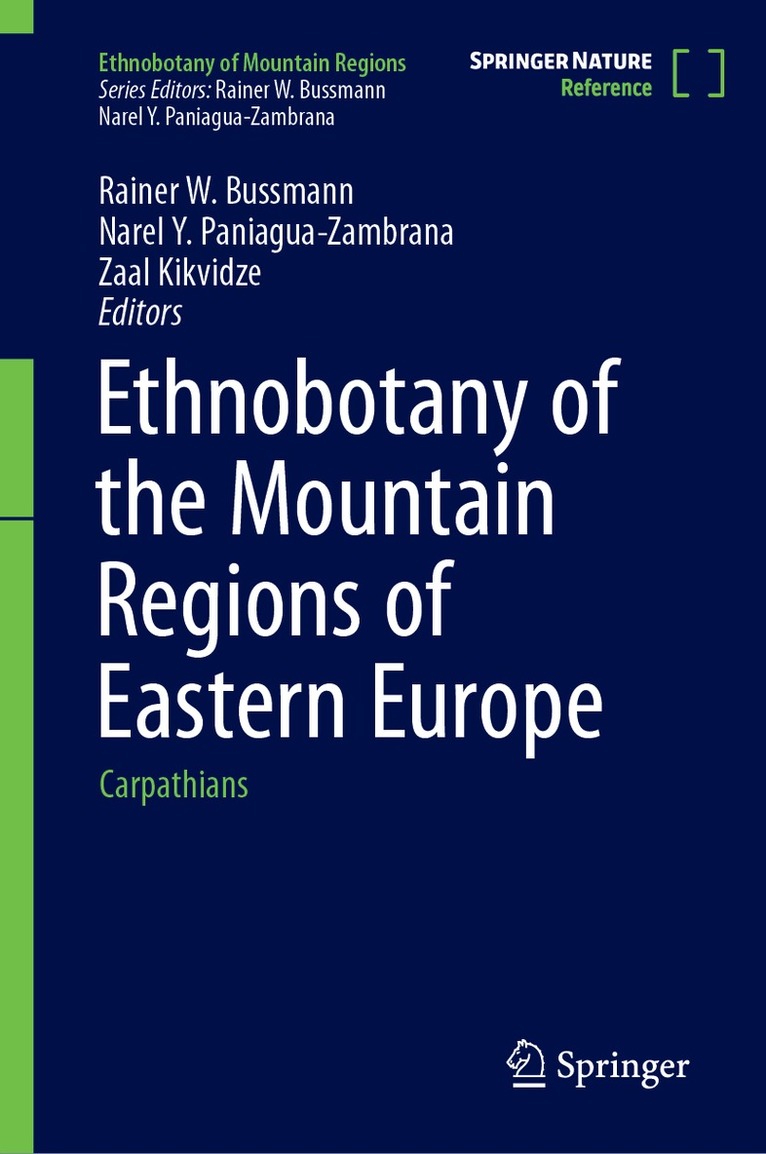
Natural resources and associated biological diversity provide the basis of livelihood for humans, particularly in the rural areas and mountain regions around the world. Over centuries, indigenous peoples, traditional societies, and local communities have developed their own specific knowledge regarding plant use, management, and conservation. The history of plant use by humans as food and to treat diverse ailments dates back to ancient civilizations. Even though the advent of allopathic medicine has somehow minimized the role of medicinal plants in favor of synthetic drugs, a number of modern drug discoveries have been based on medicinal plants used by indigenous peoples. Ethnobiology is the burgeoning interdisciplinary scientific field, which covers all types of interactions between plants and people, and Eastern Europe is recognized as a plant diversity hot spot.This new Major Reference Work on the Ethnobotany of Mountain Regions of Eastern Europe: Carpathians covers in detail the mountains and vallies of this region, which are known to be rich in unique medicinal and food plant species. Local communities residing in the mountain regions of Eastern Europe possess unique knowledge of surrounding resources, which is the result of many years of interaction with and selection of the most desirable and pervasive plant species present. In this context this major reference work provides comprehensive information on cross-culture variation in the traditional uses of plants as food, medicine, and for cultural purposes among these diverse communities residing in Eastern Europe. The key areas of focus include plant diversity in the Carpathians, cross cultural variation in traditional uses of plant species by these communities, high-value medicinal and food plant species, and threats and conservation status of plant species and traditional knowledge.
E-bok
Engelska, 20254 275 kr
Läs direkt efter köp
Natural resources and associated biological diversity provide the basis of livelihood for humans, particularly in the rural areas and mountain regions around the world. Over centuries, indigenous peoples, traditional societies, and local communities have developed their own specific knowledge regarding plant use, management, and conservation. The history of plant use by humans as food and to treat diverse ailments dates back to ancient civilizations. Even though the advent of allopathic medicine has somehow minimized the role of medicinal plants in favor of synthetic drugs, a number of modern drug discoveries have been based on medicinal plants used by indigenous peoples. Ethnobiology is the burgeoning interdisciplinary scientific field, which covers all types of interactions between plants and people, and Eastern Europe is recognized as a plant diversity hot spot. This new Major Reference Work on the Ethnobotany of Mountain Regions of Eastern Europe: Carpathians covers in detail the mountains and vallies of this region, which are known to be rich in unique medicinal and food plant species. Local communities residing in the mountain regions of Eastern Europe possess unique knowledge of surrounding resources, which is the result of many years of interaction with and selection of the most desirable and pervasive plant species present. In this context this major reference work provides comprehensive information on cross-culture variation in the traditional uses of plants as food, medicine, and for cultural purposes among these diverse communities residing in Eastern Europe. The key areas of focus include plant diversity in the Carpathians, cross cultural variation in traditional uses of plant species by these communities, high-value medicinal and food plant species, and threats and conservation status of plant species and traditional knowledge.
7 037 kr
Skickas inom 10-15 vardagar
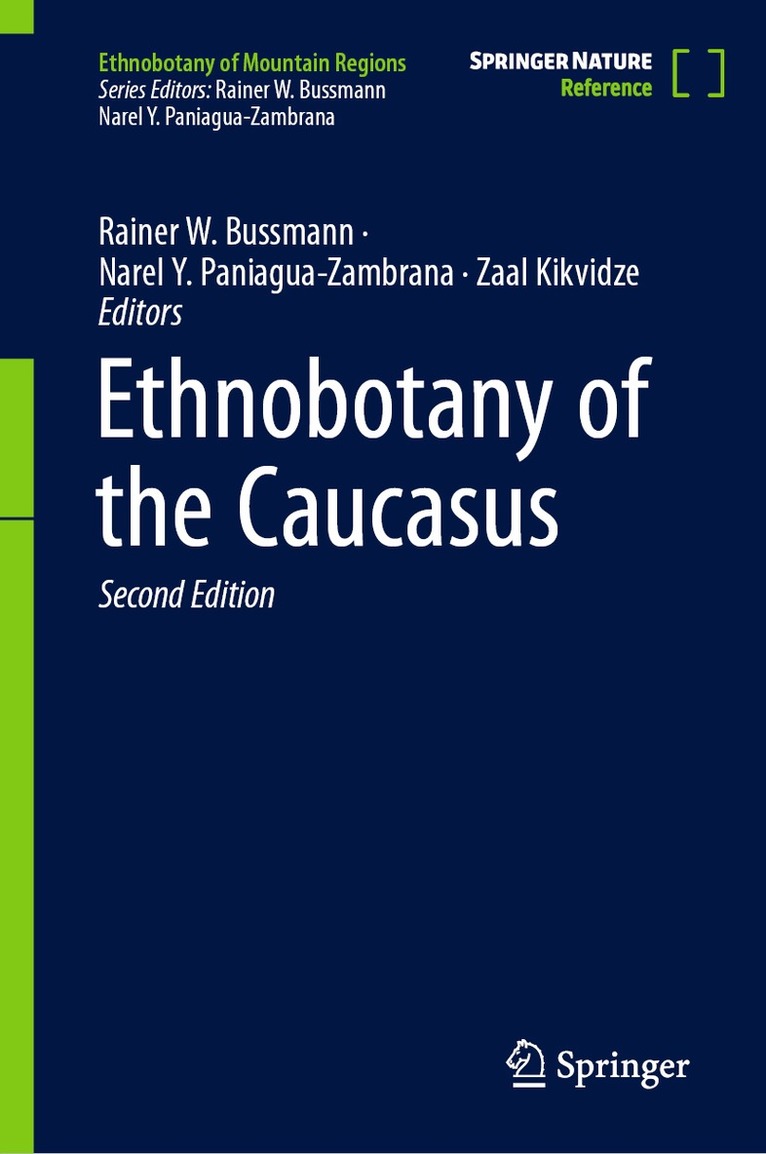
Ethnobotany of the Caucasus focuses on the ethnobotany of wild and cultivated plants in this macroregion. The book is divided into sections covering countries (or groups of countries), based on plant diversity and not political or national boundaries. This Major Reference Work begins with an introduction to the region, followed by discussions of each sub-region, and plant chapters for over 1000 plant species. To further define the content, each section is divided into five major categories—food, medicine and veterinary/handicraft/ritual/folkloric uses.
E-bok
Engelska, 20257 633 kr
Läs direkt efter köp
Ethnobotany of the Caucasus focuses on the ethnobotany of wild and cultivated plants in this macroregion. The book is divided into sections covering countries (or groups of countries), based on plant diversity and not political or national boundaries. This Major Reference Work begins with an introduction to the region, followed by discussions of each sub-region, and plant chapters for over 1000 plant species. To further define the content, each section is divided into five major categories—food, medicine and veterinary/handicraft/ritual/folkloric uses.