Kevin Brownlow – författare
Visar alla böcker från författaren . Handla med fri frakt och snabb leverans.
4 produkter
4 produkter
E-bok
Engelska, 2013221 kr
Läs direkt efter köp
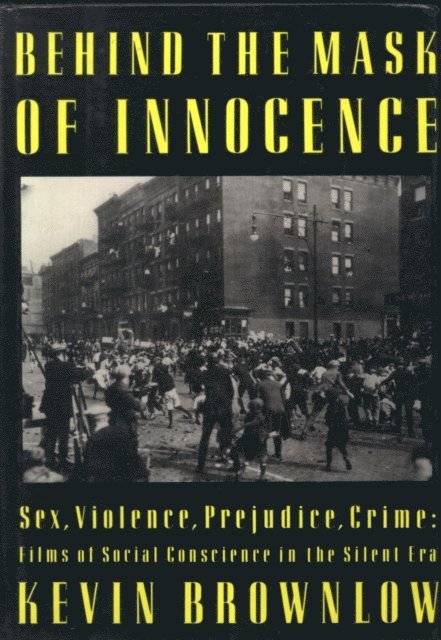
From Kevin Brownlow, cinema historian and discoverer of lost films, here is the first full-scale exploration of a vital and now almost forgotten chapter of American moviemaking: the response of early producers of the decades before World War I. All the issues that torment America today were rampant in the silent-film era: crime, poverty, alcohol, drugs, racial and ethnic prejudice, epidemics, and the controversies over birth control, abortion, and the death penalty. And there were others that persist today but were then even more explosive: sexual mores, government and police corruption, prison conditions, immigration, and strife between capital and labor. Although many early moviemakers ignored harsh realities, choosing to depict a society shielded by a “mask of innocence,” others went behind that façade, fighting the ever-present censors and producing films that made even the most sheltered moviegoer aware of deep rents in the country’s social fabric. Some films were exploitative, some serious, but together they add up to a revelation of the dark side of American life—a revelation startling to us today because it was later, in the era of the Hays Office, so thoroughly ignored, indeed denied, by Hollywood. Broken Blossoms, The Crowd, Humoresque, Regeneration: these films that have survived and become classics are, in these pages, studied in their historical context. And although a tragic number of other films have vanished, nearly all are reclaimed from oblivion by Mr. Brownlow’s brilliant feat of restoration and descriptive “reconstruction.” Here, never again to be forgotten, are The Fall of the Romanoffs, The Racket, Those Who Dance, and dozens of others. With this remarkable book, Kevin Brownlow completes the panoramic trilogy that began with The Parade’s Gone By… and continued with The War, the West, and the Wilderness. Like its predecessors, Behind the Mask of Innocence is an essential work of silent-film history, certain to become a standard reference; but it is more—at once a surprising portrait of a time not unlike our own and a powerful demonstration of the way in which a popular art form can reveal a society to itself.
E-bok
Engelska, 201388 kr
Läs direkt efter köp
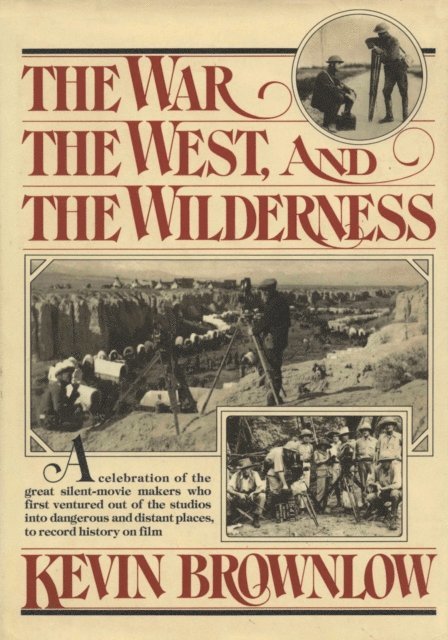
Here, from one of today’s leading authorities on film history, is the story, told brilliantly and for the first time, of the pioneering movie makers who as early as 1905 traveled beyond the studio stages to make feature films on location—and in so doing recorded the real history and real life of their time. The War, the West, and the Wilderness is the result of more than a decade of passionate research by Kevin Brownlow, whose last book, The Parade’s Gone By… (hailed by Charles Champlin as “the definitive work on the silent era”) is regarded as a classic history of early motion pictures. His new book is alive with the voices of the film-makers themselves, in their logbooks, in their letters and diaries, in their firsthand accounts of their adventurous journeys and cinematic innovations, and—even more immediate—in Brownlow’s interviews with cameramen, director’s, lighting technicians, and actors who relive those days, taking us with them to the Great War, to the West, ad into the Wilderness. It is the triumph of this book to reconstruct the dramatic moments when these men and women contrived, against ordinary odds, to bring to movie audiences for the first time, the look, the feel—the actuality—of large events and distant places, from the great battles of World War I to the South Seas with Jack London aboard the Shark, and the gold rush in Tonopah, Nevada.
Häftad, Engelska, 1976
362 kr
Skickas inom 5-8 vardagar
The magic of the silent screen, illuminated by the recollections of those who created it.
Häftad, Engelska, 2023
364 kr
Skickas inom 11-20 vardagar
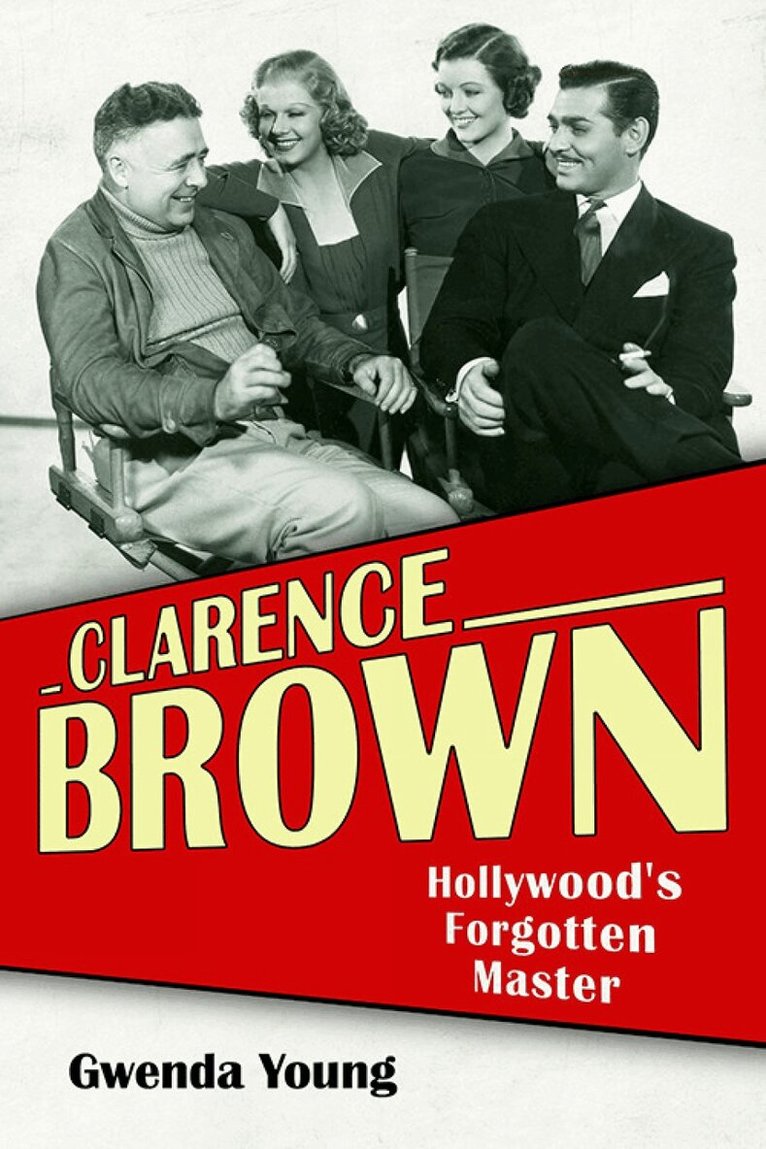
Greta Garbo proclaimed him as her favorite director. Actors, actresses, and even child stars were so at ease under his direction that they were able to deliver inspired and powerful performances. Academy–Award–nominated director Clarence Brown (1890–1987) worked with some of Hollywood's greatest stars, such as Clark Gable, Joan Crawford, Mickey Rooney, Katharine Hepburn, and Spencer Tracy. Known as the "star maker," he helped guide the acting career of child sensation Elizabeth Taylor (of whom he once said, "she has a face that is an act of God") and discovered Academy–Award–winning child star Claude Jarman Jr. for The Yearling (1946). He directed more than fifty films, including Possessed (1931), Anna Karenina (1935), National Velvet (1944), and Intruder in the Dust (1949), winning his audiences over with glamorous star vehicles, tales of families, communities, and slices of Americana, as well as hard-hitting dramas. Although Brown was admired by peers like Jean Renoir, Frank Capra, and John Ford, his illuminating work and contributions to classic cinema are rarely mentioned in the same breath as those of Hollywood's great directors.In this first full-length account of the life and career of the pioneering filmmaker, Gwenda Young discusses Brown's background to show how his hardworking parents and resilient grandparents inspired his entrepreneurial spirit. She reveals how the one–time engineer and World War I aviator established a thriving car dealership, the Brown Motor Car Company, in Alabama - only to give it all up to follow his dream of making movies. He would not only become a brilliant director but also a craftsman who was known for his innovative use of lighting and composition.In a career spanning five decades, Brown was nominated for five Academy Awards and directed ten different actors in Oscar-nominated performances. Despite his achievements and influence, however, Brown has been largely overlooked by film scholars. _Clarence Brown: Hollywood's Forgotten Master_ explores the forces that shaped a complex man - part–dreamer, part–pragmatist - who left an indelible mark on cinema.