Kevin C. Elliott - Böcker
Visar alla böcker från författaren Kevin C. Elliott. Handla med fri frakt och snabb leverans.
9 produkter
9 produkter
1 670 kr
Skickas inom 5-8 vardagar
The role of values in scientific research has become an important topic of discussion in both scholarly and popular debates. Pundits across the political spectrum worry that research on topics like climate change, evolutionary theory, vaccine safety, and genetically modified foods has become overly politicized. At the same time, it is clear that values play an important role in science by limiting unethical forms of research and by deciding what areas of research have the greatest relevance for society. Deciding how to distinguish legitimate and illegitimate influences of values in scientific research is a matter of vital importance.Recently, philosophers of science have written a great deal on this topic, but most of their work has been directed toward a scholarly audience. This book makes the contemporary philosophical literature on science and values accessible to a wide readership. It examines case studies from a variety of research areas, including climate science, anthropology, chemical risk assessment, ecology, neurobiology, biomedical research, and agriculture. These cases show that values have necessary roles to play in identifying research topics, choosing research questions, determining the aims of inquiry, responding to uncertainty, and deciding how to communicate information. Kevin Elliott focuses not just on describing roles for values but also on determining when their influences are actually appropriate. He emphasizes several conditions for incorporating values in a legitimate fashion, and highlights multiple strategies for fostering engagement between stakeholders so that value influences can be subjected to careful and critical scrutiny.
503 kr
Skickas inom 5-8 vardagar
The role of values in scientific research has become an important topic of discussion in both scholarly and popular debates. Pundits across the political spectrum worry that research on topics like climate change, evolutionary theory, vaccine safety, and genetically modified foods has become overly politicized. At the same time, it is clear that values play an important role in science by limiting unethical forms of research and by deciding what areas of research have the greatest relevance for society. Deciding how to distinguish legitimate and illegitimate influences of values in scientific research is a matter of vital importance.Recently, philosophers of science have written a great deal on this topic, but most of their work has been directed toward a scholarly audience. This book makes the contemporary philosophical literature on science and values accessible to a wide readership. It examines case studies from a variety of research areas, including climate science, anthropology, chemical risk assessment, ecology, neurobiology, biomedical research, and agriculture. These cases show that values have necessary roles to play in identifying research topics, choosing research questions, determining the aims of inquiry, responding to uncertainty, and deciding how to communicate information. Kevin Elliott focuses not just on describing roles for values but also on determining when their influences are actually appropriate. He emphasizes several conditions for incorporating values in a legitimate fashion, and highlights multiple strategies for fostering engagement between stakeholders so that value influences can be subjected to careful and critical scrutiny.
1 531 kr
Skickas inom 5-8 vardagar
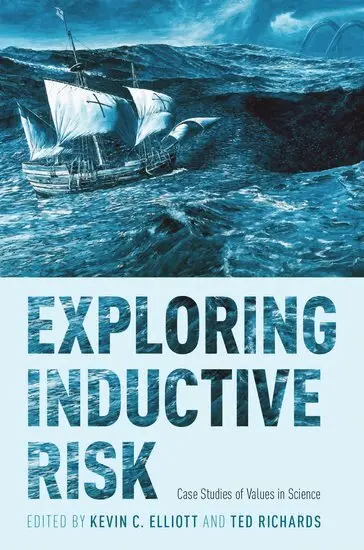
Science is the most reliable means available for understanding the world around us and our place in it. But, since science draws conclusions based on limited empirical evidence, there is always a chance that a scientific inference will be incorrect. That chance, known as inductive risk, is endemic to science. Though inductive risk has always been present in scientific practice, the role of values in responding to it has only recently gained extensive attention from philosophers, scientists, and policy-makers. Exploring Inductive Risk brings together a set of eleven concrete case studies with the goals of illustrating the pervasiveness of inductive risk, assisting scientists and policymakers in responding to it, and moving theoretical discussions of this phenomenon forward. The case studies range over a wide variety of scientific contexts, including the drug approval process, high energy particle physics, dual-use research, climate science, research on gender disparities in employment, clinical trials, and toxicology.The book includes an introductory chapter that provides a conceptual introduction to the topic and a historical overview of the argument that values have an important role to play in responding to inductive risk, as well as a concluding chapter that synthesizes important themes from the book and maps out issues in need of further consideration.
546 kr
Skickas inom 5-8 vardagar
Science is the most reliable means available for understanding the world around us and our place in it. But, since science draws conclusions based on limited empirical evidence, there is always a chance that a scientific inference will be incorrect. That chance, known as inductive risk, is endemic to science. Though inductive risk has always been present in scientific practice, the role of values in responding to it has only recently gained extensive attention from philosophers, scientists, and policy-makers. Exploring Inductive Risk brings together a set of eleven concrete case studies with the goals of illustrating the pervasiveness of inductive risk, assisting scientists and policymakers in responding to it, and moving theoretical discussions of this phenomenon forward. The case studies range over a wide variety of scientific contexts, including the drug approval process, high energy particle physics, dual-use research, climate science, research on gender disparities in employment, clinical trials, and toxicology.The book includes an introductory chapter that provides a conceptual introduction to the topic and a historical overview of the argument that values have an important role to play in responding to inductive risk, as well as a concluding chapter that synthesizes important themes from the book and maps out issues in need of further consideration.
Is a Little Pollution Good for You?
Incorporating Societal Values in Environmental Research
Häftad, Engelska, 2014
518 kr
Skickas inom 5-8 vardagar
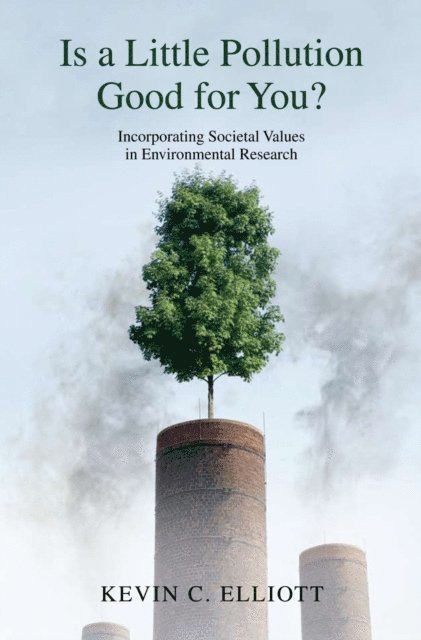
Could low-level exposure to polluting chemicals be analogous to exercise -- a beneficial source of stress that strengthens the body? Some scientists studying the phenomenon of hormesis (beneficial or stimulatory effects caused by low-dose exposure to toxic substances) claim that that this may be the case. Is A Little Pollution Good For You? critically examines the current evidence for hormesis. In the process, it highlights the range of methodological and interpretive judgments involved in environmental research: choices about what questions to ask and how to study them, decisions about how to categorize and describe new information, judgments about how to interpret and evaluate ambiguous evidence, and questions about how to formulate public policy in response to debated scientific findings. The book also uncovers the ways that interest groups with deep pockets attempt to influence these scientific judgments for their benefit. Several chapters suggest ways to counter these influences and incorporate a broader array of societal values in environmental research: (1) moving beyond conflict-of-interest policies to develop new ways of safeguarding academic research from potential biases; (2) creating deliberative forums in which multiple stakeholders can discuss the judgments involved in policy-relevant research; and (3) developing ethical guidelines that can assist scientific experts in disseminating debated and controversial phenomena to the public. Kevin C. Elliott illustrates these strategies in the hormesis case, as well as in two additional case studies involving contemporary environmental research: endocrine disruption and multiple chemical sensitivity. This book should be of interest to a wide variety of readers, including scientists, philosophers, policy makers, environmental ethicists and activists, research ethicists, industry leaders, and concerned citizens.
234 kr
Skickas inom 7-10 vardagar
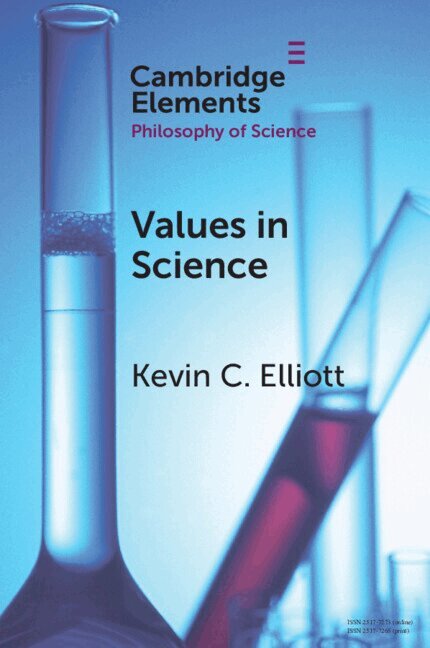
This Element introduces the philosophical literature on values in science by examining four questions: (1) How do values influence science? (2) Should we actively incorporate values in science? (3) How can we manage values in science responsibly? (4) What are some next steps for those who want to help promote responsible roles for values in science? It explores arguments for and against the "value-free ideal" for science (i.e., the notion that values should be excluded from scientific reasoning) and concludes that it should be rejected. Nonetheless, this does not mean that value influences are always acceptable. The Element explores a range of strategies for distinguishing between appropriate and inappropriate value influences. It concludes by proposing an approach for managing values in science that relies on justifying, prioritising, and implementing norms for scientific research practices and institutions.
3 565 kr
Kommande
This is the first-ever handbook to cover the vibrant philosophical literature on values and science. Its 45 chapters—appearing in print here for the first time—were written by a distinguished, international group of contributors and have been organized into six parts that explore the many ways in which ethics, values, and social considerations relate to the practices and content of the sciences:Theoretical Background on Values and ScienceManaging Values in ScienceValues, Science, and DemocracyValues, Science, Institutions, and OrganizationsValues in Scientific ActivitiesValues in Specific SciencesPublished at a time of increasing concerns about misinformation, polarization, and lack of reproducibility in science, this volume is essential reading for anyone interested in understanding how science can be made more ethically and socially responsible. The Routledge Handbook of Values and Science is designed to be an accessible resource not only for philosophers but also for scientists, policy makers, science communicators, and scholars from other science-studies fields. The Open Access version of this book, available at http://www.taylorfrancis.com, has been made available under a Creative Commons [Attribution-Non Commercial-No Derivatives (CC BY-NC-ND)] 4.0 license.
2 356 kr
Skickas inom 10-15 vardagar
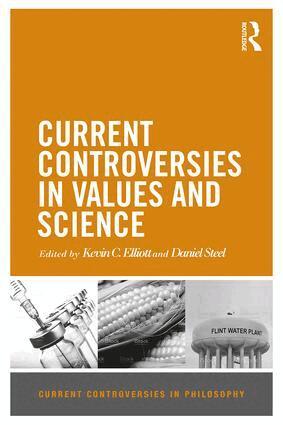
Current Controversies in Values and Science asks ten philosophers to debate five questions (two philosophers per debate) that are driving contemporary work in this important area of philosophy of science. The book is perfect for the advanced student, building up her knowledge of the foundations of the field while also engaging its most cutting-edge questions. Introductions and annotated bibliographies for each debate, preliminary descriptions of each chapter, study questions, and a supplemental guide to further controversies involving values in science help provide clearer and richer snapshots of active controversies for all readers.
657 kr
Skickas inom 10-15 vardagar
Current Controversies in Values and Science asks ten philosophers to debate five questions (two philosophers per debate) that are driving contemporary work in this important area of philosophy of science. The book is perfect for the advanced student, building up her knowledge of the foundations of the field while also engaging its most cutting-edge questions. Introductions and annotated bibliographies for each debate, preliminary descriptions of each chapter, study questions, and a supplemental guide to further controversies involving values in science help provide clearer and richer snapshots of active controversies for all readers.