K.G. Beauchamp – Författare
Visar alla böcker från författaren K.G. Beauchamp. Handla med fri frakt och snabb leverans.
4 produkter
4 produkter
1 360 kr
Skickas inom 3-6 vardagar
Throughout the 19th and 20th centuries technical exhibitions, held for the benefit of both cognoscente and the general public alike, have presented a mirror to the progress of science, engineering and, towards the second half of the 19th century and throughout the 20th century, to electrical technology.Exhibitions themselves are important not only to provide a given generation with a summary of its current capability but also to present a forum for new inventions and techniques, often shown to the public for the first time. The special requirements of exhibitions are also productive of new developments such as sophisticated lighting techniques, use of dioramas, new concepts in architecture, the first use of moving pavements and exploitation of new ideas in mass travel, such as monorail or magnetic levitation railways.Here the history of such public exhibitions is traced from their beginnings towards the end of the 18th century to the present day, with particular reference to their presentation of electrical invention and manufacture. The key factors determining this progression are described, together with the influence of competing nations in the changing format of these presentations. The book will be of interest to all those engineers who are interested in how their speciality has been presented to a wider public in the past and provide a pointer to its continued presence in the media for the decades ahead.
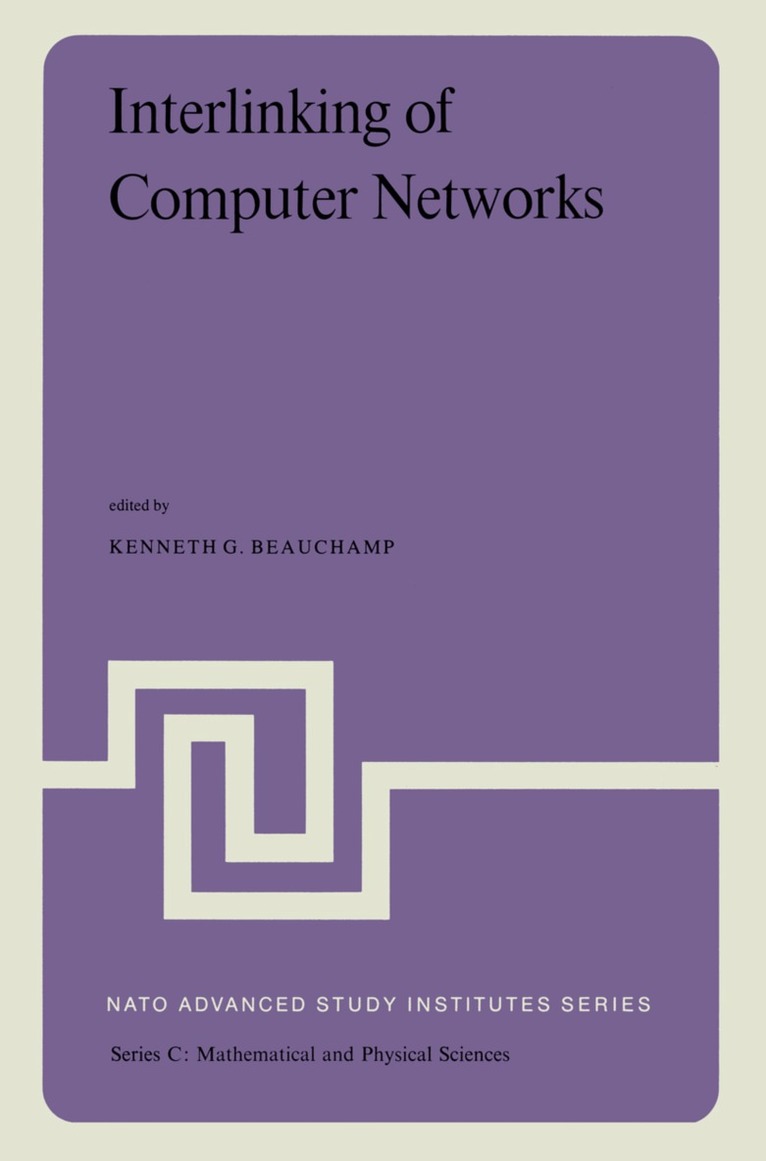
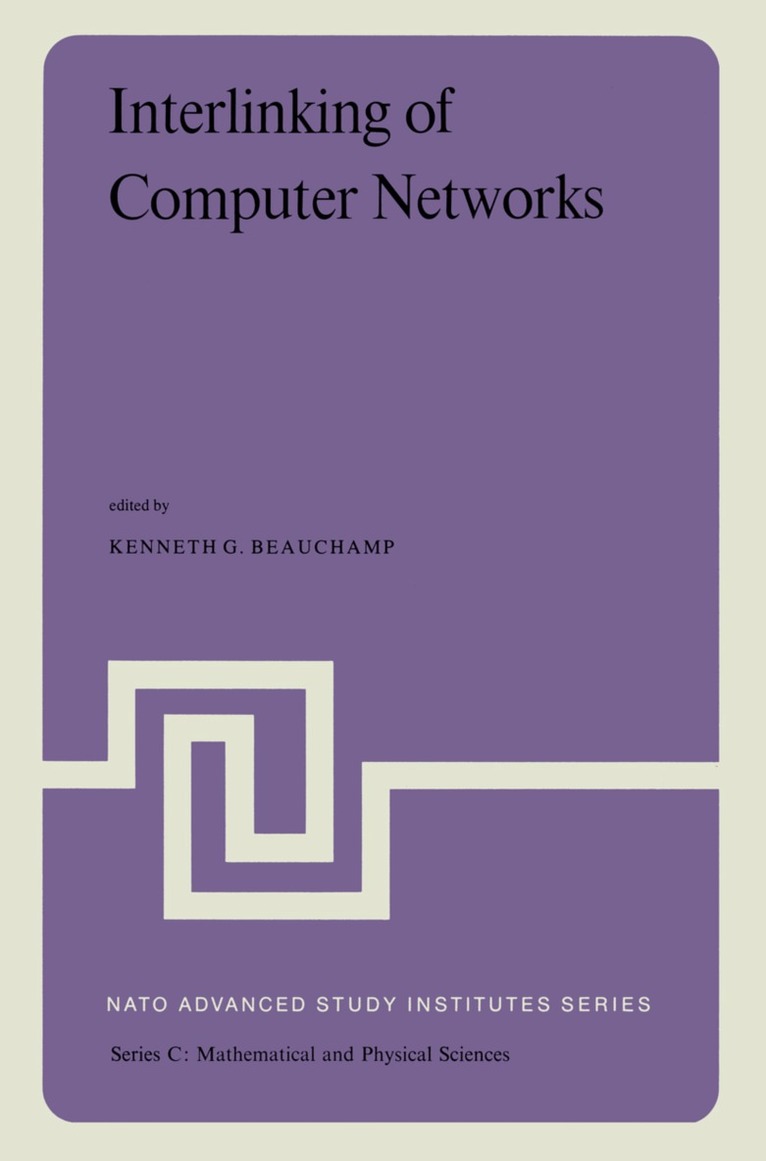
Interlinking of Computer Networks
Proceedings of the NATO Advanced Study Institute held at Bonas, France, August 28 – September 8, 1978
Inbunden, Engelska, 1979
2 180 kr
Skickas inom 10-15 vardagar
This volume contains the papers presented at the NATO Advanced Study Institute on the Interlinking of Computer Networks held between August 28th and September 8th 1978 at Bonas, France. The development of computer networks has proceeded over the last few decades to the point where a number of scientific and commercial networks are firmly established - albeit using different philosophies of design and operation. Many of these networks are serving similar communities having the same basic computer needs and those communities where the computer resources are complementary. Consequently there is now a considerable interest in the possibility of linking computer networks to provide resource sharing over quite wide geographical distances. The purpose of the Institute organisers was to consider the problems that arise when this form of interlinking is attempted. The problems fall into three categories, namely technical problems, compatibility and management. Only within the last few years have the technical problems been understood sufficiently well to enable interlinking to take place. Consequently considerable value was given during the meeting to discussing the compatibility and management problems that require solution before x FOREWORD global interlinking becomes an accepted and cost effective operation. Existing computer networks were examined in depth and case-histories of their operations were presented by delegates drawn from the international community. The scope and detail of the papers presented should provide a valuable contribution to this emerging field and be useful to Communications Specialists and Managers as well as those concerned with Computer Operations and Development.
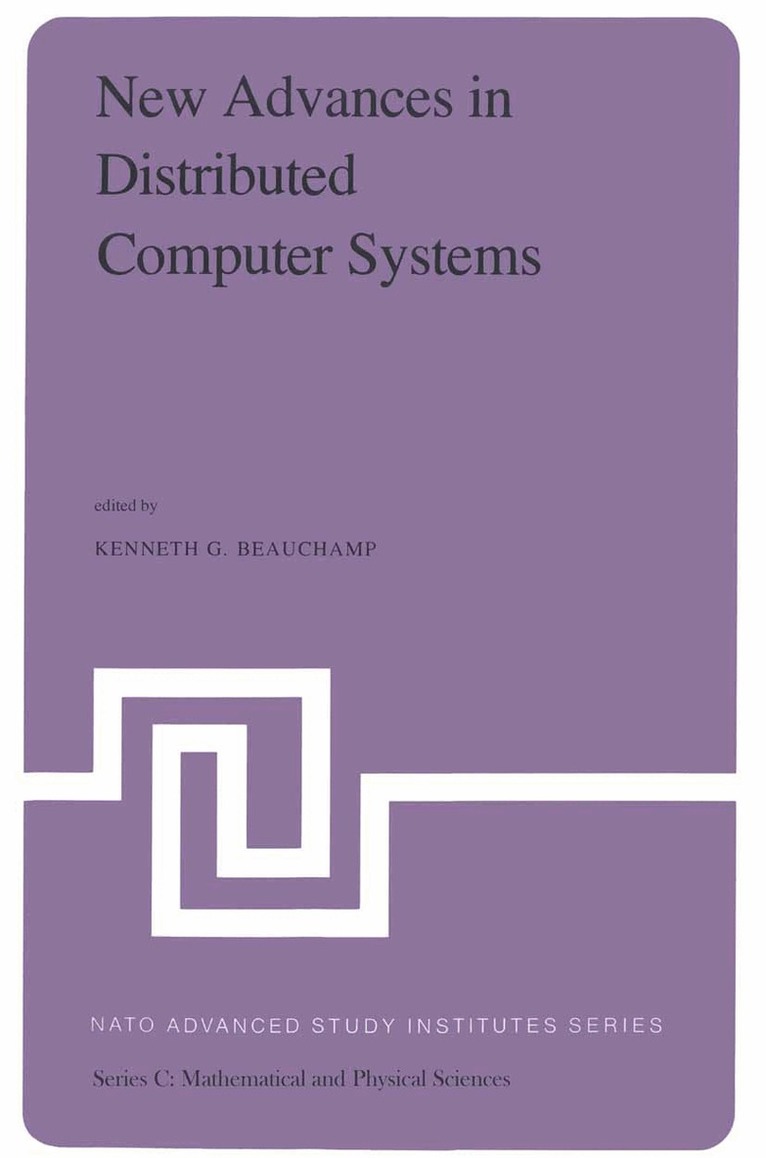
New Advances in Distributed Computer Systems
Proceedings of the NATO Advanced Study Institute held at Bonas, France, June 15–26, 1981
Häftad, Engelska, 2014
534 kr
Skickas inom 10-15 vardagar
This vo1~e contains the papers presented at the NATO Advanced Study Institute of New Advances in Distributed Computer Systems held between 15th and 26th June, 1981 at the Chateau de Bonas, France. The aim of the meeting was to promote an interchange of ideas between experts in the inter1inked fie1ds of communications and computers in order to determine the essential areas for future deve1opment. Its programme was arranged to exp10re a number of current topics inc1uding the pub1ic data-communication networks set up by the PTTs or corresponding bodies in various countries, 1arge-sca1e non-pub1ic systems such as ARPANET and its 1atest deve1opments, international systems such as the air1ines' SITA network, the recent and very important deve10pments in loca1 area networks and relevant deve10pments by universities and other higher educationa1 bodies.The recent moves towards form- isation and the 1aying down of a theoretica1 basis to guide future deve10pments and standards were discussed with particu1ar reference to the International Standards Organisation "7-1ayer model for Open System Interconnection" and the deve10pment of formal mathematica1 methods for specifying and ana1ysing communication systems and their protoco1s. Consideration was also given to the theoretica1 techniques, and their practica1 realisation, now becoming avai1ab1e to ensure privacy and security of information transmitted over digital communication systems. Fina11y the penetration of the concepts of distributed processing into the domain of computer architecture, giving such possibi1ities as array processors and other non-von Neumann architectures formed the subject of severa1 of the sessions.
Interlinking of Computer Networks
Proceedings of the NATO Advanced Study Institute held at Bonas, France, August 28 – September 8, 1978
Häftad, Engelska, 2012
2 180 kr
Skickas inom 10-15 vardagar
This volume contains the papers presented at the NATO Advanced Study Institute on the Interlinking of Computer Networks held between August 28th and September 8th 1978 at Bonas, France. The development of computer networks has proceeded over the last few decades to the point where a number of scientific and commercial networks are firmly established - albeit using different philosophies of design and operation. Many of these networks are serving similar communities having the same basic computer needs and those communities where the computer resources are complementary. Consequently there is now a considerable interest in the possibility of linking computer networks to provide resource sharing over quite wide geographical distances. The purpose of the Institute organisers was to consider the problems that arise when this form of interlinking is attempted. The problems fall into three categories, namely technical problems, compatibility and management. Only within the last few years have the technical problems been understood sufficiently well to enable interlinking to take place. Consequently considerable value was given during the meeting to discussing the compatibility and management problems that require solution before x FOREWORD global interlinking becomes an accepted and cost effective operation. Existing computer networks were examined in depth and case-histories of their operations were presented by delegates drawn from the international community. The scope and detail of the papers presented should provide a valuable contribution to this emerging field and be useful to Communications Specialists and Managers as well as those concerned with Computer Operations and Development.