Sandra Alland, Khairani Barokka and Daniel Sluman co-edit Stairs and Whispers: D/deaf and Disabled Poets Write Back, a ground-breaking anthology examining the poetics of disabled and D/deaf cultures. With contributions that span Vispo to Surrealism, and range from hard-hitting political commentary to intimate lyrical pieces – these poets refuse to perform or inspire according to tired old narratives. Five years after the seminal U.S. anthology, Beauty is a Verb, Nine Arches Press brings you its exciting UK progeny: Stairs and Whispers. The first of its kind and packed with fierce poetry, essays, photos and links to accessible online videos, this book showcases a diversity of styles, opinions, and survival strategies for a world that often works to shut us down.
Khairani Barokka’s first full poetry collection, Rope, is a spellbinding and impressive debut, kaleidoscopic in detail and richly compelling. With a meticulous artist’s instinct, these finely-tuned poems ask urgent questions about our impact upon the environment, and examine carefully the fragile ties that bind our lives and our fate to our planet, our ecosystems and to our fellow humans. Sensual and ecologically attentive, Rope draws on issues of climate change, sexuality, violence, nature, desire and the body. Lush with detail, alert to its own distinct sounds, this is poetry in urgent and vivacious action - intent on finding vivid joy and hope amidst the destruction and dangers of the Anthropocene era.
A contemporary, feminist take on a Heart of Darkness-esque tale of an upriver journey through a landscape scarred by ecological destruction, and a culture scarred by historical greed. A young girl is abducted and smuggled about a boat bound for the Indonesian interior. As her captors take her ever deeper into the jungle, her uncertain fate is compounded by the sense of her environment as a place of violence, destruction and jeopardy.A long poem accompanied by the author''s own ''rainforest gothic'' artwork, the book is also a bold and necessary experiment in making a sight-impaired-accessible art book – it will feature Braille alongside conventional text, and tactile, textured images.
A contemporary, feminist take on a Heart of Darkness-esque tale of an upriver journey through a landscape scarred by ecological destruction, and a culture scarred by historical greed. A young girl is abducted and smuggled about a boat bound for the Indonesian interior. As her captors take her ever deeper into the jungle, her uncertain fate is compounded by the sense of her environment as a place of violence, destruction and jeopardy. A long poem accompanied by the author's own 'rainforest gothic' artwork, the book is also a bold and necessary experiment in making a sight-impaired-accessible art book - it will feature Braille alongside conventional text, and tactile, textured images.
Khairani Barokka's second poetry collection is an intricate exploration of colonialism and environmental injustice: her acute, interlaced language draws clear connections between colonial exploitation of fellow humans, landscapes, animals, and ecosystems. Amidst the horrifying damage that has resulted for peoples as interlinked with places, there is firm resistance. Resonant and deeply attentive, the lyricism of these poems is juxtaposed with the traumatic circumstances from which they emerge. Through these defiant, potent verses, the body—particularly the disabled body—is centred as an ecosystem in its own right. Barokka's poems are every bit as alarming, urgent and luminous as is necessary in the age of climate catastrophe as outgrowth of colonial violence.
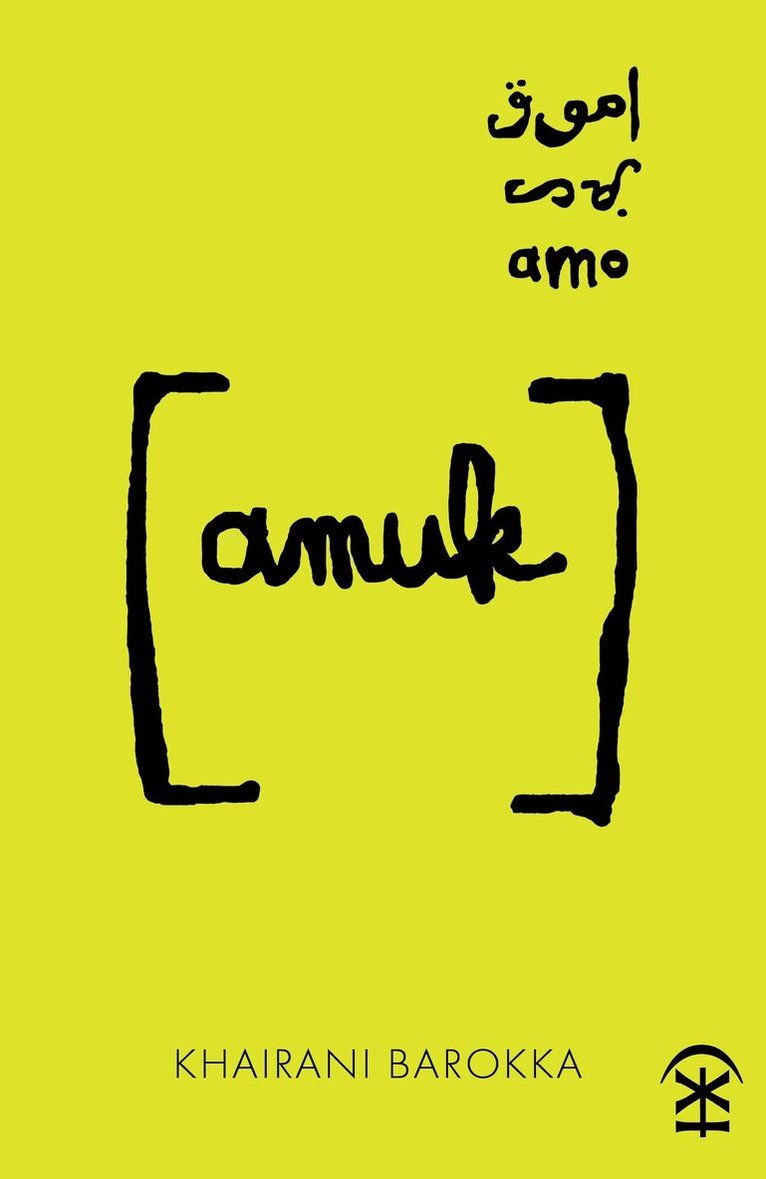
Khairani Barokka’s uncompromising third collection of poetry amuk sheds light on the devastating and ongoing effects of a single word's mistranslation, and emphasises what exists in opposition to such hostile histories and presents: hope, resistance, and joy.Groundbreaking in its use of form and poetics, amuk deconstructs the brutal workings of oppressive systems to examine how, “through macheted etymology”, violence and suffering is replicated through (mis)translation. These radical poems of fury and prayer look towards the vital, living resistance of persisting languages, and resilient peoples.
Khairani Barokka''s uncompromising third collection of poetry amuk sheds light on the devastating and ongoing effects of a single word's mistranslation, and emphasises what exists in opposition to such hostile histories and presents: hope, resistance, and joy.Groundbreaking in its use of form and poetics, amuk deconstructs the brutal workings of oppressive systems to examine how, "through macheted etymology", violence and suffering is replicated through (mis)translation. These radical poems of fury and prayer look towards the vital, living resistance of persisting languages, and resilient peoples.
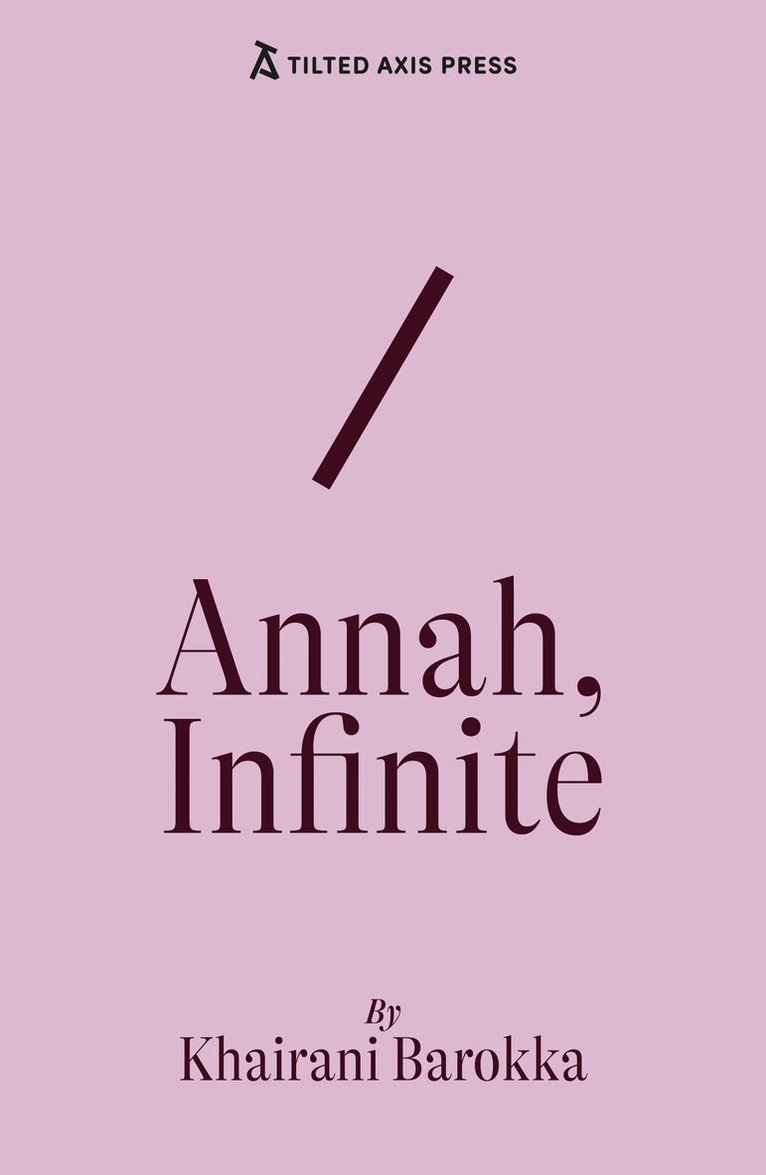
In Annah, Infinite, the dominant narratives surrounding Paul Gauguin's famous painting Annah la Javanaise (1893-94) are turned upside down. The work argues a simple point: what if the portrait does not depict a romanticised muse, but a pained child, caught in a moment of profound vulnerability? In questioning the 'facts' surrounding Annah's life, Annah, Infinite draws attention to how historical narratives, shaped by colonial powers, have distorted Annah's story. It critiques the systems of ablenormativity, racism, and sexism embedded in art institutions, and the way these structures mask the violent colonial legacies still haunting museum walls. Interspersed with the author's own poetry, fiction, and visual art on the painting's subject, this is a book of emotional heft. It asks us all to acknowledge the possibility of pain in every single portrait, as well as the possibility of escape.
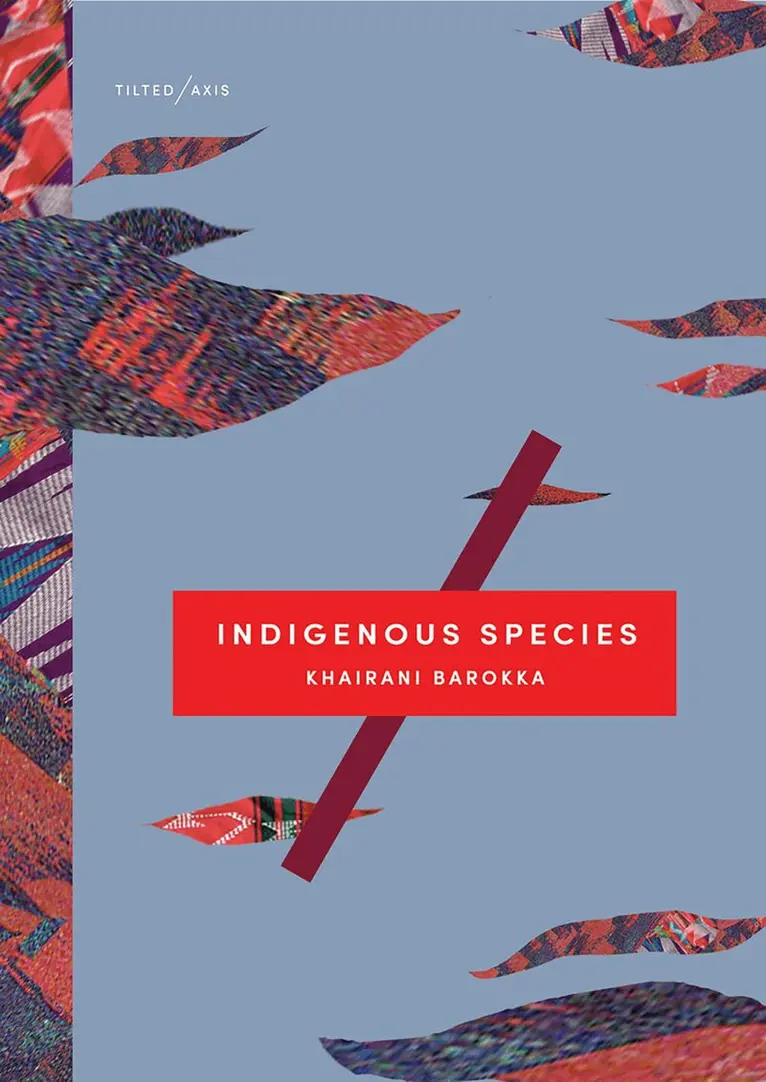
A young girl is abducted and smuggled aboard a boat bound upstream on an Indonesian river, through a landscape scarred by ecological destruction and historical greed. As her captors take her ever deeper into the jungle, her uncertain fate is compounded by the sense of her environment as a place of violence, destruction and jeopardy. But it is also a place from which she herself is indigenous, and if she can root herself back into its landscape and languages, she may yet save herself. Khairani Barokka addresses issues of pollution, consumerism, and habitat destruction with a poet's sensibility, and her frenetic neon artwork, inspired by contemporary glitch artists while also incorporating traditional motifs, aims to overturn our ideas of the jungle as a place of threatening darkness. Indigenous Species is also a bold and necessary experiment in making a sight-impaired-accessible art book: Tilted Axis is producing a separate edition which will feature Braille alongside text for sighted readers, and tactile, embossed imagery.