Khaled El Emam – författare
691 kr
Skickas inom 10-15 vardagar
1 866 kr
Skickas inom 5-8 vardagar
Elements of Software Process Assessment & Improvement
1 485 kr
Skickas inom 5-8 vardagar
2 049 kr
Skickas inom 5-8 vardagar
1 629 kr
Kommande
670 kr
Kommande
1 506 kr
Läs direkt efter köp
1 493 kr
Läs direkt efter köp
310 kr
Läs direkt efter köp
Updated as of August 2014, this practical book will demonstrate proven methods for anonymizing health data to help your organization share meaningful datasets, without exposing patient identity. Leading experts Khaled El Emam and Luk Arbuckle walk you through a risk-based methodology, using case studies from their efforts to de-identify hundreds of datasets.
Clinical data is valuable for research and other types of analytics, but making it anonymous without compromising data quality is tricky. This book demonstrates techniques for handling different data types, based on the authors’ experiences with a maternal-child registry, inpatient discharge abstracts, health insurance claims, electronic medical record databases, and the World Trade Center disaster registry, among others.
Understand different methods for working with cross-sectional and longitudinal datasetsAssess the risk of adversaries who attempt to re-identify patients in anonymized datasetsReduce the size and complexity of massive datasets without losing key information or jeopardizing privacyUse methods to anonymize unstructured free-form text dataMinimize the risks inherent in geospatial data, without omitting critical location-based health informationLook at ways to anonymize coding information in health dataLearn the challenge of anonymously linking related datasets310 kr
Läs direkt efter köp
Updated as of August 2014, this practical book will demonstrate proven methods for anonymizing health data to help your organization share meaningful datasets, without exposing patient identity. Leading experts Khaled El Emam and Luk Arbuckle walk you through a risk-based methodology, using case studies from their efforts to de-identify hundreds of datasets.
Clinical data is valuable for research and other types of analytics, but making it anonymous without compromising data quality is tricky. This book demonstrates techniques for handling different data types, based on the authors’ experiences with a maternal-child registry, inpatient discharge abstracts, health insurance claims, electronic medical record databases, and the World Trade Center disaster registry, among others.
Understand different methods for working with cross-sectional and longitudinal datasetsAssess the risk of adversaries who attempt to re-identify patients in anonymized datasetsReduce the size and complexity of massive datasets without losing key information or jeopardizing privacyUse methods to anonymize unstructured free-form text dataMinimize the risks inherent in geospatial data, without omitting critical location-based health informationLook at ways to anonymize coding information in health dataLearn the challenge of anonymously linking related datasets266 kr
Skickas inom 5-8 vardagar
1 930 kr
Skickas inom 10-15 vardagar
802 kr
Läs direkt efter köp
Offering compelling practical and legal reasons why de-identification should be one of the main approaches to protecting patients’ privacy, the Guide to the De-Identification of Personal Health Information outlines a proven, risk-based methodology for the de-identification of sensitive health information. It situates and contextualizes this risk-based methodology and provides a general overview of its steps.The book supplies a detailed case for why de-identification is important as well as best practices to help you pin point when it is necessary to apply de-identification in the disclosure of personal health information. It also:
Outlines practical methods for de-identification Describes how to measure re-identification risk Explains how to reduce the risk of re-identification Includes proofs and supporting reference material Focuses only on transformations proven to work on health information—rather than covering all possible approaches, whether they work in practice or notRated the top systems and software engineering scholar worldwide by The Journal of Systems and Software, Dr. El Emam is one of only a handful of individuals worldwide qualified to de-identify personal health information for secondary use under the HIPAA Privacy Rule Statistical Standard. In this book Dr. El Emam explains how we can make health data more accessible—while protecting patients’ privacy and complying with current regulations.
46 kr
Läs direkt efter köp
139 kr
Skickas inom 5-8 vardagar
231 kr
Skickas inom 5-8 vardagar
809 kr
Läs direkt efter köp
509 kr
Läs direkt efter köp
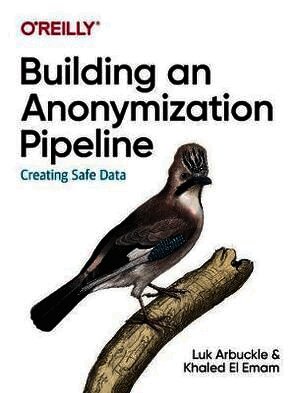
How can you use data in a way that protects individual privacy but still provides useful and meaningful analytics? With this practical book, data architects and engineers will learn how to establish and integrate secure, repeatable anonymization processes into their data flows and analytics in a sustainable manner.
Luk Arbuckle and Khaled El Emam from Privacy Analytics explore end-to-end solutions for anonymizing device and IoT data, based on collection models and use cases that address real business needs. These examples come from some of the most demanding data environments, such as healthcare, using approaches that have withstood the test of time.
Create anonymization solutions diverse enough to cover a spectrum of use casesMatch your solutions to the data you use, the people you share it with, and your analysis goalsBuild anonymization pipelines around various data collection models to cover different business needsGenerate an anonymized version of original data or use an analytics platform to generate anonymized outputsExamine the ethical issues around the use of anonymized data509 kr
Läs direkt efter köp
How can you use data in a way that protects individual privacy but still provides useful and meaningful analytics? With this practical book, data architects and engineers will learn how to establish and integrate secure, repeatable anonymization processes into their data flows and analytics in a sustainable manner.
Luk Arbuckle and Khaled El Emam from Privacy Analytics explore end-to-end solutions for anonymizing device and IoT data, based on collection models and use cases that address real business needs. These examples come from some of the most demanding data environments, such as healthcare, using approaches that have withstood the test of time.
Create anonymization solutions diverse enough to cover a spectrum of use casesMatch your solutions to the data you use, the people you share it with, and your analysis goalsBuild anonymization pipelines around various data collection models to cover different business needsGenerate an anonymized version of original data or use an analytics platform to generate anonymized outputsExamine the ethical issues around the use of anonymized data420 kr
Skickas inom 5-8 vardagar
610 kr
Läs direkt efter köp
Building and testing machine learning models requires access to large and diverse data. But where can you find usable datasets without running into privacy issues? This practical book introduces techniques for generating synthetic data—fake data generated from real data—so you can perform secondary analysis to do research, understand customer behaviors, develop new products, or generate new revenue.
Data scientists will learn how synthetic data generation provides a way to make such data broadly available for secondary purposes while addressing many privacy concerns. Analysts will learn the principles and steps for generating synthetic data from real datasets. And business leaders will see how synthetic data can help accelerate time to a product or solution.
This book describes:
Steps for generating synthetic data using multivariate normal distributionsMethods for distribution fitting covering different goodness-of-fit metricsHow to replicate the simple structure of original dataAn approach for modeling data structure to consider complex relationshipsMultiple approaches and metrics you can use to assess data utilityHow analysis performed on real data can be replicated with synthetic dataPrivacy implications of synthetic data and methods to assess identity disclosure605 kr
Läs direkt efter köp
Building and testing machine learning models requires access to large and diverse data. But where can you find usable datasets without running into privacy issues? This practical book introduces techniques for generating synthetic data—fake data generated from real data—so you can perform secondary analysis to do research, understand customer behaviors, develop new products, or generate new revenue.
Data scientists will learn how synthetic data generation provides a way to make such data broadly available for secondary purposes while addressing many privacy concerns. Analysts will learn the principles and steps for generating synthetic data from real datasets. And business leaders will see how synthetic data can help accelerate time to a product or solution.
This book describes:
Steps for generating synthetic data using multivariate normal distributionsMethods for distribution fitting covering different goodness-of-fit metricsHow to replicate the simple structure of original dataAn approach for modeling data structure to consider complex relationshipsMultiple approaches and metrics you can use to assess data utilityHow analysis performed on real data can be replicated with synthetic dataPrivacy implications of synthetic data and methods to assess identity disclosure494 kr
Skickas inom 5-8 vardagar