Khalil M. Dirani - Böcker
Visar alla böcker från författaren Khalil M. Dirani. Handla med fri frakt och snabb leverans.
4 produkter
4 produkter
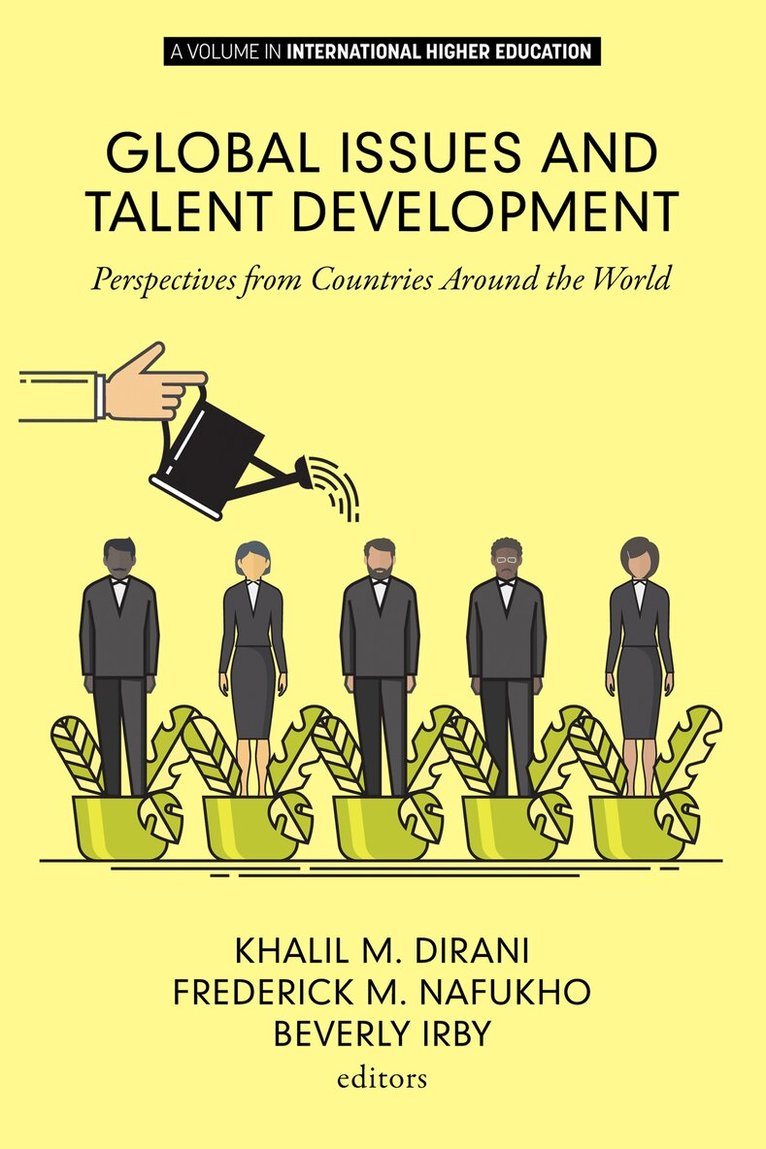
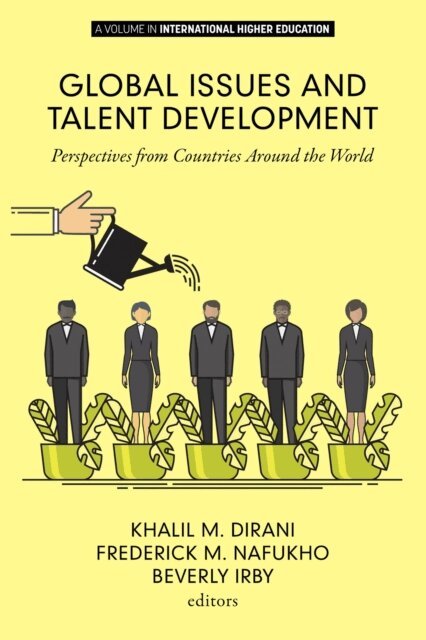
Global Issues and Talent Development
Perspectives from Countries Around the World
Häftad, Engelska, 2018
549 kr
Skickas inom 7-10 vardagar
Talent management (TM) and talent development (TD) are of the most important areas of focus for organizational leaders and scholars around the world (Machado, 2015). Geographic boundaries have become increasingly permeable, with talent considerations being a key factor in the decision of where organizations locate their operations (Farndale, Scullion, & Sparrow, 2010). These changes in global market conditions have lead organizations to develop robust global talent management and development strategies that help organizations attract and retain the best talent (Nilsson & Ellström, 2012). Still, most international TM and TD initiatives can be described as ad hoc, non-strategic, or based on exported models from the West (Machado, 2015)From an operational perspective, although there is a surge in research on TM and TD practices across different regions, most of what we know about these topics is based on government and practitioners’ reports. Nowadays, organizations are operating in diverse environments catalyzed by globalization, economic openness, and governmental smart visions and practical policies. Governments and organizations alike, are aspiring to become talent magnet destination, attracting expatriates from all over the world. The question we try to answer in this book is whether entities are able to continue their growth through current TM and TD practices or whether a more strategic approach is needed in order to address the current TM and TD challenges and to meet the needs of individuals, organizations, and governments.In particular, in this book we provide different perspectives of current status of TM and TD practices in select countries across the world. Our aim is to provide scholars and practitioners interested in the topic with a better understanding of TM and TD practices, and an overview of factors that affect these practices. Once we understand the different challenges, practitioners and leaders can use TM and TD as a source of power, or a strategy, that can lead people and organizations into success.
Global Issues and Talent Development
Perspectives from Countries Around the World
Inbunden, Engelska, 2018
1 010 kr
Skickas inom 7-10 vardagar
Talent management (TM) and talent development (TD) are of the most important areas of focus for organizational leaders and scholars around the world (Machado, 2015). Geographic boundaries have become increasingly permeable, with talent considerations being a key factor in the decision of where organizations locate their operations (Farndale, Scullion, & Sparrow, 2010). These changes in global market conditions have lead organizations to develop robust global talent management and development strategies that help organizations attract and retain the best talent (Nilsson & Ellström, 2012). Still, most international TM and TD initiatives can be described as ad hoc, non-strategic, or based on exported models from the West (Machado, 2015)From an operational perspective, although there is a surge in research on TM and TD practices across different regions, most of what we know about these topics is based on government and practitioners’ reports. Nowadays, organizations are operating in diverse environments catalyzed by globalization, economic openness, and governmental smart visions and practical policies. Governments and organizations alike, are aspiring to become talent magnet destination, attracting expatriates from all over the world. The question we try to answer in this book is whether entities are able to continue their growth through current TM and TD practices or whether a more strategic approach is needed in order to address the current TM and TD challenges and to meet the needs of individuals, organizations, and governments.In particular, in this book we provide different perspectives of current status of TM and TD practices in select countries across the world. Our aim is to provide scholars and practitioners interested in the topic with a better understanding of TM and TD practices, and an overview of factors that affect these practices. Once we understand the different challenges, practitioners and leaders can use TM and TD as a source of power, or a strategy, that can lead people and organizations into success.
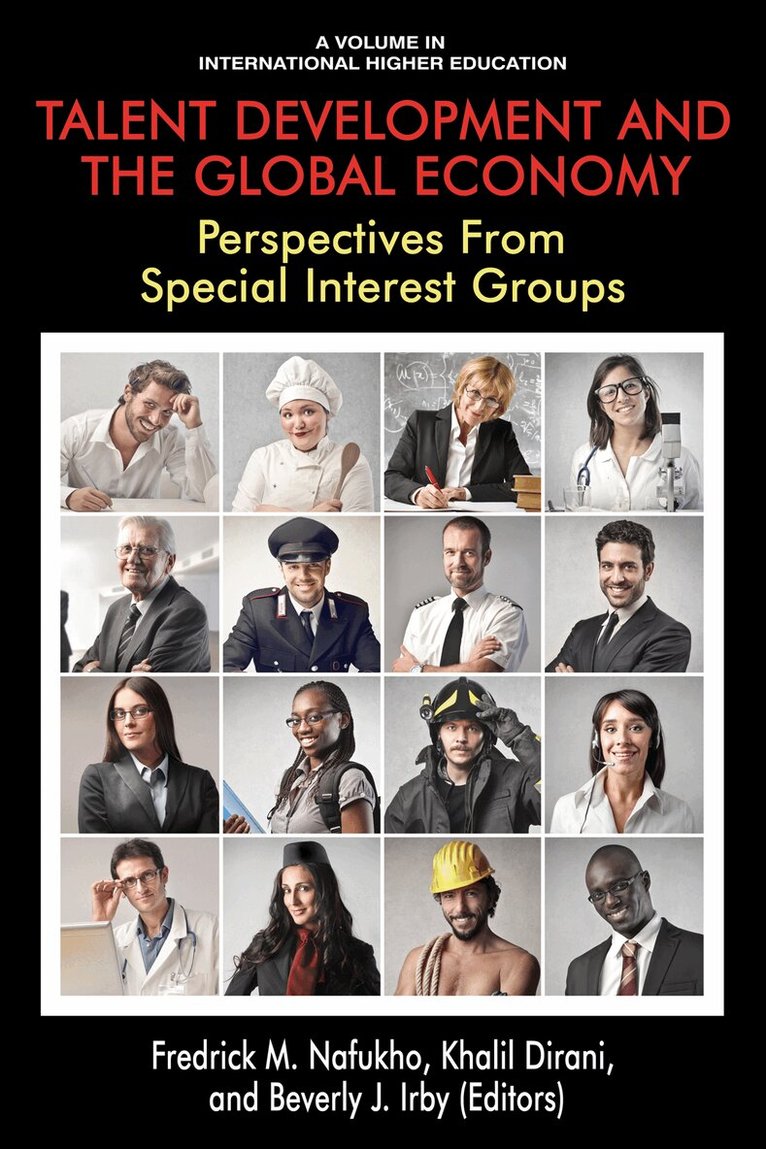
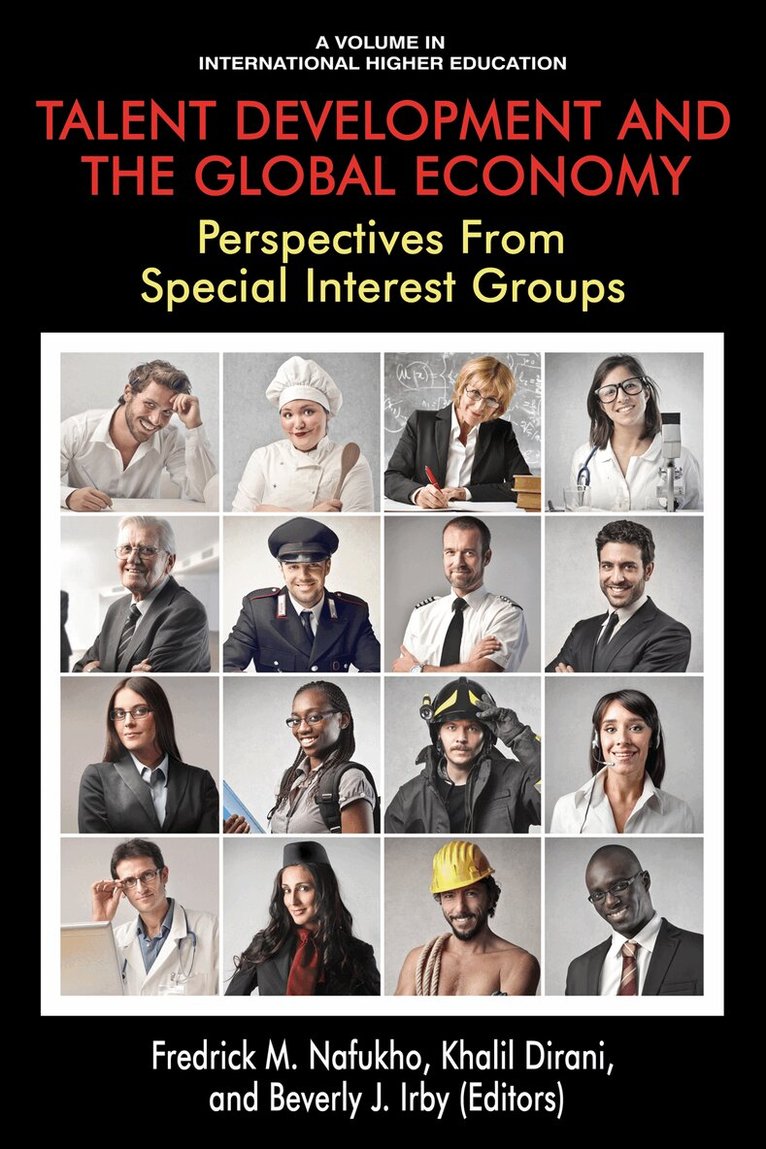
Talent Development and the Global Economy
Perspectives from Special Interest Groups
Häftad, Engelska, 2017
549 kr
Skickas inom 7-10 vardagar
Talent has been identified as the only differentiator for an organization’s, nations’ or any region’s success in this uncertain, complex, competitive and global environment. Ulrich (2008) defined talent as the equation of 3Cs: Talent = Competence x Commitment x Contribution. Malaeb and Chanaron (2010, p. 2), noted “Competence means that employees have the skills and abilities today and in the future for required business results. ... Commitment means that employees are involved and engaged ... while Contribution means that employees find personal abundance at occupation ...” While Ulrich (2008) observed that commitment focused on meaning and identity and other restraints that tap employee’s heart. This book is unique in many ways, which makes it extraordinary. First, unlike other books that have examined issues of change facing the global economy no book has examined the issue of talent development from the perspective of special interest groups including management international students, women refugees, refugees, non-governmental organizations, for profit, for benefit and nonprofit organizations. Thus, talent development world over has become one of the most important issues when it comes to developing human resources especially through education and training. The book presents pertinent research and practice on talent development management and argues that the term talent development broadly refers to management and development of high performing and high potential individuals in society required to carry out critical organizational and society roles aimed at improving human development. The contributors of the book chapters include individuals actively involved in research, teaching and practice in higher education and in business and industry. The chapters are based on empirical data, including review of relevant literature. The book also recognizes that talent development is more than just crisis management and includes best talent management practices, shared governance, meaningful reforms, strategic planning, transparency and accountability, social justice and respect for human life and the need to develop humane organizations and humane communities. The contributions take cognizance of the fact that talent development as a concept is facing fundamental changes in the global knowledge economy, and especially with political changes taking place world over. Contributors also take cognizance of the fact that one important source of change in society has been the accelerating speed of scientific and technological advancement driven by the power of the Internet hence the need to develop talent for the 21st century and beyond. The book is basically an academic book for use by undergraduates and graduate students at universities, for-profit, for-benefit, and non-profit organizations, policy makers and formulators in ministries of Education; supra national organizations, foreign organizations multilateral organizations, non-governmental organizations, community based organizations as well as development stakeholders, and community organizers.
Talent Development and the Global Economy
Perspectives from Special Interest Groups
Inbunden, Engelska, 2017
1 010 kr
Skickas inom 7-10 vardagar
Talent has been identified as the only differentiator for an organization’s, nations’ or any region’s success in this uncertain, complex, competitive and global environment. Ulrich (2008) defined talent as the equation of 3Cs: Talent = Competence x Commitment x Contribution. Malaeb and Chanaron (2010, p. 2), noted “Competence means that employees have the skills and abilities today and in the future for required business results. ... Commitment means that employees are involved and engaged ... while Contribution means that employees find personal abundance at occupation ...” While Ulrich (2008) observed that commitment focused on meaning and identity and other restraints that tap employee’s heart. This book is unique in many ways, which makes it extraordinary. First, unlike other books that have examined issues of change facing the global economy no book has examined the issue of talent development from the perspective of special interest groups including management international students, women refugees, refugees, non-governmental organizations, for profit, for benefit and nonprofit organizations. Thus, talent development world over has become one of the most important issues when it comes to developing human resources especially through education and training. The book presents pertinent research and practice on talent development management and argues that the term talent development broadly refers to management and development of high performing and high potential individuals in society required to carry out critical organizational and society roles aimed at improving human development. The contributors of the book chapters include individuals actively involved in research, teaching and practice in higher education and in business and industry. The chapters are based on empirical data, including review of relevant literature. The book also recognizes that talent development is more than just crisis management and includes best talent management practices, shared governance, meaningful reforms, strategic planning, transparency and accountability, social justice and respect for human life and the need to develop humane organizations and humane communities. The contributions take cognizance of the fact that talent development as a concept is facing fundamental changes in the global knowledge economy, and especially with political changes taking place world over. Contributors also take cognizance of the fact that one important source of change in society has been the accelerating speed of scientific and technological advancement driven by the power of the Internet hence the need to develop talent for the 21st century and beyond. The book is basically an academic book for use by undergraduates and graduate students at universities, for-profit, for-benefit, and non-profit organizations, policy makers and formulators in ministries of Education; supra national organizations, foreign organizations multilateral organizations, non-governmental organizations, community based organizations as well as development stakeholders, and community organizers.