Kille Ian Kille – författare
Visar alla böcker från författaren . Handla med fri frakt och snabb leverans.
2 produkter
2 produkter
443 kr
Läs direkt efter köp
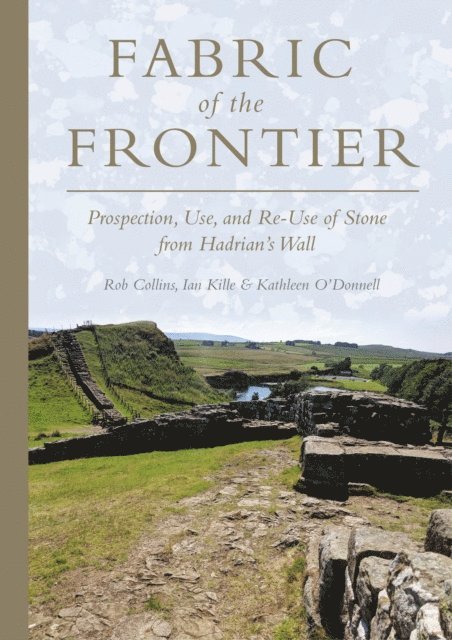
What is Hadrian’s Wall made of, where did this material come from and how has it been reused in other buildings in the communities that emerged in the centuries after the Roman Empire? By studying the fabric of Hadrian’s Wall using a geological approach combined with archaeological methods, is it possible to refine our answers to these questions? This study describes how the relationship between the geology of the Wall’s landscape and its fabric may be used to further understand the Wall and presents a significant set of new geological and archaeological data on the Wall’s stones from across the length of the Wall. This data set has been collected in two complementary ways. First as a citizen-science project, where volunteers from local communities were trained to visually characterize sandstones and resulting in data collecting on large numbers of the Wall’s stones along the length of the Wall. Secondly, analytical research was used to gather in scientific data for a selected sets of rocks and stones. Geochemical data was captured using an X-ray fluorescence spectrometer, and petrographic observations made using a petrographic microscope and thin sections. The combined methods provide a framework for geological analysis of the Wall supported by robust data. It builds on earlier work on Roman quarrying and stone preparation highlighting not only stone sources, but the criteria for choosing stone, stone preparation methods, and the implied routes to the Wall. At the heart of this study lies the ability to uniquely identify different sandstone types. Geological methods used to achieve this are explored, as are the ways in which the sandstones form. This highlights both the possibilities and limits of this approach.
E-bok
Engelska, 2023123 kr
Läs direkt efter köp
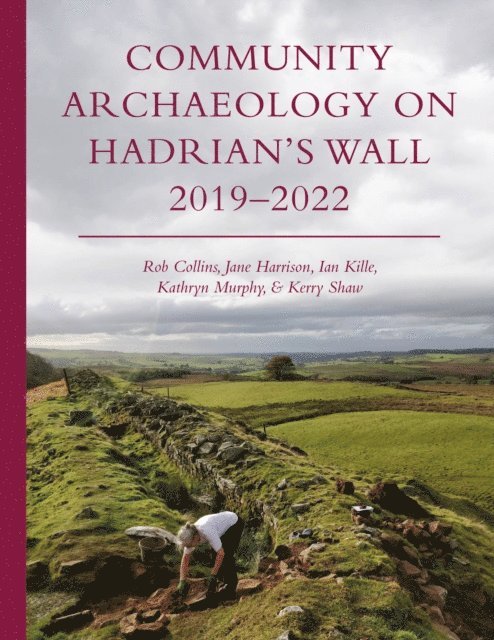
The Hadrian’s Wall Community Archaeology Project (WallCAP) was funded by the National Lottery Heritage Fund to promote the value of heritage – specifically of the Hadrian’s Wall World Heritage Site – to local communities and provide opportunities for volunteers to engage with the archaeology and conservation of the Wall to better ensure the future of the monument.This short book provides a summary of the project, communicating the range of activities undertaken during the project and key results. The structure and aims of the project are communicated, and an overview of the many different people and communities that participated are explored. Archaeological fieldwork resulted in a number of new discoveries and insights into Hadrian’s Wall. Revolutionary new work to explore the stones of Hadrian’s Wall, its source geology and how stones were reused from the monument is also discussed. Each chapter is supported by full color illustrations and contributions from project volunteers also bring the project into a vibrant focus.