Kim Rogers – författare
Visar alla böcker från författaren Kim Rogers. Handla med fri frakt och snabb leverans.
8 produkter
8 produkter
Inbunden, Engelska, 2023
273 kr
Skickas inom 3-6 vardagar
Inbunden, Engelska, 2023
241 kr
Skickas
Inbunden, Engelska, 1998
1 083 kr
Skickas inom 10-15 vardagar
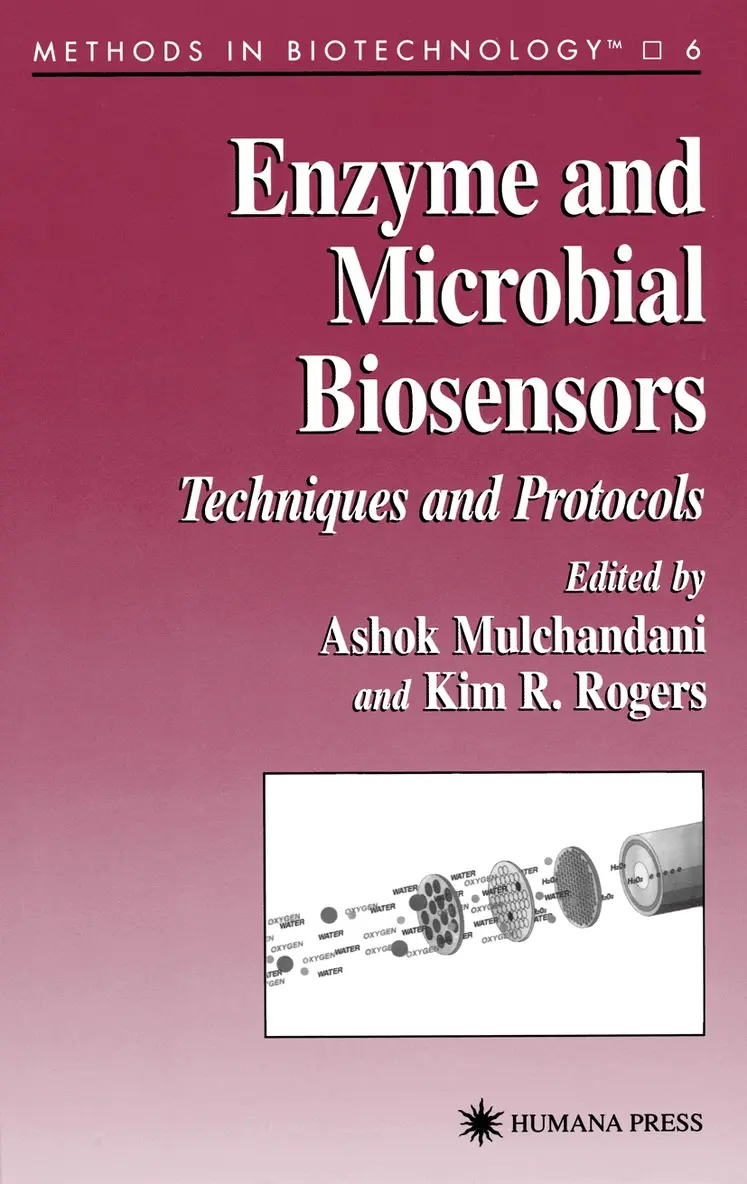
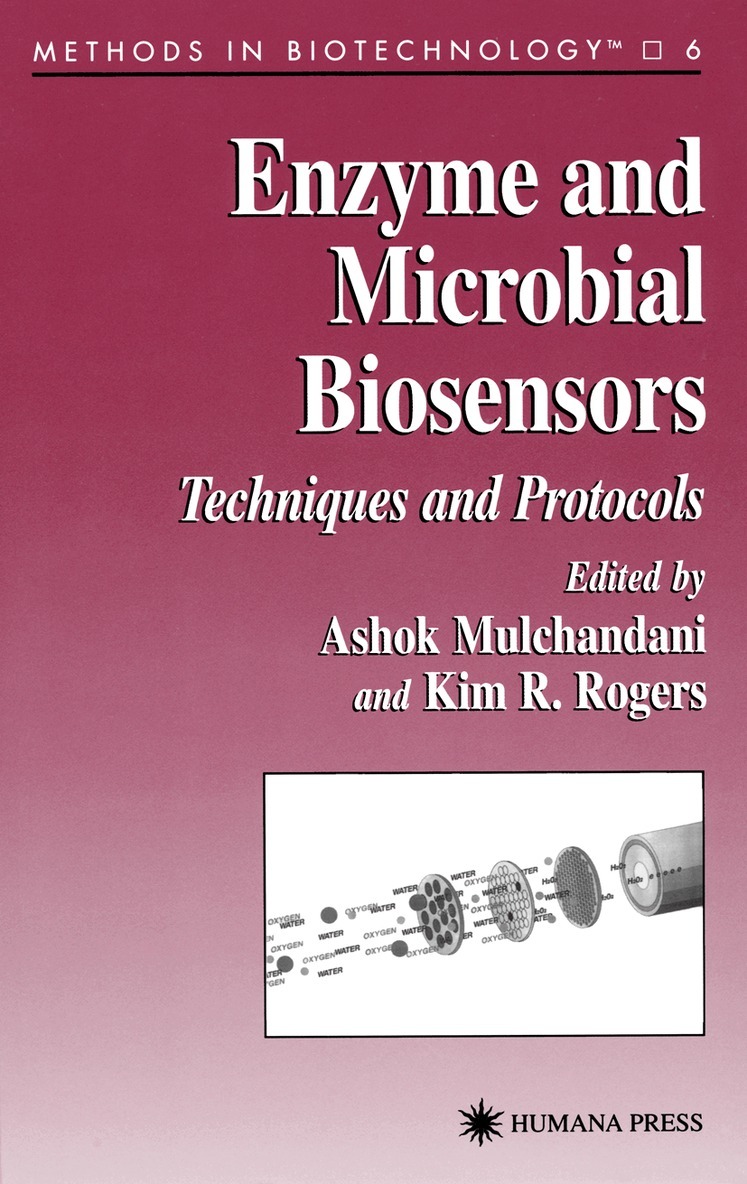
A cutting-edge collection of detailed, step-by-step techniques and protocols for constructing, evaluating, and using enzyme- and microbial-based biosensors. Ideal for novices starting research in their field or experienced researchers wanting to use a biosensor for a specific analytical measurement, the methods detailed here allow biochemists, analytical chemists, microbiologists, and engineers to successfully apply biosensor technology to their specific problems. The techniques include classical enzyme biosensors based on potentiometric, amperometric, conductimetric, optical, and thermal transducers, as well cell-based biosensors based on amperometric and optical transducers. A companion volume, Affinity Biosensors: Protocols and Techniques, by Rogers & Mulchandani, concentrates on cell- and affinity-based biosensors.
Inbunden, Engelska, 1998
1 083 kr
Skickas inom 10-15 vardagar
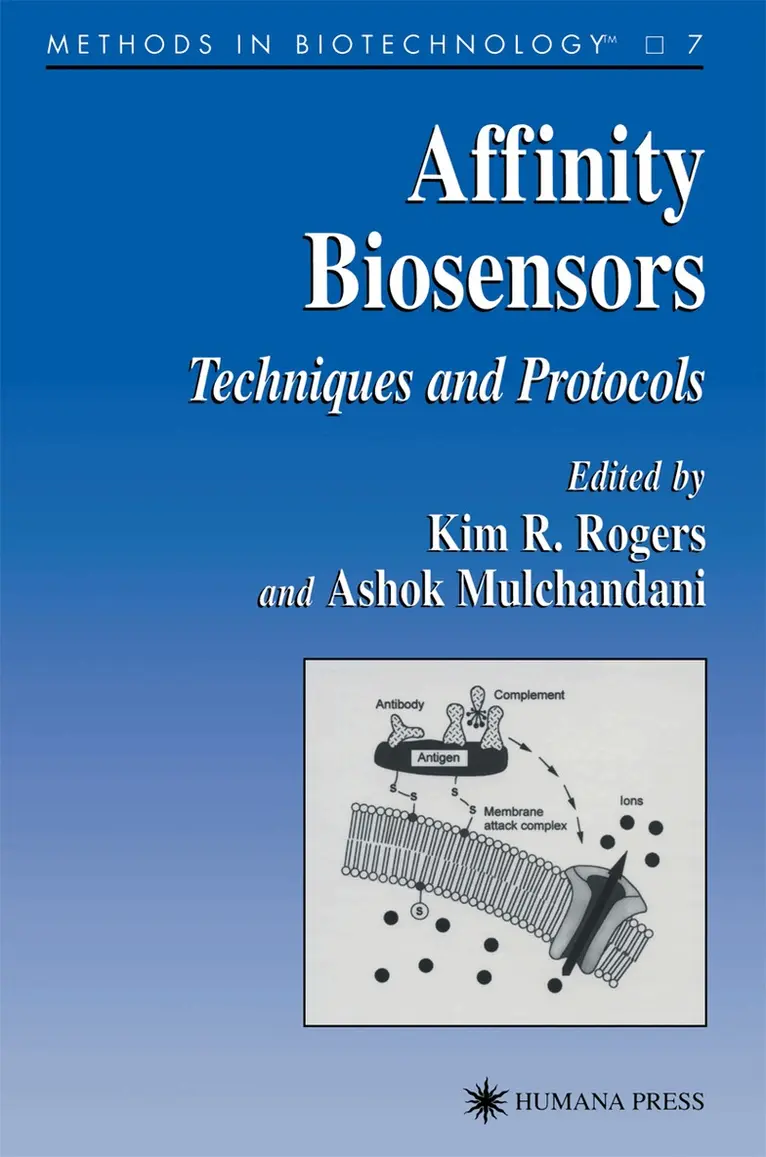
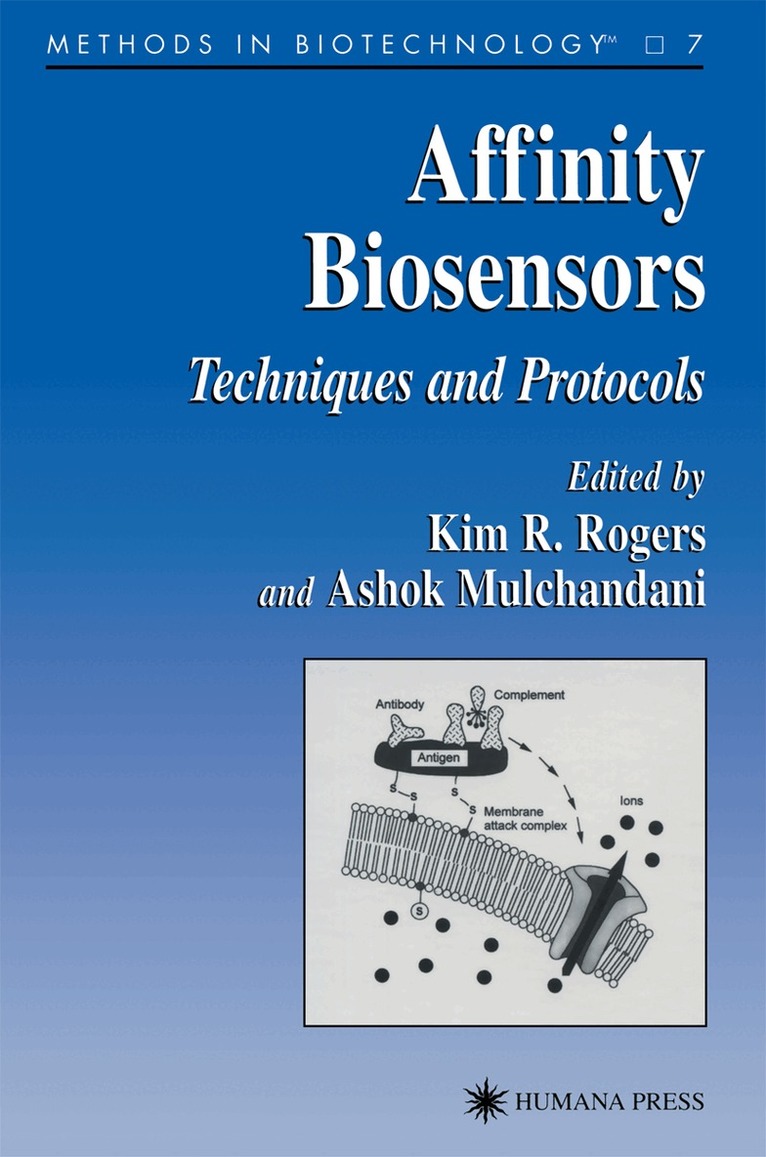
A cutting-edge collection of detailed, step-by-step techniques and protocols for constructing, evaluating, and using affinity-based biosensors. Ideal for novices starting research in their field or experienced researchers wanting to use a biosensor for a specific analytical measurement, the methods detailed here allow biochemists, analytical chemists, microbiologists, and engineers to successfully apply biosensor technology to their specific problems. The techniques include the use of antibodies and membrane receptors to construct optical, thermal, acoustic, and electrochemically based biosensors. Additional techniques involve antibodies, receptors, nucleic acids, liposomes, and eukaryotic cells. A companion volume, Enzyme and Microbial Biosensors: Protocols and Techniques, by Mulchandani & Rogers, concentrates on enzyme-biosensors.
E-bok
Engelska, 20081 367 kr
Läs direkt efter köp
In 1962 Clark and Lyons pioneered the concept of a biosensor. They p- posed immobilizing enzymes at electrochemical detectors to form “enzyme el- trodes” in order to expand the analyte range of ther base sensor. Smce then, the field of blosensors has greatly expanded. Some of the reasons for the expansion include both advances in signal transduction technologies and the incorporation of different biological sensing elements (Table 1). As a consequence, there are now a bewildering array of permutations of the biological sensing element and signal transducers that can be used to c- struct a biosensor. The purpose of the two volumes of Protocols and Te- niques in Biosensors is to provide a basic reference tool and starting point for use by graduate students, postdoctoral and senior researchers, and technicians m academics, industry, and government research establishments, to enable rapid entry into the field of biosensors. There are a variety of approaches that researchers employ to select a combination of bioaffinity elements and signal transducers. One commonly used approach is to identtfy the compound or compounds of interest; identify the biological molecule that yields an appropriate recognitionlselectivtty and dynamic concentration range for the assay; and choose an assay format and signal transduction technology that will meet the analytical requirements for the proposed application, This volume, Enzyme and Microbial Biosensors: Techniques and Protocols, describes a variety of transduction technologies that have been interfaced to enzymes and microorganisms.
E-bok
Engelska, 20081 367 kr
Läs direkt efter köp
The frequency of reports concemmg the interface of biological reco- tion elements to signal transduction technologies has risen dramatically over the last decade. Because any one of a wide variety of biological recognition elements (e. g. , antibodies, receptors, DNA, microorganisms, or enzymes) can theoretically be interfaced with any one of a wide variety of signal transducers (e. g. , optical, electrochemical, thermal, or acoustic), the potential range of devices and techniques can be bewildering. The purpose of this volume and the previous volume in this series is to provide a basic reference and startmg point for investigators in academics, mdustry, and government to begin or expand their biosensors research. This volume, Methods in Biotechnology vol. 7: Affinity Biosensors: Techniques and Protocols, describes a variety of classical and emerging transduction technologies that have been interfaced to bioaffinity elements (e. g. , antibodies and receptors). Some of the reasons for the expansion in the use of affinity-based biosensors include both advances in signal transduction technologies (e. g. , fiber optics, microelectromcs, and microfabrication) and the availability of bioafflmty elements. More specifically, with respect to biological recognttion elements, commercially and noncommercially produced antibodies directed toward a variety of analytes have become widely available. In addition, te- niques for the purification and stabilization of receptors have also significantly improved. As a result of these recent advances in the field, biosensors research and development projects are being pursued by mvestigators from a wide range of disciplines.
Häftad, Engelska, 2010
1 083 kr
Skickas inom 10-15 vardagar
A cutting-edge collection of detailed, step-by-step techniques and protocols for constructing, evaluating, and using enzyme- and microbial-based biosensors. Ideal for novices starting research in their field or experienced researchers wanting to use a biosensor for a specific analytical measurement, the methods detailed here allow biochemists, analytical chemists, microbiologists, and engineers to successfully apply biosensor technology to their specific problems. The techniques include classical enzyme biosensors based on potentiometric, amperometric, conductimetric, optical, and thermal transducers, as well cell-based biosensors based on amperometric and optical transducers. A companion volume, Affinity Biosensors: Protocols and Techniques, by Rogers & Mulchandani, concentrates on cell- and affinity-based biosensors.
Häftad, Engelska, 2011
1 083 kr
Skickas inom 10-15 vardagar
A cutting-edge collection of detailed, step-by-step techniques and protocols for constructing, evaluating, and using affinity-based biosensors. Ideal for novices starting research in their field or experienced researchers wanting to use a biosensor for a specific analytical measurement, the methods detailed here allow biochemists, analytical chemists, microbiologists, and engineers to successfully apply biosensor technology to their specific problems. The techniques include the use of antibodies and membrane receptors to construct optical, thermal, acoustic, and electrochemically based biosensors. Additional techniques involve antibodies, receptors, nucleic acids, liposomes, and eukaryotic cells. A companion volume, Enzyme and Microbial Biosensors: Protocols and Techniques, by Mulchandani & Rogers, concentrates on enzyme-biosensors.