Kimmo Laine - Böcker
Visar alla böcker från författaren Kimmo Laine. Handla med fri frakt och snabb leverans.
4 produkter
4 produkter
2 150 kr
Skickas inom 3-6 vardagar
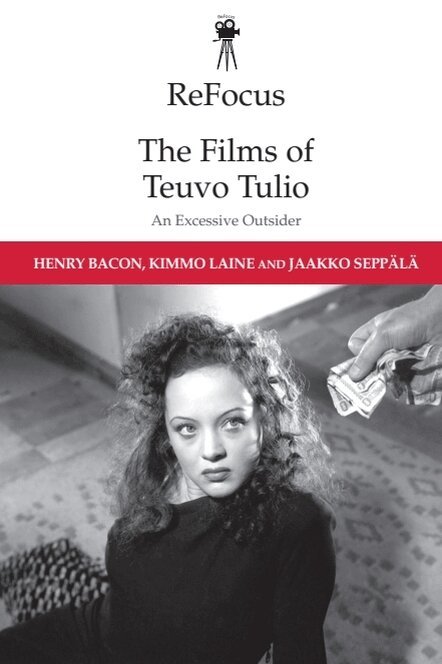
Teuvo Tulio (1912–2000) was one of the most original directors in Finnish film history. Growing up in the newly independent Finland, he lived most of his life in the Finnish cultural and social context, yet he always remained something of an outsider and ended up as a total recluse.This is the first English-language collection on this innovative director, exploring Tulio’s unique style and the extent, and effect of his obsessive recirculation of story elements and stylistic patterns in his work. A range of international scholars analyse how Tulio created his own brand of excessive melodrama, and follow the strange trajectory of his career from within the studio system to the outsider status of an independent producer-director.
527 kr
Skickas inom 3-6 vardagar
Teuvo Tulio (1912 2000) was one of the most obsessive directors in film history. As an independent producer and an increasingly reclusive personality, he developed his own, excessive brand of melodrama, haunted by irresistible temptations, obsessive desires, mad jealousies and toxic moralism. Combining cultural and historical contextualisation with formalist analysis, ReFocus: The Films of Teuvo Tulio is the first English-language study on this innovative director. Three internationally recognised scholars analyse the strange trajectory of his career through its impressive beginning within the Finnish studio system to becoming an outsider, an independent producer-director who could single-mindedly pursue his own, highly idiosyncratic line.
1 179 kr
Skickas
Provides the first scholarly examination of Finnish studio systemProvides an approach that is both sensitive to the specific characteristics of Finnish studio system and applicable to small nation cinema industries in generalConsiders practically the whole output of Finnish film companies over the studio era; this is a benefit of analysing a small nation cinema with c. 600 feature films made between the 1930s and early 1960sExplores films such as Stolen Death (1938), The Way You Wanted Me (1944), The White Reindeer (1952), The Glass Heart (1959)Finnish Film Studios provides a thorough examination of Finnish film industry through the core decades of the studio era, from the early 1920s to the early 1960s. Laine analyses the contributions of fully integrated major companies, Suomi-Filmi, Suomen Filmiteollisuus and Fennada-Filmi, in addition to minor companies and independent producers that were responsible for some of the canonized work of the studio era, including the films of Teuvo Tulio and Nyrki Tapiovaara.This study approaches Finnish studio cinema as both typical and particular: it is a typical European small nation cinema with its industrial structures, reliance on hierarchical organisation of labour and love-hate relationship with Hollywood; yet, it is particular, not only in its genres, cycles and hugely popular domestic stars, but also because films were made in the constant presence of geopolitical realities, at times under the influence of Germany and the Soviet Union.
498 kr
Skickas inom 3-6 vardagar
Global Film Studios is a series of books devoted to examining international film studios and their global influence. Each volume will address several studios representing an era (New Hollywood Studios), a regional intersection of production (Nordic Film Studios), a nation cinema (French Film Studios), a genre (Hong Kong Action Film Studios) or a style (Bollywood Studios). The series offers interdisciplinary interpretations of international film studios. Particular attention will emphasize the signature features of these studios, such as their distinctive style, look, design, and genres, as well as principal figures who created and sustained those definable studio elements. Technological advancements and innovations associated with or promoted by studios will also be examined. Additionally, these volumes will address studios' market strategies, their core competencies and core rigidities, and their reliance upon and shifts from film cycles in terms of re-evaluating box office and audience appeal. Detailed analysis of specific film productions that transformed studios will conclude each volume. Because of its multifaceted analysis and international scope, this series intends to open up the field of global studiography.