Kinga Stecuła - Böcker
Visar alla böcker från författaren Kinga Stecuła. Handla med fri frakt och snabb leverans.
3 produkter
3 produkter
710 kr
Skickas inom 10-15 vardagar
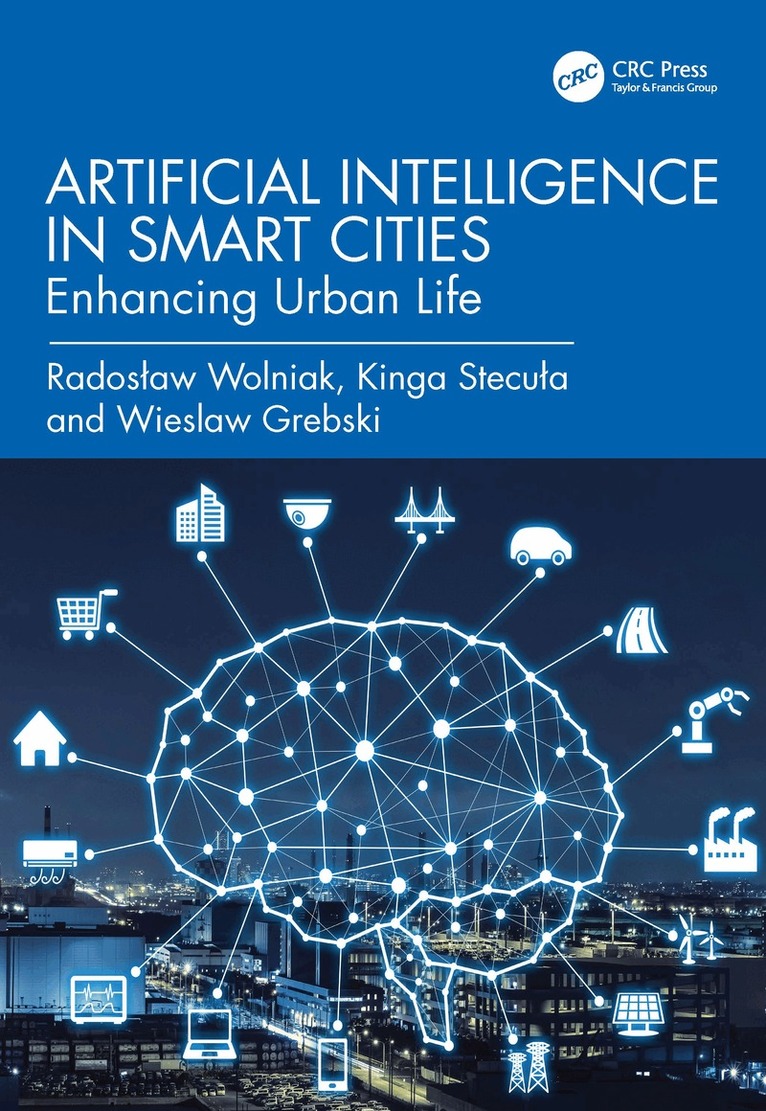
Artificial Intelligence in Smart Cities presents an interdisciplinary and comprehensive analysis of how AI reengineers urban life, governance, and infrastructure. The book explores key thematic areas, including smart government, economy, environment, living, people, cybersecurity, and innovation, complemented by Central European empirical case studies. Each chapter examines the impact of AI technologies—machine learning, natural language processing, and IoT integration—on augmented decision-making, sustainability, health, education, urban resilience, and social inclusiveness.The book integrates empirical evidence, conceptual reflection, and practical deployment to illuminate how AI can be harnessed for inclusive urban growth. It guides readers through the complex landscape of ethics, economics, and privacy concerns while offering insights on algorithmic fairness, data protection, public trust, and AI innovation. This thoughtful examination advocates for a human-centered and ethical approach to Smart City development, balancing technological advancement with societal needs.Addressed at researchers, urban planners, policymakers, technologists, and graduate students, this resource provides both policy-driven expertise and analytical capability. Readers will gain valuable perspectives on the convergence of urban futures and Artificial Intelligence, equipping them with the knowledge to navigate the challenges and opportunities of AI-enhanced urban environments while ensuring technology serves the public good.The book provides a thorough and systematic examination of the role of AI in Smart Cities, covering its applications, benefits, and challenges in various aspects of urban development, including governance, economy, environment, mobility, living, and people.Offers an in-depth analysis of the key principles and technologies of AI, as well as its applications in Smart Cities, providing readers with a detailed understanding of the potential of AI to transform urban environmentsPresents case studies of successful AI implementations in Central European cities, providing practical insights and lessons learned for policymakers, urban planners, and business leaders seeking to harness the power of AI to create more liveable, sustainable, and resilient citiesAdopts an interdisciplinary approach, drawing on insights from urban planning, computer science, engineering, economics, and social sciences to provide a comprehensive understanding of the role of AI in Smart CitiesProvides a vision for a future where AI is used to create a better life for all citizens and inspires a new wave of innovation and collaboration in the development of Smart Cities
1 900 kr
Skickas inom 10-15 vardagar
Artificial Intelligence in Smart Cities presents an interdisciplinary and comprehensive analysis of how AI reengineers urban life, governance, and infrastructure. The book explores key thematic areas, including smart government, economy, environment, living, people, cybersecurity, and innovation, complemented by Central European empirical case studies. Each chapter examines the impact of AI technologies—machine learning, natural language processing, and IoT integration—on augmented decision-making, sustainability, health, education, urban resilience, and social inclusiveness.The book integrates empirical evidence, conceptual reflection, and practical deployment to illuminate how AI can be harnessed for inclusive urban growth. It guides readers through the complex landscape of ethics, economics, and privacy concerns while offering insights on algorithmic fairness, data protection, public trust, and AI innovation. This thoughtful examination advocates for a human-centered and ethical approach to Smart City development, balancing technological advancement with societal needs.Addressed at researchers, urban planners, policymakers, technologists, and graduate students, this resource provides both policy-driven expertise and analytical capability. Readers will gain valuable perspectives on the convergence of urban futures and Artificial Intelligence, equipping them with the knowledge to navigate the challenges and opportunities of AI-enhanced urban environments while ensuring technology serves the public good.The book provides a thorough and systematic examination of the role of AI in Smart Cities, covering its applications, benefits, and challenges in various aspects of urban development, including governance, economy, environment, mobility, living, and people.Offers an in-depth analysis of the key principles and technologies of AI, as well as its applications in Smart Cities, providing readers with a detailed understanding of the potential of AI to transform urban environmentsPresents case studies of successful AI implementations in Central European cities, providing practical insights and lessons learned for policymakers, urban planners, and business leaders seeking to harness the power of AI to create more liveable, sustainable, and resilient citiesAdopts an interdisciplinary approach, drawing on insights from urban planning, computer science, engineering, economics, and social sciences to provide a comprehensive understanding of the role of AI in Smart CitiesProvides a vision for a future where AI is used to create a better life for all citizens and inspires a new wave of innovation and collaboration in the development of Smart Cities
Enhancing Modern Living with Virtual and Augmented Reality
Practical Applications
Inbunden, Engelska, 2026
1 652 kr
Kommande
This book explores the role of virtual and augmented reality (VR and AR) in today’s evolving digital landscape, examining how these technologies are shaping society and how they might evolve in the future.It surveys the wide-ranging applications of VR and AR across industries, showcasing their functionality in areas such as entertainment, culture, retail, sports, tourism, and well-being. Through practical examples, the book highlights the benefits of these technologies while also addressing their limitations, challenges, and risks. Critical discussions include the technical, ethical, and societal implications of AR and VR, with a focus on pressing issues such as data privacy, cybersecurity, accessibility, the digital divide, and the psychological effects of immersive experiences. This balanced approach provides a comprehensive understanding of both the opportunities and pitfalls of these technologies.This volume is an invaluable resource for students, researchers, and professionals interested in the interdisciplinary nature of VR and AR. It bridges fields such as computer science, psychology, media studies, tourism, and urban studies, offering insights into how these technologies are reshaping industries and everyday life.